Ruth Handler
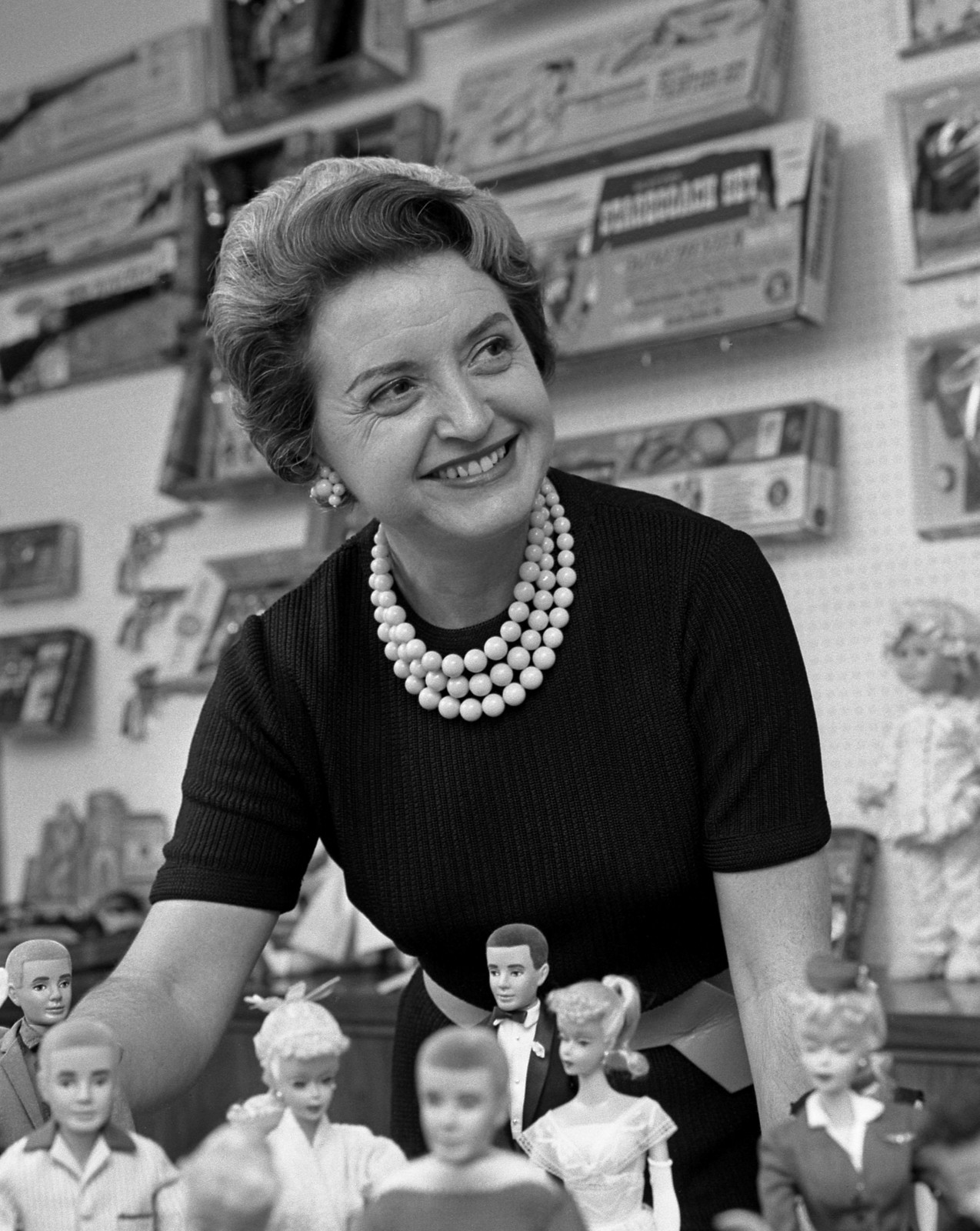
born Ruth Marianna Mosko Handler
Co-founder, Mattel; creator of the Barbie doll; founder, Nearly Me · b. 1916–2002 · Denver, Colorado
Two calls made by hand, not formulas. how we score →
Summary
Handler co-founded Mattel from a Los Angeles garage in 1945 with her husband Elliot, on furniture scraps and her own sales calls, and in 1959 built the Barbie doll into the product that defined the company.
She ran Mattel as president for thirty years. A 1970s accounting scandal ended that: she and Elliot were forced out, and in 1978 she pleaded no contest to charges over falsified earnings.
How it happened
Born in Denver in 1916, the youngest of ten children of Polish-Jewish immigrants — her father a blacksmith, her mother chronically ill. At six months old she was sent to live with her adult sister Sarah, who ran a drugstore and soda fountain, and stayed there until she was about nineteen. The exposure to running a small retail business came from that household, not her parents'.
She left the University of Denver without finishing a degree, moved to Los Angeles for secretarial work at Paramount, and married Elliot Handler in 1938. Elliot began making picture frames and dollhouse furniture from leftover Lucite and Plexiglas in their garage; Ruth sold it, landing accounts like Douglas Aircraft. In 1945 the two of them and a partner, Harold "Matt" Matson, formalized the business as Mattel — Matson and Elliot's names combined, because, as Elliot later said, they couldn't find a way to fit hers in.
Watching her daughter Barbara play with adult-bodied paper dolls instead of baby dolls, Handler concluded there was no three-dimensional version of that kind of play and no company selling one. On a 1956 trip to Europe she found a German novelty doll, Bild Lilli, bought three, and brought the idea back to Mattel over internal skepticism. Barbie launched at the American International Toy Fair on March 9, 1959, and sold roughly 300,000 units in its first year — more than the company had planned to produce.
In 1970, already Mattel's president, she was diagnosed with breast cancer and had a modified radical mastectomy. She later said the commercial prosthetics available to her were unconvincing, and that the experience was tied to the same instinct that had produced Barbie: she'd said for years that giving a doll an adult body mattered to a girl's sense of herself, and now she wanted that same dignity restored to women who'd lost a breast.
Mattel was investigated by the SEC starting in the early 1970s over financial statements that had overstated earnings and concealed losses. Ruth and Elliot Handler were forced to resign in 1975. In 1978, Ruth Handler was charged in connection with the false statements; she pleaded no contest — a plea that is not an admission of guilt — and was fined $57,000 and sentenced to 2,500 hours of community service. She was not sentenced to prison.
After leaving Mattel she founded Ruthton Corp with a partner, Peyton Massey, to make Nearly Me, a realistic breast prosthesis. First Lady Betty Ford was fitted for one after her own mastectomy. Handler died in 2002 of complications during surgery for a later, separate diagnosis of colon cancer.
The coded evidence
Thirteen groups, every claim sourcedSecond-generation American; born in Denver to Polish-Jewish immigrant parents (father immigrated from Poland around 1907).
↗ en.wikipedia.org2
Reduced Mattel involvement following her 1970 mastectomy and cancer treatment. This is a health interruption, not a childbearing or caregiving one; the exact duration of reduced involvement isn't precisely documented.
↗ en.wikipedia.orgNo move was made for a partner's career.
She moved from Denver to Los Angeles for her own job at Paramount before marrying Elliot in 1938; he later joined her there. Not a move subordinated to his career.
↗ en.wikipedia.orgnot established
No documented family wealth cushion as an adult — her parents were working immigrants. Her sister Sarah's household supplied a home during her childhood, but nothing suggests a fallback was available or needed during the Mattel founding period.
↗ en.wikipedia.orgElliot's income from lighting-fixture design work and Ruth's secretarial salary at Paramount supported the household while the furniture side-business, and later Mattel, got off the ground.
↗ en.wikipedia.org2
Daughter Barbara (b. 1941) and son Kenneth (b. 1944), both born before Mattel's 1945 founding.
↗ en.wikipedia.orgThe hardship was imposed, not chosen. There was nothing to fall back on.
No austerity narrative is documented; the couple held steady jobs throughout the earliest years of the business.
↗ en.wikipedia.orgFather Jacob Moskowicz, a blacksmith who immigrated from Poland around 1907; mother Ida (Rubenstein) Moskowicz, chronically ill for much of Ruth's childhood.
↗ en.wikipedia.orgA parent worked for themselves, the strongest known predictor of founding.
Blacksmithing was typically an independent trade in this period; not explicitly stated as self-employment.
↗ en.wikipedia.orgHer sister Sarah's drugstore and soda fountain, where Ruth worked growing up and picked up early exposure to running a small business.
↗ en.wikipedia.orgSent at six months old to live with her adult sister Sarah, who ran a drugstore and soda fountain, because their mother was ill. Ruth stayed in that household until about age nineteen.
↗ en.wikipedia.orgDiagnosed with breast cancer in 1970 and underwent a modified radical mastectomy. She spoke publicly about the experience afterward and said it was the reason she went on to found a company making realistic breast prostheses. She died in 2002 of complications during surgery for a later, separate diagnosis of colon cancer.
↗ en.wikipedia.orgDenver, Colorado, a working-class immigrant neighborhood.
↗ en.wikipedia.orgMoved from Denver to Los Angeles as a young woman for a secretarial job at Paramount Pictures. Married Elliot Handler in Denver in 1938; the couple then settled in Los Angeles together.
↗ en.wikipedia.orgEarly accounts such as Douglas Aircraft, secured through her own direct sales calls, kept the picture-frame and furniture business running before it moved into toys.
↗ en.wikipedia.orgHusband Elliot Handler and business partner Harold "Matt" Matson co-founded the venture that became Mattel in 1945. Matson, in poor health, sold his stake to the Handlers in 1946.
↗ en.wikipedia.org1
Paramount Pictures, in a secretarial role, is the only employer documented before she co-founded Mattel.
↗ en.wikipedia.orgAttended the University of Denver; left during her sophomore year for a job in Los Angeles and did not complete a degree.
↗ en.wikipedia.orgSome college, no degree.
↗ en.wikipedia.orgFurniture and picture frames Elliot made from leftover Lucite and Plexiglas, sold by Ruth to buyers she found herself. Funded from the couple's own labor and wages; no outside investors.
↗ en.wikipedia.orgIt paid its own way from the start. Revenue came before any outside money.
↗ en.wikipedia.orgGrew on operating revenue for fifteen years. Mattel did not raise outside capital until its 1960 initial public offering, by which point Barbie was already a hit and the company was already profitable.
↗ en.wikipedia.orgProfits from Barbie's first years were reinvested into expanding production and into new product lines, including the Ken doll, rather than taken out of the company.
↗ en.wikipedia.orgPersonal observation. Handler watched her daughter Barbara and friends play with adult-bodied paper dolls rather than baby dolls, then found a three-dimensional version of the same idea in a German novelty doll, Bild Lilli, on a 1956 trip to Europe.
↗ en.wikipedia.orgSelf and Elliot, from their own household income. The business was never large enough in its earliest years to require an outside party to absorb a loss.
↗ en.wikipedia.orgPostwar consumer-manufacturing growth and the new medium of television advertising aimed directly at children. Mattel became a year-round sponsor of the Mickey Mouse Club in the mid-1950s, one of the first toy companies to advertise to kids directly rather than through their parents.
↗ en.wikipedia.orgBarbie's debut at the American International Toy Fair sold roughly 300,000 units in its first year, outrunning what Mattel had planned to produce.
↗ en.wikipedia.orgBuilt — created an entirely new doll category rather than acquiring an existing brand.
↗ en.wikipedia.orgToy manufacturing / consumer products
↗ en.wikipedia.orgnot established
No methodologically clear net-worth figure is documented for Handler at any point. She died in 2002, decades after her 1975 ouster from Mattel, and no source found reports the value of her remaining stake after that. Left null rather than estimated. Magnitude below is coded from the documented scale of the company she co-founded and ran, not from Mattel's market capitalization or a personal-wealth guess.
↗ en.wikipedia.orgBarbie became Mattel's best-selling product and one of the best-selling toys in history; Mattel has said it has sold more than a billion Barbie dolls since 1959. Handler was inducted into the Toy Industry Hall of Fame and received the Los Angeles Times' Woman of the Year in Business award. She was portrayed by Rhea Perlman in the 2023 film Barbie.
↗ en.wikipedia.orgUncapped
Equity ownership in a company she co-founded and ran, not a salaried role, though the 1975 ouster ended her direct control of it.
↗ en.wikipedia.orgThe Securities and Exchange Commission investigated Mattel starting in the early 1970s over financial statements that had overstated earnings and concealed losses. Ruth and Elliot Handler were forced to resign from the company in 1975 as the investigation proceeded.
↗ en.wikipedia.orgHandler was charged in connection with the falsified financial statements. In 1978 she pleaded no contest — a plea that is not an admission of guilt — and was fined $57,000 and sentenced to 2,500 hours of community service. She did not serve prison time.
Exact 1978 plea date not confirmed to the day; year is well documented across sources.
↗ en.wikipedia.orgAfter
The financial misstatements at issue date to the early 1970s, more than a decade after Barbie's 1959 launch and Mattel's 1960 IPO had already made the company and the Handlers successful.
↗ en.wikipedia.orgIncidental
The conduct concerned obscuring Mattel's financial results well after Barbie had already made the company a major manufacturer; it did not produce her original success.
↗ en.wikipedia.orgCrime
Charged criminally; resolved by a no-contest plea rather than a trial verdict.
↗ en.wikipedia.orgPersonal liability
A personal fine and a community-service sentence; no incarceration.
↗ en.wikipedia.orgVisionary, Shrewd, Polarizing
Composite of how press coverage across her career and after her death has characterized her.
↗ en.wikipedia.orgPress
↗ en.wikipedia.orgBefore
Her reputation as Barbie's creator and Mattel's driving sales force was established well before the 1970s accounting matter.
↗ en.wikipedia.orgMixed
An asset as a celebrated product visionary; a liability once the SEC matter became public.
↗ en.wikipedia.orgPortrayed by Rhea Perlman in Greta Gerwig's 2023 film Barbie, a dramatization made decades after her death and outside her control, which renewed public attention to her story.
↗ en.wikipedia.orgAfter leaving Mattel she built a public identity around Nearly Me and cancer-survivor advocacy, including the American Cancer Society's Volunteer Achievement Award, rather than returning to the toy industry.
↗ en.wikipedia.orgStructural context
The cost-of-failure score comes from this person's own money and circumstances. But who they were in America carried its own weight, the same way their household or income did, and it shaped how hard the path was just as much. That part isn't in the cost-of-failure number. It's here instead.
Startups founded only by women have drawn about 2% of US venture capital, a share that has barely moved in a decade. Raising money as a woman was harder than any one record shows.
↗ techcrunch.comWhite founders are heavily overrepresented among funded companies and top-tier wealth relative to their share of the population, an edge that has nothing to do with a person's own money.
↗ techcrunch.comImmigrants and their children are overrepresented among America's biggest companies, as founders and as senior leaders. They got there through the visa, credential, and network hurdles that make the path harder to even start down.
↗ forbes.comAmong the people recorded here — women: 68 · White subjects: 114. Representation here is who reached these outcomes, not equal odds of reaching them.
Controlled comparisons
Each holds one thing constant and varies another, so the difference is the point. A list of similar names wouldn't tell you anything.