Sara Blakely
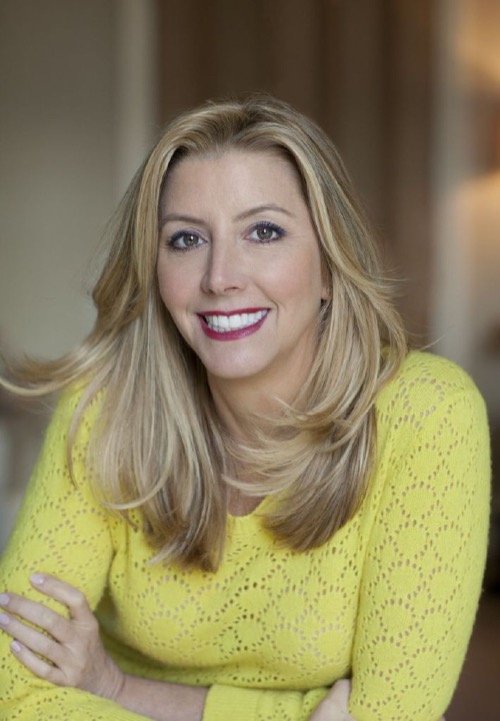
Founder, Spanx · b. 1971 · Clearwater, Florida
Two calls made by hand, not formulas. how we score →
Summary
She built Spanx on five thousand dollars of savings while still working her day job selling fax machines, wrote her own patent to skip a legal bill she couldn't afford, and turned down outside money for two decades.
An unpaid mention from Oprah did more for sales than any ad budget could have. In 2021 she sold a majority stake to Blackstone at $1.2 billion and kept a piece of the company.
How it happened
A comfortable childhood in Clearwater, Florida. Her father was a personal injury attorney and her mother an artist. She wanted to go to law school, failed the LSAT twice, and gave up on it. A brief tryout at Walt Disney World went nowhere either — she was half an inch too short to play Goofy and turned down a chipmunk costume instead.
She spent seven years selling fax machines door-to-door for Danka, working her way up to national sales trainer. Doors got slammed in her face and her card got torn up in front of her at least once a week. She later said cold calling taught her more than anything in college did, and it's what let her walk into hosiery mills that wanted nothing to do with her.
In 1998 she put about $5,000 of her own savings into the idea, wrote the patent application herself from a book instead of paying a lawyer's full rate, and cold-called hosiery mills across North Carolina until one agreed to make it. She never took outside investment to build the company.
A cold pitch to a Neiman Marcus buyer got Spanx onto shelves. Then in November 2000, Oprah Winfrey named it one of her Favorite Things, unpaid, and the product sold out. Spanx grew for the next sixteen years with almost no paid advertising, on press and word of mouth instead.
Twenty-one years self-funded, then a majority stake sold to Blackstone in 2021 at a $1.2 billion valuation. She kept an equity stake and stayed on as executive chair. The catch is the product had to be right, and a bootstrapped consumer brand tops out lower than one built on venture money.
The coded evidence
Thirteen groups, every claim sourcednot established
Not established. Coverage describes the family only as American, with no distinct ethnic identity emphasized in any profile found.
↗ forbes.comRaised Christian; converted to Judaism as an adult after marrying Jesse Itzler. Denomination of upbringing not established.
↗ en.wikipedia.orgA comfortable two-parent household in Clearwater gave her a family home to fall back on, though nothing suggests she needed it during the build.
↗ abajournal.comKept her job as Danka's national sales trainer throughout the roughly two years she spent developing the product, resigning only after the Oprah placement in late 2000 had already proven the business.
↗ cnbc.comThe hardship was imposed, not chosen. There was nothing to fall back on.
No austerity narrative applies either way — she kept a full salary throughout the build, so there was no visible scarcity to code.
↗ cnbc.comFather John Blakely, a personal injury trial attorney; mother Ellen Ford, an artist. A comfortable, professional two-parent household.
Father's occupation confirmed independently; mother's from Wikipedia only.
↗ abajournal.comHer father reportedly asked his children at dinner what they'd failed at that week and treated a "no" as more interesting than a safe yes. It is her own frequently repeated framing of where her tolerance for rejection came from.
Widely repeated across profiles and interviews; treated as her own account.
↗ gobankingrates.comA comfortable Clearwater, Florida household.
↗ abajournal.comClearwater High School, a public school.
↗ en.wikipedia.orgMoved from Clearwater to Atlanta around age 24–25 for the Danka national sales trainer role; developed and launched Spanx there.
↗ cnbc.comCold. She had no industry contacts; a Neiman Marcus buyer agreed to a meeting and Blakely changed into the product in the store restroom to demonstrate it on the spot.
↗ en.wikipedia.orgDanka, an office-equipment company. Seven years selling fax machines door-to-door gave her sales skill, cold-calling resilience, and the salary she saved to start the company — no apparel-industry credibility or contacts.
↗ siliconcanals.comSkill, Capital
Supplied sales skill and the savings that became the first dollar. Not credibility or a network in apparel.
↗ fortune.comCold-called hosiery mills across North Carolina after repeated rejections; one mill owner in Asheboro agreed to produce it after his daughters urged him to. She called it "coming in and disrupting an entire industry."
↗ invent.orgGrew almost entirely without paid advertising until 2016, relying instead on unpaid press and media placements, the Oprah feature chief among them, rather than an ad budget or agency relationships.
↗ invent.org2
A brief stint at Walt Disney World, then seven years at Danka, before founding.
↗ gobankingrates.comBA in communications, Florida State University (1993).
↗ invent.orgDirect four-year degree. She had planned on law school, failed the LSAT twice, and abandoned that path entirely.
↗ abajournal.comAbout $5,000 of her own savings from the Danka sales job, put into developing the product beginning around 1998.
↗ fortune.comIt paid its own way from the start. Revenue came before any outside money.
Reported $4M in first-year sales and $10M in year two, entirely self-funded.
↗ invent.orgNo outside capital for 21 years, funded from operating cash flow and the original $5,000. In October 2021 Blackstone Growth bought a majority stake at a $1.2 billion valuation; Blakely kept a significant equity stake and became executive chair.
↗ blackstone.comPersonal experience. She cut the feet off her own pantyhose to wear under white slacks without visible seams, and the leftover control-top band became the product.
↗ invent.orgWrote her own utility patent application from a book bought at a bookstore, then paid an attorney roughly $700–750 only to review the sections she couldn't finish, instead of a full attorney fee typically quoted around $3,000–5,000.
↗ siliconcanals.comSelf, from savings built up while employed full-time; there was no point at which the household had to absorb a loss.
↗ cnbc.comOprah Winfrey named Spanx one of her "Favorite Things" on 17 November 2000 after Blakely mailed her a sample basket unsolicited. It was not a paid placement or a prior relationship, and the product sold out.
↗ tampabay.comBuilt. Created a new product category, footless control-top shapewear, rather than acquiring an existing brand.
↗ invent.orgConsumer products / apparel
↗ forbes.com1400000000
Forbes real-time estimate for a company that is now majority-owned by Blackstone. Band only.
↗ forbes.comJournalistic estimate
↗ forbes.com2026
↗ forbes.comTwo decades of wealth as an owned, appreciating private company, not salary. The 2021 Blackstone deal realized part of that stake in cash while she retained ongoing equity, so it is now a mix of the two.
↗ cnbc.comForbes named her the youngest self-made female billionaire in 2012; she was on the Time 100 that year, and became the first female billionaire to join the Giving Pledge in 2013. Inducted into the National Inventors Hall of Fame.
↗ invent.orgUncapped
↗ blackstone.comScrappy, Resourceful, Customer obsessed
From her own framing of the story, echoed in press coverage: "I did not have the most experience in the industry or the most money, but I cared the most."
↗ forbes.comPress
↗ fortune.comAfter
↗ tampabay.comAsset
The bootstrapper story is central to the brand and was cited by Blackstone itself in announcing the deal.
↗ blackstone.comThe reputation was deliberately built, through books, press, and PR.
Deliberately built through media appearances and interviews in place of paid advertising.
↗ invent.orgStructural context
The cost-of-failure score comes from this person's own money and circumstances. But who they were in America carried its own weight, the same way their household or income did, and it shaped how hard the path was just as much. That part isn't in the cost-of-failure number. It's here instead.
Startups founded only by women have drawn about 2% of US venture capital, a share that has barely moved in a decade. Raising money as a woman was harder than any one record shows.
↗ techcrunch.comWhite founders are heavily overrepresented among funded companies and top-tier wealth relative to their share of the population, an edge that has nothing to do with a person's own money.
↗ techcrunch.comAmong the people recorded here — women: 68 · White subjects: 114. Representation here is who reached these outcomes, not equal odds of reaching them.
Controlled comparisons
Each holds one thing constant and varies another, so the difference is the point. A list of similar names wouldn't tell you anything.