Shonda Rhimes
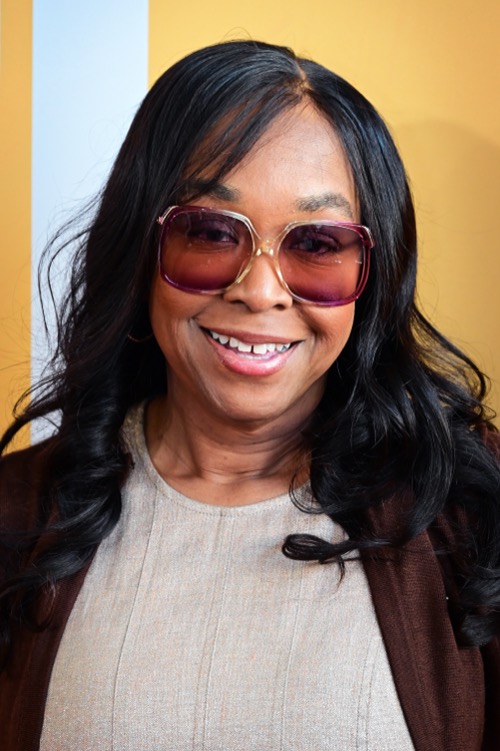
Creator, Grey's Anatomy and Scandal; founder, Shondaland · b. 1970 · Chicago, Illinois
Two calls made by hand, not formulas. how we score →
Summary
Two working parents gave her stability and permission, but no capital and no industry door.
After film school she was broke enough to sell her CDs for gas money before a sold script kept her in Los Angeles. A decade of hit shows made Disney's ABC billions and paid her a fee — the network owned the shows outright. The Netflix deal that followed bought a bigger backend, not a deed.
How it happened
Youngest of six children in Park Forest South, a Chicago suburb. Her father, Ilee Rhimes Jr., was a university administrator who later became chief information officer at USC; her mother, Vera P. Cain, earned a PhD in educational administration in 1991 while raising the family and working as a college professor. Neither parent supplied capital, but both supplied standing, stability, and — by her own account — active encouragement of a creative, unconventional path.
Dartmouth, then an MFA in screenwriting at USC, where she ranked at the top of her class and interned for producer Debra Martin Chase. Out of school she was an unemployed scriptwriter working day jobs — office administrator, then a counselor at a center teaching job skills to people with housing instability — and has said she was broke enough to sell off her CD collection to buy gas. An option on a spec script, "Human Seeking Same," and an HBO writing assignment kept her in Los Angeles rather than pursuing the medical-school backup plan she'd begun to consider.
"Grey's Anatomy" premiered in 2005, grown out of a teenage fascination with hospitals from her own hospital-volunteer years. "Private Practice," "Scandal," and "How to Get Away with Murder" followed, building the Thursday "TGIT" block into a franchise Forbes credits with generating more than $2 billion for Disney. She was reportedly paid around $10 million a year at her peak — a serious fee, and still a fee. ABC Studios, not Rhimes, owned "Grey's Anatomy," "Scandal," and every show under the deal.
In August 2017 she signed an exclusive overall deal with Netflix, ending a 15-year run with ABC Studios in what The New York Times called "a huge blow to ABC and Disney." Financial terms weren't disclosed at signing; later reporting put the initial deal at roughly $100–150 million over four years, negotiated by her agents at ICM Partners and attorney Michael Gendler. Rhimes described the move as trading a network's ownership of her work for "creative freedom" and a bigger share of what Shondaland built.
The 2021 renewal, on undisclosed terms reported by industry trackers at $300–400 million, added new formats and a stake described as "bigger" in Netflix's own language. "Bridgerton" became the most-watched series in the platform's history. Forbes put her net worth at $250 million in 2023. Even so, Netflix — not Shondaland — owns the shows made under the deal; the backend improved, but the underlying asset still isn't hers.
The coded evidence
Thirteen groups, every claim sourcedDescendant; no immigration event in the family record reviewed.
↗ en.wikipedia.orgAttended Marian Catholic High School; denomination-level practice beyond schooling isn't established.
↗ en.wikipedia.orgnot established
Not explicitly documented either way. Both parents held stable professional positions throughout her adult early-career years, which makes some fallback plausible, but no source states she used or could have used one.
↗ en.wikipedia.orgAfter USC, an unemployed scriptwriter working day jobs to get by; she has said she was broke enough to sell her CD collection to buy gas, and considered leaving entertainment for medicine before a script option and an HBO assignment kept her afloat.
↗ dartmouthalumnimagazine.comnot established
The scarcity was real income precarity in her mid-twenties, not staged hardship — but whether a parental fallback existed if it had continued is not established either way.
↗ dartmouthalumnimagazine.comFather, Ilee Rhimes Jr., was a university administrator and later chief information officer at USC, a post he held until 2013. Mother, Vera P. Cain, was a college professor who earned a PhD in educational administration in 1991 while raising six children.
↗ en.wikipedia.orgNeither parent was self-employed.
Both parents held salaried, institutional academic-administration roles.
↗ en.wikipedia.orgMother: PhD, educational administration (1991). Father's specific credential is not established, though his role as a university administrator and later CIO implies advanced education.
↗ en.wikipedia.orgnot established
She attended a private Catholic high school and Dartmouth; no specific parental sacrifice aimed at tuition is documented in the sources reviewed.
↗ en.wikipedia.orgHer father in particular is described as encouraging her creative and artistic pursuits rather than steering her toward a more conventional path.
↗ dartmouthalumnimagazine.comPark Forest South (now University Park, Illinois), a Chicago south suburb.
↗ en.wikipedia.orgMarian Catholic High School, a private Catholic high school in Chicago Heights, Illinois.
↗ en.wikipedia.orgProducer Debra Martin Chase, a mentor who hired her as an intern while she was at USC and later worked with her again on "The Princess Diaries 2." She also worked at Denzel Washington's production company, Mundy Lane Entertainment.
↗ en.wikipedia.org25
Research director on the documentary "Hank Aaron: Chasing the Dream" (1995), her first credited industry work.
↗ en.wikipedia.org10
From first paid industry work (1995) to "Grey's Anatomy" premiering as her own defining show (2005).
↗ en.wikipedia.orgBy the 2017 Netflix move she had run ABC's entire Thursday "TGIT" block for years, a built-in, appointment-viewing audience across three concurrent hit dramas — leverage a new writer never has.
↗ nytimes.comUSC internship under Debra Martin Chase, followed by staff and assignment work — research director on a Peabody-winning documentary, an HBO teleplay, and two studio feature scripts — before her first original pilot.
↗ en.wikipedia.orgLongtime representation at ICM Partners, with entertainment attorney Michael Gendler negotiating the 2017 Netflix deal.
↗ variety.comMFA in screenwriting, USC School of Cinematic Arts (ranked top of her class, Gary Rosenberg Writing Fellowship); BA in English and film studies, Dartmouth College (1991).
↗ en.wikipedia.orgnot established
No diversity or first-generation pipeline program is documented; unlike some people here, her path ran through standard admissions.
↗ en.wikipedia.orgUSC's screenwriting program supplied the internship under Debra Martin Chase that became her first industry mentorship.
↗ en.wikipedia.orgPaid research-director work on a 1995 documentary, followed by New Line Cinema's purchase of a spec feature script and an HBO teleplay assignment in 1999 — professional entertainment income before any of her own shows existed.
↗ en.wikipedia.orgIt paid its own way from the start. Revenue came before any outside money.
A fee-for-work writer and producer throughout; no capital was ever raised.
↗ en.wikipedia.orgReal estate investment, including reported properties in New York City and Connecticut, alongside the ongoing Shondaland production operation.
Specific amounts and dates aren't established.
↗ forbes.comUnder her 15-year ABC Studios deal, Disney owned "Grey's Anatomy," "Private Practice," "Scandal," and "How to Get Away with Murder" outright; Rhimes was paid a creative/producer fee, reportedly around $10 million a year at her peak. The August 2017 Netflix deal ended that arrangement — terms weren't disclosed at signing, though later reporting put it at roughly $100 million (Forbes) to $150 million (aggregator estimate) over four years — and shifted Shondaland toward larger backend profit participation. A 2021 extension, again undisclosed but reported by industry trackers at $300–400 million, added new formats. Netflix, not Shondaland, retains ownership of the shows produced under the deal.
The $100M and $150M figures for the 2017 deal, and the $300–400M figure for 2021, come from different outlets and neither Netflix nor Rhimes has confirmed exact numbers; treat all dollar figures here as band-level estimates, not precise values.
↗ forbes.com"Grey's Anatomy" grew out of her own fascination with hospital environments, which she traces to volunteering at a hospital in high school.
↗ en.wikipedia.orgRhimes and Netflix both framed the 2017 move as a trade of a network's ownership for "creative freedom" — showrunner-level control over what gets made — rather than a trade for outright ownership of the resulting IP, which the streaming platform retains.
↗ nytimes.com1
Income is concentrated in one field — scripted television and streaming, first for a fee, later for fee plus backend — rather than equity stakes taken across unrelated industries.
↗ en.wikipedia.org1
A 2003 ABC pilot about young female war correspondents was turned down by the network before "Grey's Anatomy" sold.
↗ en.wikipedia.orgSelf. She worked day jobs — office administrator, then a counselor at a job-skills center — through the unemployed-scriptwriter years after USC.
↗ en.wikipedia.orgDay-job wages between paid writing assignments; a script option and an HBO assignment arrived before she had to give up on the industry entirely.
↗ dartmouthalumnimagazine.comBuilt her ABC run inside broadcast network television's mid-2000s medical- and political-drama boom; the 2017 move landed inside the early streaming arms race, explicitly framed by both Netflix and the press as a counterpunch to Disney's own upcoming streaming service.
↗ nytimes.comBuilt her signature ABC franchises from original concepts. "Bridgerton," her biggest Netflix hit, is an adaptation of an existing novel series licensed for television rather than an original idea.
↗ en.wikipedia.orgTelevision and streaming production
↗ televisionacademy.com250000000
↗ forbes.comJournalistic estimate
↗ forbes.com2023
↗ forbes.com10000000
Reported estimate of her annual pay under the ABC Studios deal, the figure at the moment she left for Netflix. Her Netflix-era annual income has not been disclosed.
↗ variety.comJournalistic estimate
↗ variety.comTwo decades of fee income, not equity in the shows that produced it. ABC Studios/Disney owned "Grey's Anatomy," "Scandal," and "How to Get Away with Murder" outright while she was paid to create and run them. The Netflix deal increased the fee and added backend profit participation, which is real money but still not ownership of the underlying shows — Netflix holds that, the same structural position Disney held before it.
↗ forbes.comFirst African American woman to create and executive-produce three network dramas that each reached the 100-episode mark; "Bridgerton" became Netflix's most-watched series; named Commander of the Order of the British Empire in 2024 for, among other things, "Bridgerton"'s reported economic impact of more than a quarter of a billion pounds in the UK.
↗ en.wikipedia.orgCapped
Compensation is negotiated fee-plus-backend under overall deals at ABC and then Netflix, not an owned, appreciating equity stake in the underlying shows or platform.
↗ forbes.comProlific, Hitmaker, Meticulous, Boundary pushing
↗ nytimes.comPress
↗ nytimes.comBefore
Established by the "Grey's Anatomy"/"Scandal" run, well before the 2017 Netflix move.
↗ nytimes.comAsset
↗ nytimes.comIn September 2014, New York Times TV critic Alessandra Stanley opened a piece on Viola Davis with the line "When Shonda Rhimes writes her autobiography, it should be called 'How to Get Away With Being an Angry Black Woman,'" intending — by her own later account — to praise Rhimes for undercutting the stereotype. Readers and critics read it as the stereotype itself; the paper's public editor said many called it offensive or racist. The episode is frequently cited as evidence of how a Black female showrunner's success gets narrated differently than a white one's.
↗ en.wikipedia.orgStructural context
The cost-of-failure score comes from this person's own money and circumstances. But who they were in America carried its own weight, the same way their household or income did, and it shaped how hard the path was just as much. That part isn't in the cost-of-failure number. It's here instead.
Across film, music, and digital, ownership and control stay in far fewer women's hands than men's. For one measure, women directed only about 12% of 2023's top-grossing films.
↗ assets.uscannenberg.orgIn the creative and media industries, recognition comes far more easily to underrepresented creators than the ownership it should turn into. Among 2023's top-grossing film directors, for one measure, eight were Black.
↗ assets.uscannenberg.orgAmong the people recorded here — women: 68 · Black subjects: 58. Representation here is who reached these outcomes, not equal odds of reaching them.
Controlled comparisons
Each holds one thing constant and varies another, so the difference is the point. A list of similar names wouldn't tell you anything.