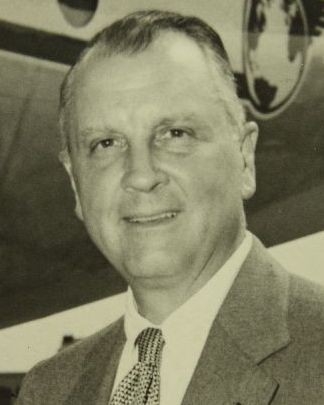
Steve Ells
born Marlon Steven Ells
Founder of Chipotle Mexican Grill · b. 1965 · Indianapolis, Indiana, raised largely in Boulder, Colorado
Two calls made by hand, not formulas. how we score →
Summary
Raised comfortably, the son of a pharmaceutical executive, with an art history degree and a diploma from the Culinary Institute of America, Ells built a cheap, fast burrito shop instead of the fine-dining restaurant he wanted.
An $85,000 loan from his parents funded the first store in 1993; a McDonald's investment from 1998 funded the national expansion that eventually made him a billionaire.
How it happened
Marlon Steven Ells was born September 12, 1965, in Indianapolis, Indiana, and grew up mostly in Boulder, Colorado, where his father worked as a pharmaceutical industry executive. He earned a bachelor's degree in art history from the University of Colorado Boulder, then went east to the Culinary Institute of America in Hyde Park, New York, graduating in 1990.
After culinary school he moved to San Francisco and spent about two years working under chef Jeremiah Tower at Stars, one of the city's defining fine-dining restaurants of the era. He has said the plan was to save enough from a simple, fast concept to eventually bankroll a real fine-dining restaurant of his own.
He asked his parents for $85,000 and opened the first Chipotle in July 1993, in a converted ice cream shop near the University of Denver. It sold more than a thousand burritos a day within a month. He never did open the fine-dining restaurant; the burrito shop was the business.
McDonald's Corporation began investing in Chipotle in 1998, an initial stake that grew into roughly $340 million and, eventually, about 90% of the company. That money took Chipotle from 14 locations to more than 500 in about seven years. The fine-dining training gave Ells a format worth scaling; McDonald's capital is what actually scaled it into a national chain rather than a well-regarded regional one.
Chipotle listed on the New York Stock Exchange under the ticker CMG on January 26, 2006, priced at $22 a share and closing near double that on its first day, one of the strongest restaurant IPOs in years. McDonald's still held about 91% of the company at the offering; Ells' own stake was down to less than 4%, worth roughly $44 million on paper. McDonald's sold down the rest of its stake over the following months, swapping its remaining Chipotle shares for McDonald's stock, and was fully out by October 2006.
Ells ran the company as sole CEO from 1993 until 2009, then shared the title as co-CEO with Monty Moran through 2016. Starting in the second half of 2015, a series of E. coli and norovirus outbreaks tied to Chipotle restaurants sickened hundreds of customers, and the stock lost more than half its value over the following two years. Moran left in December 2016 and Ells became sole CEO again, but the company hired former Taco Bell CEO Brian Niccol to replace him, effective March 5, 2018. Ells stayed on as executive chairman until March 2020, when he left the board entirely.
In April 2020 the Department of Justice fined Chipotle $25 million, the largest food-safety criminal penalty on record at the time, under a deferred prosecution agreement tied to the 2015-2018 outbreaks; no individual, including Ells, was personally charged. Forbes put his net worth at $1 billion in March 2025, on the strength of a remaining stake of roughly 1% plus decades of stock sales and executive pay. In 2023 he launched Kernel, a plant-based fast-food concept built around robotic food prep; the vegan menu underperformed and by 2025 the company was dropping the robots and reworking the format.
The coded evidence
Thirteen groups, every claim sourcedDescendant. No immigration event documented in the sources reviewed.
↗ en.wikipedia.orgEnglish
Inferred from a US-born Indianapolis/Boulder upbringing; not explicitly stated in any source reviewed.
↗ en.wikipedia.orgA comfortable, professionally headed two-parent household with a pharmaceutical-executive father. Nothing in the record suggests he was ever at risk of losing housing; his parents were able and willing to fund an $85,000 restaurant loan outright.
↗ en.wikipedia.orgnot established
No documented salary or stipend covering him personally during the 1993 build separate from the store's own early revenue, which turned profitable quickly.
↗ westword.comnot established
No student debt or other personal debt overhang documented at the time of founding. The $85,000 startup loan is coded under d7 as founding capital, not a personal debt burden.
↗ en.wikipedia.orgnot established
No homelessness, eviction, or comparable instability is documented at any stage.
↗ en.wikipedia.orgnot established
No period of visible poverty is documented, so the voluntary-vs-imposed test doesn't cleanly apply. He worked ordinary restaurant-industry wages as a line cook after culinary school, but from a position of family backing that could fund an entire restaurant on request.
↗ en.wikipedia.orgFather worked as an executive in the pharmaceutical industry; the specific company and title are not established in the sources reviewed. Mother's occupation is not established.
Multiple secondary bios describe the father generically as "a pharmaceutical executive" without naming the company; no primary source for this detail was located.
↗ globalbrandsmagazine.comNeither parent was self-employed.
An executive role at a pharmaceutical company reads as salaried employment rather than self-employment; not explicitly confirmed.
↗ globalbrandsmagazine.comnot established
No account of a parent taking extra work specifically to fund his schooling; a comfortable household made this a non-issue.
↗ en.wikipedia.orgHis parents lent him the full $85,000 needed to open the first Chipotle right out of culinary school, with no business plan and no restaurant-ownership experience behind him. That is active financial sanction of a high-variance path, not just permission.
↗ westword.comBorn in Indianapolis, Indiana; the family relocated to Boulder, Colorado, where he was raised through high school.
↗ en.wikipedia.orgBoulder High School, a public school in Boulder, Colorado.
↗ en.wikipedia.orgIndianapolis to Boulder, Colorado in childhood; Boulder to Hyde Park, New York for culinary school; New York to San Francisco for the Stars apprenticeship; San Francisco to Denver to open the first Chipotle.
↗ en.wikipedia.orgStudents and locals near the University of Denver campus, where the first store opened in a converted ice cream shop in 1993.
↗ westword.comOpened his own restaurant directly rather than being hired into or introduced to an existing chain; no patron or institutional sponsor is documented at founding.
↗ en.wikipedia.org25
Approximate age at the 1990 CIA graduation and entry into professional kitchen work.
↗ en.wikipedia.org3
Roughly the span from the 1990 CIA graduation and Stars apprenticeship to the 1993 Chipotle founding.
↗ en.wikipedia.orgAfter graduating the Culinary Institute of America in 1990, he spent about two years working under chef Jeremiah Tower at Stars in San Francisco, a well-regarded fine-dining restaurant of the period.
↗ en.wikipedia.orgBA in art history, University of Colorado Boulder; culinary diploma, Culinary Institute of America, Hyde Park, New York, graduated 1990.
↗ en.wikipedia.orgnot established
Not established; a comfortable, professional household makes family-funded tuition likely but this is not explicitly confirmed in the sources reviewed.
↗ en.wikipedia.orgDirect four-year degree followed by a specialized culinary-school credential, both apparently family-funded.
↗ en.wikipedia.org$85,000 borrowed from his parents, used to open the first Chipotle near the University of Denver in July 1993.
Widely repeated secondary sources specify the loan came from his father; the Denver alt-weekly source used here, closer to the original reporting, says "his parents." Treated as a family loan either way.
↗ westword.comAn $85,000 loan from his parents at founding in 1993; whether it was formally repaid is not established.
↗ westword.comIt paid its own way from the start. Revenue came before any outside money.
The first store sold over a thousand burritos a day within a month of opening; it was a cash-generating retail business from the start.
↗ westword.comMcDonald's became an outside investor in 1998 with an initial stake reported at $50 million, later increasing its holding to roughly 90% of the company through further investment.
↗ finance.yahoo.comMcDonald's functioned as more than a passive check: it supplied operational infrastructure, real-estate and site-selection experience, and back-office scale that let Chipotle expand quickly, though Ells has said he resisted McDonald's push toward a breakfast menu and drive-thru windows.
↗ finance.yahoo.comFounded on a single $85,000 family loan and grown through reinvested restaurant revenue for its first five years. From 1998, McDonald's Corporation invested growing amounts of outside equity, eventually about $340 million total, that funded expansion from 14 stores to more than 500 by the time of the 2006 IPO. Ells' own ownership was diluted to under 4% by the IPO; McDonald's held about 91%.
↗ finance.yahoo.comPersonal experience. He wanted to save enough from a simple, fast concept to eventually fund a fine-dining restaurant of his own, applying kitchen technique learned under Jeremiah Tower to a stripped-down burrito format instead.
↗ en.wikipedia.orgAt the January 2006 IPO, McDonald's held roughly 91% of the company through Class B shares; Ells' economic stake was under 4%, worth an estimated $44 million on paper. He continued to run the company as CEO throughout McDonald's ownership period despite holding a small minority stake.
↗ finance.yahoo.com0
The 1993 Chipotle founding was his first and only venture; no prior failed attempt is documented.
↗ en.wikipedia.orgHis parents, via the founding loan; the store was profitable within its first month and no loss is documented.
↗ westword.comA US fast-food market still built almost entirely around drive-thru burger and pizza chains; "fast casual," a higher-quality, assembly-line format between fast food and sit-down dining, barely existed as a category in 1993.
↗ en.wikipedia.orgDenver, Colorado, near the University of Denver campus, close to where he grew up in Boulder.
↗ westword.comBuilt. He created the restaurant, menu, and assembly-line format himself rather than acquiring or franchising an existing concept.
↗ en.wikipedia.orgFast-casual restaurant industry
↗ en.wikipedia.org1000000000
Forbes named Ells a new billionaire on its 2025 World's Billionaires list, crediting roughly $300 million pretax accumulated from stock sales and executive pay plus a remaining roughly 1% Chipotle stake that has appreciated sharply (Chipotle shares up about 250% since he left the board in 2020). This crosses the coded.magnitude threshold into the $1-10B band; earlier in his career, and for most of his tenure, his personal net worth sat more clearly in the $100M-1B band.
↗ forbes.comJournalistic estimate
↗ forbes.com2025
↗ forbes.com25100000
2013 co-CEO compensation, reported by Wikipedia's "controversies" section as exceeding compensation paid that year to the CEOs of Ford, Boeing, and AT&T; drawn from Chipotle proxy-statement disclosures.
↗ en.wikipedia.orgProxy statement
↗ en.wikipedia.orgA mix of both: large annual executive compensation as CEO and co-CEO, on top of an equity stake that was diluted early by McDonald's investment and the 2006 IPO but appreciated substantially over three subsequent decades as Chipotle stock rose.
↗ forbes.comCredited with pioneering the "fast casual" restaurant category and the "Food with Integrity" sourcing standards Chipotle popularized, influencing how a generation of restaurant chains approached ingredient sourcing and menu transparency. Founded Kernel in 2023, a plant-based, robotics-assisted fast-food concept that underperformed and was being reworked as of 2025.
↗ restauranttechnologynews.comUncapped
↗ forbes.comIn April 2020 the US Department of Justice, with the FDA, announced a $25 million criminal fine against Chipotle under a three-year deferred prosecution agreement, the largest food-safety criminal penalty on record at the time. The charge concerned adulterated food and insufficient enforcement of sick-employee policies tied to a series of foodborne-illness outbreaks (including E. coli and norovirus) between 2015 and 2018. No individual, including Ells, was personally charged.
↗ foodsafetynews.comAfter
The outbreaks (2015-2018) and the 2020 fine both came roughly a decade after the 2006 IPO that established his wealth and position.
↗ foodsafetynews.comUnrelated
The outbreaks and the resulting fine damaged the brand and contributed to his 2018 ouster as CEO; they did not produce the advantage that built his fortune, which was already substantially in place by the 2006 IPO.
↗ foodsafetynews.comCrime
A federal criminal charge, resolved through a deferred prosecution agreement rather than a conviction.
↗ foodsafetynews.comFine absorbed
The $25 million penalty was paid by the corporation; no personal fine or liability attached to Ells.
↗ foodsafetynews.comBuilt "Food with Integrity" sourcing standards that raised ingredient quality expectations across the industry, while Chipotle also drew criticism during his tenure for high executive pay (his 2013 co-CEO compensation reportedly exceeded that of the CEOs of Ford, Boeing, and AT&T) alongside ordinary fast-casual crew wages, and for the food-safety lapses that led to the 2020 federal fine.
↗ en.wikipedia.orgPerfectionist, Food quality driven, slow to respond publicly during crisis
↗ fool.comPress
↗ fool.comBefore
His reputation as a food-quality pioneer formed through the 1990s and 2000s, well before the 2015-2018 crisis that damaged it.
↗ en.wikipedia.orgMixed
An asset for decades as the face of a category-defining sourcing standard; a liability during 2015-2018 as investors and media blamed him personally for a slow, defensive crisis response.
↗ fool.comIndustry and food-media audiences long credited him as the inventor of "fast casual" and a pioneer of ingredient-sourcing transparency. Investors and much of the business press turned sharply critical after 2015, faulting his handling of the outbreaks and crediting his 2018 replacement, Brian Niccol, with the brand's eventual recovery.
↗ fool.comHe left Chipotle's board entirely in March 2020 rather than staying on through the recovery Niccol led. His post-Chipotle venture, Kernel, drew fresh press interest as an innovator story starting in 2023, but by 2025 its plant-based, robotics-heavy format was reported to be underperforming and undergoing a rework.
↗ foodondemand.comStructural context
The cost-of-failure score comes from this person's own money and circumstances. But who they were in America carried its own weight, the same way their household or income did, and it shaped how hard the path was just as much. That part isn't in the cost-of-failure number. It's here instead.
Men founded the companies that took nearly all the venture funding and almost every top outcome, a tailwind that never shows up in one person's own circumstances.
↗ techcrunch.comWhite founders are heavily overrepresented among funded companies and top-tier wealth relative to their share of the population, an edge that has nothing to do with a person's own money.
↗ techcrunch.comAmong the people recorded here — men: 115 · White subjects: 74. Representation here is who reached these outcomes, not equal odds of reaching them.
Controlled comparisons
Each holds one thing constant and varies another, so the difference is the point. A list of similar names wouldn't tell you anything.