Travis Kalanick
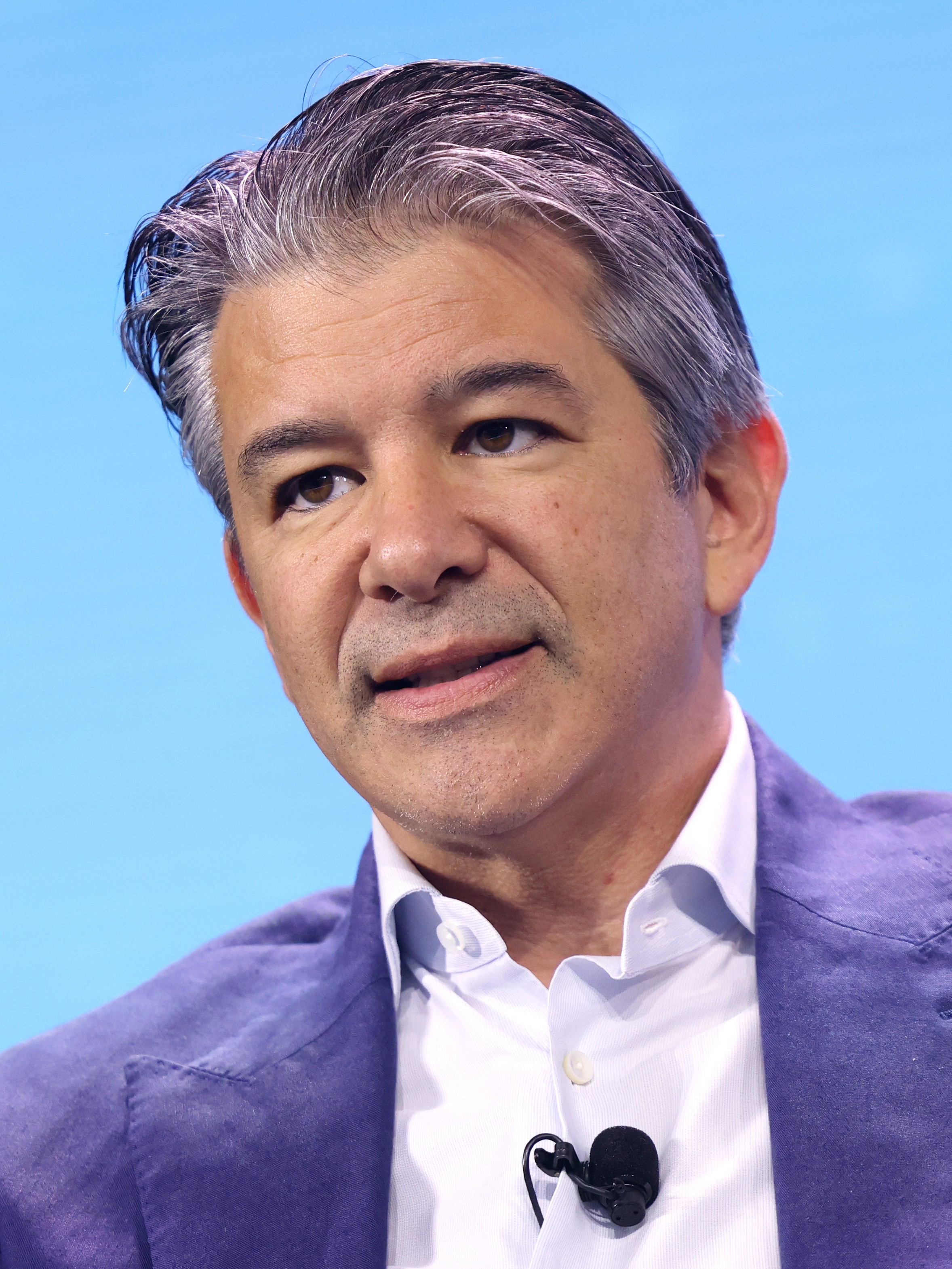
born Travis Cordell Kalanick
Co-founder and former CEO of Uber; founder and CEO of CloudKitchens (Atoms) · b. 1976 · Los Angeles, California (Northridge)
Two calls made by hand, not formulas. how we score →
Summary
Raised middle-class in Los Angeles by a civil engineer and an advertising saleswoman, he dropped out of UCLA, survived a bankrupt startup and a distressed one that sold for about $19 million, then co-founded Uber in 2009 and built it into a global ride-hailing company.
A wave of documented 2017 controversies forced his resignation as CEO; he later returned as the founder of CloudKitchens.
How it happened
Born August 6, 1976, in Los Angeles, and raised in Northridge in the San Fernando Valley. His father, Donald Kalanick, was a civil engineer for the City of Los Angeles; his mother, Bonnie Kalanick, worked in advertising sales for the Los Angeles Daily News. He grew up in a stable, ordinary two-parent household and attended Granada Hills Charter High School.
He enrolled at UCLA to study computer engineering and business economics, then dropped out in 1998 to work full time on Scour, a peer-to-peer file-sharing and search startup where he handled sales and marketing. In 2000 the major movie, music, and publishing trade groups filed a massive copyright infringement suit against Scour, and the company filed for bankruptcy that September.
He co-founded Red Swoosh, a peer-to-peer content delivery company, in 2001, calling it his answer to the copyright fights that had killed Scour. The company survived years of cash-flow strain before Akamai Technologies acquired it in 2007 for about $19 million; Kalanick cleared roughly $2 million after taxes, his first real money.
Garrett Camp, a co-founder of StumbleUpon, had the idea for an app-based car service and recruited Kalanick, who came in first as an advisor before the two co-founded UberCab in 2009. Ryan Graves ran the company as its first CEO for about ten months before Kalanick took over in 2010. From there he drove Uber's expansion into hundreds of cities worldwide, often ahead of local taxi regulation, through repeated large venture rounds that made it one of the most valuable startups in the world.
In February 2017, a former Uber engineer, Susan Fowler, published an on-the-record account alleging sexual harassment and describing a workplace culture that, in her telling, mishandled her complaints to HR; reporting at the time said Kalanick had been aware of harassment complaints. Uber commissioned an investigation led by former US Attorney General Eric Holder, which led to the firing of more than 20 employees. The same year brought reporting on Greyball, a tool Uber used to identify and evade regulators and law enforcement in cities where it was operating without authorization; a leaked dashcam video of Kalanick arguing with an Uber driver over falling fares, for which he apologized by email, saying he needed to "grow up"; and Waymo's lawsuit alleging Uber's self-driving unit was built on stolen trade secrets. Under pressure from five major investors led by Benchmark Capital, he resigned as CEO on June 20, 2017.
He kept his Uber board seat until December 2019, selling about 90% of his remaining shares in the weeks before for roughly $2.5 billion pretax. In 2018 he started a venture fund, 10100, and then founded City Storage Systems, later renamed Atoms, whose CloudKitchens division builds and operates delivery-only "ghost kitchens"; he has run it as CEO since.
Forbes put his net worth at about $3.6 billion as of March 2026, drawn mainly from his realized Uber proceeds and his stake in Atoms.
The coded evidence
Thirteen groups, every claim sourcedMulti-generational American; no recent immigration documented in the family line.
↗ en.wikipedia.orgnot established
Not established. His parents' families carry Catholic and Jewish heritage respectively, but no practiced childhood religion is documented in sources reviewed.
↗ en.wikipedia.org0
No documented gap out of the workforce across Scour, Red Swoosh, angel investing, and Uber.
↗ en.wikipedia.orgA stable, middle-class two-parent household in Los Angeles on a city civil engineer's income. No housing instability is documented at any point in his life.
↗ en.wikipedia.orgBy the time he co-founded Uber in 2009 he had roughly $2 million net from the 2007 Red Swoosh sale to Akamai and several years of angel investing from his San Francisco apartment, giving him a personal capital cushion going into the venture that produced his wealth.
↗ en.wikipedia.orgnot established
No homelessness, food insecurity, or comparable instability is documented at any point.
↗ en.wikipedia.orgFather a civil engineer for the City of Los Angeles; mother in advertising sales for the Los Angeles Daily News.
↗ en.wikipedia.orgNeither parent was self-employed.
↗ en.wikipedia.org3
Two half-sisters and a younger brother are mentioned in secondary profiles; birth order and exact family structure are not fully confirmed.
↗ en.wikipedia.orgnot established
No documented account of a specific family sacrifice aimed at tuition.
↗ en.wikipedia.orgNorthridge, a middle-class San Fernando Valley neighborhood of Los Angeles.
↗ en.wikipedia.orgGranada Hills Charter High School, a public high school, then UCLA, a public university, for computer engineering and business economics.
↗ en.wikipedia.orgLos Angeles (childhood and UCLA) to San Francisco around the Scour and Red Swoosh years, where he stayed to build Uber and, later, Atoms — a standard in-state move to a technology hub rather than a family migration.
↗ en.wikipedia.orgGarrett Camp, a co-founder of StumbleUpon who had already sold that company to eBay, originated the idea for an app-based car service and brought Kalanick in, first as an advisor.
↗ en.wikipedia.orgUberCab was co-founded with Garrett Camp in 2009. Ryan Graves served as the company's first CEO for about ten months before Kalanick assumed the role in 2010.
↗ en.wikipedia.orgnot established
He was self-employed or a founder across nearly his entire career (Scour, Red Swoosh, angel investing, Uber, Atoms); a conventional employer count doesn't apply cleanly.
↗ en.wikipedia.orgnot established
No degree completed. Attended UCLA for computer engineering and business economics, then dropped out in 1998 to work at Scour full time.
↗ en.wikipedia.orgPublic university, left without a degree, directly into startup work rather than a return to school.
↗ en.wikipedia.orgRoughly $2 million net from the 2007 sale of Red Swoosh to Akamai for about $19 million, plus several years of angel investing from his San Francisco apartment, funded his early involvement in what became Uber.
↗ en.wikipedia.orgIt needed capital up front, before it earned anything.
Uber raised outside venture capital early and repeatedly well ahead of company-wide profitability.
↗ en.wikipedia.orgHis Red Swoosh/Akamai proceeds and angel-investing gains gave him personal capital and standing in the San Francisco startup scene before Uber's first institutional round.
↗ en.wikipedia.orgBenchmark Capital led an $11 million Series A in February 2011 for roughly a 20% stake, valuing Uber at about $50 million; a $32 million Series B followed later that year, and Google Ventures put in $250 million in 2013 at a $3.5 billion valuation.
↗ en.wikipedia.orgUber raised repeated large venture rounds rather than growing from revenue; new investors' shares reportedly carried a tenth of the voting power of the shares held by Kalanick, Camp, and Graves, giving Kalanick outsized control relative to his economic stake through most of Uber's private years.
↗ en.wikipedia.orgAfter his 2017 resignation he redeployed Uber-derived capital into a new venture fund, 10100, in 2018, then $150 million of that fund into City Storage Systems (later Atoms), which he has run as CEO since.
↗ en.wikipedia.org1
Scour, his first venture, filed for Chapter 11 bankruptcy in 2000 after a mass copyright lawsuit from major entertainment and publishing trade groups.
↗ en.wikipedia.orgnot established
Not clearly established who bore Scour's losses when it went bankrupt.
↗ en.wikipedia.orgRed Swoosh, founded within about a year of Scour's collapse, sustained him between that failure and his first real payday at Akamai in 2007.
↗ en.wikipedia.orgFounded after the 2008 financial crisis, in the window when smartphones and GPS had just become ubiquitous enough to support an on-demand, location-based car service, and while local taxi and livery regulation in most cities hadn't yet caught up to that possibility.
↗ en.wikipedia.orgSan Francisco, where UberCab was founded and where he had been based since the Scour and Red Swoosh years.
↗ en.wikipedia.orgIn October 2010, after San Francisco regulators issued a cease-and- desist order, Kalanick directed the company to keep operating and rebranded from UberCab to Uber; the company went on to launch in many cities ahead of, or in open conflict with, local taxi and livery regulation, a gap that has since closed in most major markets.
↗ en.wikipedia.orgBuilt from scratch, alongside Garrett Camp and Ryan Graves, rather than acquiring an existing car-service business.
↗ en.wikipedia.org10
From Uber's 2009 founding through his final share sale around December 2019, including the two-and-a-half years after he stepped down as CEO but stayed a shareholder and board member.
↗ en.wikipedia.orgRide-hailing and mobility technology (Uber); ghost kitchens and real estate technology (CloudKitchens/Atoms)
↗ en.wikipedia.org3600000000
Forbes real-time tracker, last updated March 10, 2026, ranked around #1,200 globally. Composition is not fully itemized by Forbes; drawn mainly from his realized Uber share sales and an estimate of his Atoms stake, the largest single unknown in the figure since Atoms' last disclosed valuation (2022) predates the broader venture-market reset. Band figure only.
↗ forbes.comJournalistic estimate
↗ forbes.com2026
↗ forbes.comnot established
No proxy-statement-grade compensation figure is available; Uber was private throughout his tenure as CEO.
↗ en.wikipedia.orgHis Uber stake is fully realized: he sold roughly 90% of his remaining shares for about $2.5 billion pretax in late 2019 and left the board that December. His stake in Atoms/CloudKitchens remains illiquid, private-company equity.
↗ en.wikipedia.orgAlmost entirely founder equity rather than salary, first through Uber and now through Atoms.
↗ en.wikipedia.orgSubject of Mike Isaac's book "Super Pumped: The Battle for Uber" (2019) and the Showtime series it inspired (2022), in which he was portrayed by Joseph Gordon-Levitt — a dramatization he did not control.
↗ en.wikipedia.orgUncapped
↗ en.wikipedia.orgReporting in March 2017 described a tool called Greyball, which Uber used to identify and route around regulators and law enforcement in cities where its service ran afoul of local licensing rules; the practice was examined by the city of Portland, Oregon and reportedly reviewed by the US Department of Justice. No criminal charges against Kalanick personally are documented in sources reviewed.
↗ en.wikipedia.orgWaymo sued Uber in 2017 alleging its self-driving unit, acquired via the Otto/Ottomotto deal, was built on trade secrets a former Google engineer, Anthony Levandowski, had taken from Waymo. Uber settled in February 2018, five days into trial, by paying Waymo roughly 0.34% of its own equity, worth about $245 million at the time, without admitting wrongdoing.
↗ bloomberg.comIn August 2017, Benchmark Capital, an early Uber investor and board member, sued Kalanick alleging fraud, breach of contract, and breach of fiduciary duty tied to board control. The case moved to arbitration and Benchmark withdrew it in January 2018 to clear the way for SoftBank's investment in the company.
↗ en.wikipedia.orgA dashcam video that circulated in February 2017 showed Kalanick arguing with an Uber driver, Fawzi Kamel, over falling fares. Kalanick apologized by email to Uber staff afterward, saying he needed to "grow up" and that he owed the driver an apology.
↗ en.wikipedia.orgDuring
The 2017 events occurred while Uber's valuation and his wealth were still actively compounding, well before his 2019 share sale.
↗ en.wikipedia.orgIncidental
Reported and disputed among observers. The documented HR and culture failures around Susan Fowler's account are best read as incidental to Uber's valuation, which rested on network effects, capital, and market position rather than the harassment complaints themselves. Greyball and the aggressive-expansion posture are more contested: some coverage frames regulatory evasion as having accelerated Uber's entry into resistant cities, which would make it closer to instrumental. Coded conservatively here as incidental, with that caveat on the record.
↗ en.wikipedia.orgCivil wrong
The Waymo matter settled as a civil trade-secrets dispute. Other 2017 episodes span a range — Greyball sits closer to a regulatory and terms-of-service gray area, and no crime was charged against Kalanick personally in any of them.
↗ en.wikipedia.orgFine absorbed
The Waymo settlement and Uber's separate $7 million 2017 settlement of gender-discrimination and harassment claims were both paid by the company. No personal fine, liability, or criminal consequence for Kalanick is documented.
↗ en.wikipedia.orgFollowing Susan Fowler's February 2017 account and the Holder-led investigation into Uber's culture, the company fired more than 20 employees and separately paid about $7 million to settle gender- discrimination and harassment claims from hundreds of current and former employees. The episode is widely characterized in press coverage as evidence of an aggressive, growth-at-all-costs culture under Kalanick's leadership that HR and management structures failed to check.
↗ en.wikipedia.orgaggressive, win-at-all-costs operator, combative and defiant toward regulators, visionary but reckless steward of company culture (critics), relentless negotiator and fundraiser
↗ en.wikipedia.orgPress
↗ en.wikipedia.org4
Wikipedia's sourcing, the Holder-report-driven coverage, Mike Isaac's reporting and book, and Forbes' ongoing profile are among the independently sourced accounts reviewed here.
↗ en.wikipedia.orgAfter
Uber's core valuation and his personal wealth were already substantially built by 2016-2017, on the strength of years of expansion and fundraising, before the 2017 reporting crystallized his current public reputation.
↗ en.wikipedia.orgMixed
An asset through most of Uber's private years — the combative, fast-moving persona helped win funding rounds and city-by-city expansion fights. A liability by 2017, when the same reputation gave investors reason to force him out, and it has not been fully rehabilitated since, even as institutional investors like Microsoft and Saudi Arabia's Public Investment Fund have backed his subsequent company.
↗ en.wikipedia.orgThe reputation accrued from behaviour rather than being manufactured.
His public image reads as accrued from reported conduct and press coverage rather than a deliberately built books-and-speaking-circuit brand; he has kept a comparatively low public profile since 2017.
↗ en.wikipedia.orgMike Isaac's book "Super Pumped: The Battle for Uber" (2019) and the Showtime series it inspired (2022), in which Joseph Gordon-Levitt played Kalanick, shaped a substantial share of public perception of him and were not made with his control or cooperation.
↗ en.wikipedia.orgPublic perception after 2017 was sharply negative, driven by the Fowler account, Greyball, and the driver-argument video. Institutional investors read it differently: Microsoft and Saudi Arabia's Public Investment Fund both put money into City Storage Systems/CloudKitchens after his Uber exit, suggesting a more forgiving assessment among counterparties willing to back him again than among the general public.
↗ en.wikipedia.orgHe has continued operating as a founder and CEO at Atoms/CloudKitchens, which has raised large rounds since 2018, indicating a real operating and financial recovery. His public reputation from the Uber era remains largely fixed to the 2017 events rather than substantially rehabilitated.
↗ en.wikipedia.orgStructural context
The cost-of-failure score comes from this person's own money and circumstances. But who they were in America carried its own weight, the same way their household or income did, and it shaped how hard the path was just as much. That part isn't in the cost-of-failure number. It's here instead.
Men founded the companies that took nearly all the venture funding and almost every top outcome, a tailwind that never shows up in one person's own circumstances.
↗ techcrunch.comWhite founders are heavily overrepresented among funded companies and top-tier wealth relative to their share of the population, an edge that has nothing to do with a person's own money.
↗ techcrunch.comAmong the people recorded here — men: 169 · White subjects: 114. Representation here is who reached these outcomes, not equal odds of reaching them.
Controlled comparisons
Each holds one thing constant and varies another, so the difference is the point. A list of similar names wouldn't tell you anything.