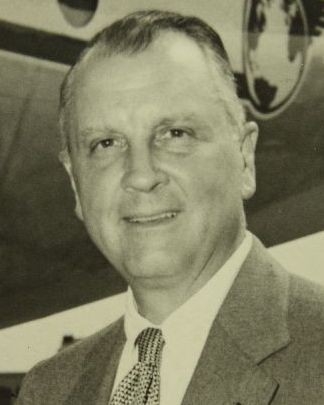
Tristan Walker
Founder and CEO, Walker & Company Brands (Bevel) · b. 1984 · Queens, New York City
Two calls made by hand, not formulas. how we score →
Summary
His father was murdered when he was three, and he grew up in Queens public housing on a mother's income that dipped into welfare.
A scholarship got him to boarding school, then Wall Street and an a16z fellowship got him into Silicon Valley, where he built a grooming company around a problem the industry ignored and sold it to Procter & Gamble in 2018. What he personally kept was never made public.
How it happened
Born in Queens in 1984, the youngest of three. His father was shot and killed when he was around three or four years old, and his mother raised him afterward on her own, working multiple jobs through stretches of public assistance while the family lived in public housing.
A scholarship sent him to the Hotchkiss School, an elite Connecticut boarding school, where he later said he saw "how the other half lived" for the first time, attending class alongside Rockefellers and Fords. He finished an economics degree at SUNY Stony Brook in three years as class valedictorian, then traded energy derivatives at Lehman Brothers and J.P. Morgan, one of few Black men on the floor — before a layoff arrived the same week as his acceptance to Stanford's business school.
He emailed Foursquare co-founder Dennis Crowley eight times before getting a meeting, then flew to New York unannounced. He joined as employee No. 3, ran business development while finishing his MBA, and in 2012 became Andreessen Horowitz's first Black entrepreneur-in-residence, with the standard six to nine months to find an idea.
He'd hated shaving since his first attempt at fifteen left his face covered in razor bumps, a problem that affects a large share of Black men and gets no attention from mainstream grooming brands. Investors mostly didn't get it — he later said the market looked small to people who'd never had the problem — but he built Bevel around it anyway, betting that an ignored market was a market, not a limit.
Walker & Company raised roughly $40 million from Andreessen Horowitz, Google Ventures, Institutional Venture Partners, and individual backers including Magic Johnson and Nas. Procter & Gamble bought the company in December 2018 on undisclosed terms — a person familiar with the deal told Recode that investors recovered most, but not all, of what they'd put in. Walker stayed on as CEO, the company moved its headquarters from Palo Alto to Atlanta, and he also built CODE2040, a nonprofit placing Black and Latino engineering students in tech internships.
The coded evidence
Thirteen groups, every claim sourcedDescendant, US-born multiple generations back
↗ ebsco.comNone documented. The family lived in public housing in Queens with stretches on welfare; no family property, savings, or co-signer is referenced anywhere in his own account of the period.
Absence of evidence rather than a documented "none" — but nothing in any account suggests a fallback existed.
↗ usatoday.comBy the time he became an a16z entrepreneur-in-residence in 2012, he had several years of Wall Street trading income and three years of Foursquare salary and equity behind him. That personal cushion, not family money, is what let him take an unpaid-idea-stage fellowship.
↗ bloomberg.comThe hardship was imposed, not chosen. There was nothing to fall back on.
Public housing and welfare in childhood were imposed conditions, not a chosen austerity — there was no standing family home to return to.
↗ usatoday.comHis father's occupation before his death isn't documented in available sources. His mother worked multiple jobs to support the family, with periods of public assistance.
↗ usatoday.comPublic housing in Queens through early childhood; the family relocated to the Flushing neighborhood of Queens around age six.
↗ ebsco.comHis father was shot and killed when Walker was young — sources give his age as three or four. His mother raised him alone afterward.
EBSCO Research Starters gives age three; USA Today (2014) gives age four. Both agree the death occurred in early childhood and that his mother became the sole parent.
↗ ebsco.comHas spoken on the record about being "raised in Queens projects with bouts of welfare," and press accounts consistently describe his father's killing when he was a small child and his mother raising him and his siblings alone afterward. He has attributed his early, single-minded drive to "become as wealthy as possible as quickly as possible" directly to this upbringing.
Self-disclosed and heavily documented across multiple outlets; no third party is named or implicated, so nothing here requires sequestering.
↗ bloomberg.comNew York City public schools (P.S. 214 and a public junior high) through age fourteen, then a full scholarship to the Hotchkiss School, an elite private boarding school in Lakeville, Connecticut, class of 2002.
↗ ebsco.comQueens public housing to Flushing, Queens (around age six); Flushing to Lakeville, Connecticut for boarding school (Hotchkiss); Stony Brook, New York for college; New York City for Wall Street; Palo Alto/Menlo Park, California for Stanford, Foursquare-adjacent work, and Andreessen Horowitz; and Atlanta, Georgia, where the company relocated in 2018.
↗ bloomberg.comHe has described searching the "ethnic" shelf at a drugstore for grooming products and finding packaging aimed at an older, narrower idea of Black consumers, calling it "an experience that should not exist." Razor bumps disproportionately affecting men with coarse or curly hair, a problem he'd lived with since his first shave at fifteen, became the direct basis for Bevel — friction he experienced personally became the market thesis rather than a side note to it.
↗ bloomberg.comFoursquare co-founder Dennis Crowley, who agreed to meet only after Walker emailed him eight times and then flew to New York unannounced. Crowley set a test, sign 30 local businesses in a month, and Walker signed roughly 300 in about a week.
↗ usatoday.comAndreessen Horowitz's entrepreneur-in-residence program, 2012-13, which gave him six to nine months and a stipend to find and develop a company idea before he settled on Walker & Company.
↗ gsb.stanford.eduCapital, Credibility, Network
a16z funded the EIR period, later invested directly in the company, and lent its name to early fundraising conversations. No evidence it supplied the underlying idea, which he attributes to his own life.
↗ gsb.stanford.eduBoth his entry to Foursquare (repeated unsolicited emails, then an unannounced flight to New York) and his selection as an a16z EIR were built through direct, cold approaches rather than an existing connection into venture capital or tech.
↗ usatoday.comMBA, Stanford Graduate School of Business, 2010
↗ bloomberg.comWorked full time as Foursquare's employee No. 3 and director of business development during his second year at Stanford GSB, alongside his coursework.
↗ usatoday.comNYC public elementary and junior high, a scholarship to an elite private boarding school (Hotchkiss), a direct in-state public university degree (SUNY Stony Brook, three years, valedictorian), then an elite MBA (Stanford GSB).
↗ ebsco.comHotchkiss and Stanford GSB gave him his first sustained proximity to wealth and to the Silicon Valley and venture networks he later drew on — a network built through scholarship and admission rather than inherited.
↗ bloomberg.comYears of Wall Street trading income (Lehman Brothers, J.P. Morgan, 2005-08) and Foursquare salary and equity (2009-12) built the personal financial base that let him take an unpaid idea-stage fellowship at Andreessen Horowitz rather than needing an immediate paycheck.
↗ bloomberg.comRoughly $6.9M Series A by late 2014 ($9.3M raised to date at that point), a $24M Series B in September 2015 (bringing the total to $33.3M), and further rounds bringing total funding to nearly $40M by the time of the 2018 acquisition.
↗ techcrunch.comIndividual investors included Magic Johnson, John Legend, and rapper Nas (through QueensBridge Venture Partners) alongside institutional backers Andreessen Horowitz, Institutional Venture Partners, Upfront Ventures, and Google Ventures.
↗ techcrunch.comOutside venture capital funded the company throughout — roughly $40M raised across multiple rounds before the 2018 sale to Procter & Gamble. No evidence he retained majority ownership at exit; standard venture dilution across that many rounds makes retained majority unlikely, and deal terms were never disclosed.
↗ vox.comHis own decades-long frustration with razor bumps from shaving with coarse or curly hair, a problem he says mainstream grooming brands had never addressed despite affecting a large share of Black men and a smaller share of other groups.
↗ cnbc.comSaid on the record that fundraising was harder than typical because most of the investors he pitched "had no context about the problems we were hoping to solve" — the razor-bump issue affects up to 80% of Black men, he said, "but the folks I was pitching weren't black men and women."
↗ usatoday.comRoughly fifteen years passed between his first disastrous shave around age fifteen and Bevel's 2013 launch, during which he pursued Wall Street trading and then a tech career before circling back to solve the problem himself.
↗ npr.orgThe Andreessen Horowitz EIR program gave him roughly six to nine months to land on and validate a company concept before committing.
↗ gsb.stanford.eduFounded in 2013 during the rise of direct-to-consumer subscription grooming (Dollar Shave Club, founded 2011, was later acquired by Unilever for $1B in 2016), and about a year before Silicon Valley's 2014-15 wave of public diversity reports made "underserved multicultural consumer" a recognized VC talking point — he was pitching the thesis before that language existed.
↗ usatoday.comBuilt Bevel from scratch in 2013; did not acquire an existing brand or company.
↗ cnbc.comMoved the company's headquarters from Palo Alto to Atlanta in 2018 after the P&G deal, explicitly because Atlanta was "where Black people actually live," where the company's largest customer base resided, where talent and living costs were more affordable, and where he wanted to raise his family — a deliberate move away from the Silicon Valley cluster rather than toward it.
↗ vox.comConsumer health and beauty (grooming products)
↗ cnbc.comnot established
Not established. Forbes does not maintain a tracked profile for him (the profile URL returns a 404). Several content-farm sites circulate an unsourced "~$75M" figure with no disclosed methodology; those are not used here. No filing, equity disclosure, or credible journalistic estimate of his personal net worth exists in the public record.
↗ forbes.comThe P&G deal terms were never disclosed. A person familiar with the transaction told Recode that investors recovered most, but not all, of the nearly $40M they had put in — meaning the sale price was likely in the $20-40M range and was not, by venture standards, a standout financial outcome. What Walker personally realized from it, after several rounds of dilution, has never been reported.
↗ vox.comBecame the first Black CEO of a Procter & Gamble subsidiary in the company's 180-year history, continuing to run Walker & Company under P&G ownership. Also founded and chairs CODE2040, which places Black and Latino engineering students in tech internships, and sits on the boards of Foot Locker and Shake Shack.
↗ gsb.stanford.eduUncapped
An equity outcome in structure, though the disclosed deal signals were modest — this describes how the money was structured, not its size.
↗ vox.comAuthentic, Mission driven, Persistent
From on-record characterizations by early backers, e.g. LivingSocial co-founder and angel investor Aaron Batalion.
↗ techcrunch.comCounterparties
↗ techcrunch.comBefore
His reputation as a rising, mission-driven Silicon Valley founder was established by 2014 press coverage, well before the 2018 acquisition.
↗ usatoday.comAsset
↗ gsb.stanford.eduStructural context
The cost-of-failure score comes from this person's own money and circumstances. But who they were in America carried its own weight, the same way their household or income did, and it shaped how hard the path was just as much. That part isn't in the cost-of-failure number. It's here instead.
Men founded the companies that took nearly all the venture funding and almost every top outcome, a tailwind that never shows up in one person's own circumstances.
↗ techcrunch.comBlack-founded startups got roughly 0.5% of US venture funding in 2023, while Black Americans are about 14% of the population. That gap holds no matter where a founder personally started.
↗ techcrunch.comAmong the people recorded here — men: 115 · Black subjects: 58. Representation here is who reached these outcomes, not equal odds of reaching them.
Controlled comparisons
Each holds one thing constant and varies another, so the difference is the point. A list of similar names wouldn't tell you anything.