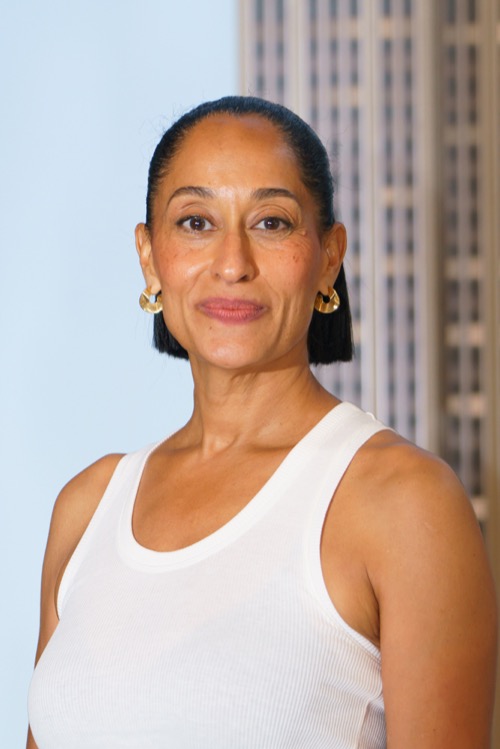
Ursula Burns
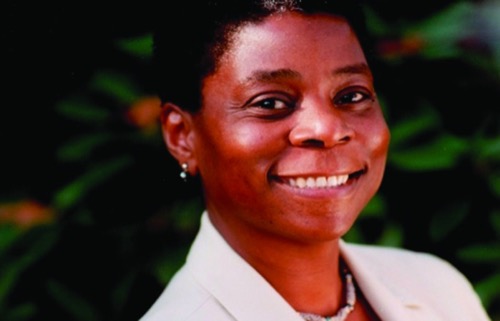
Former Chairman and CEO, Xerox · b. 1958 · Lower East Side, New York
Two calls made by hand, not formulas. how we score →
Summary
A funded engineering degree stood in for both money and a network, and a senior boss she once challenged in public spent real political capital pushing her up.
Thirty years inside one company took her from summer intern to CEO. It is the path that works when you cannot afford to fail, and the trade is a higher floor for a lower ceiling.
How it happened
A single mother raised her and two siblings in a Lower East Side housing project. Her mother ran a daycare out of the apartment and took in ironing and cleaning, and spent the money on Catholic school tuition. Her mother's best year of income was around $4,400.
A state opportunity program got her through an engineering degree at Polytechnic. Then Xerox paid for her master's at Columbia through a program aimed at minority students, which came bundled with a summer internship and an employer. She had a degree strangers would respect and a job, without the debt.
At a company meeting around 1989 she stood up and challenged a senior executive, Wayland Hicks, over a remark about diversity. Instead of being punished she was made his assistant, then assistant to the chairman. A later CEO, Anne Mulcahy, mentored her and handed her the top job.
CEO of Xerox in 2009, the first Black woman to run a Fortune 500 company. Her pay peaked around $22M in 2014. It came as salary and stock, not ownership, so the ceiling was real in a way a founder's isn't.
The coded evidence
Thirteen groups, every claim sourcedCoarse public-record coding; race is a noisy, interpretive category.
↗ blackhistory.news.columbia.eduSecond generation on her mother's side
↗ worldfinance.comAttended Cathedral High, a Catholic girls' school. Practice beyond schooling is less clear.
↗ ebsco.comnot established
No family wealth or fallback in childhood. Once she was inside Xerox, though, the institutional path gave her a salary floor most of the venture subjects here never had.
↗ 247wallst.comA Xerox salary from age 22 onward. The risk was losing a job, not the roof.
↗ encyclopedia.comThe hardship was imposed, not chosen. There was nothing to fall back on.
↗ 247wallst.comRaised by a single mother, Olga, who ran a licensed daycare in the apartment and took in ironing and cleaning to pay tuition. Her father is largely absent from the record.
↗ worldfinance.comA parent worked for themselves, the strongest known predictor of founding.
The home daycare, run to pay for schooling.
↗ worldfinance.comHer mother's daycare, ironing, and cleaning work existed specifically to pay Catholic school tuition for the children.
↗ worldfinance.comLower East Side public housing (reported as the Baruch Houses).
The specific project name comes from secondary profiles.
↗ 247wallst.comCathedral High School, a Catholic girls' school in Manhattan, paid for by her mother's side work.
↗ ebsco.comAnne Mulcahy, who became Xerox CEO in 2001, mentored her and handed her the CEO role in 2009.
↗ sec.govXerox. She joined as an intern in 1980 and never worked anywhere else on the way up.
↗ encyclopedia.comAt a company event around 1989 she publicly challenged executive Wayland Hicks over a diversity remark. Rather than punish her, he made her his executive assistant. It was sponsorship, not mentorship: a senior person spending his own standing to advance her.
↗ cnbc.comExecutive assistant to Hicks, then to chairman and CEO Paul Allaire. Staff roles beside decision-makers turned her competence into visibility.
↗ ebsco.com1
The whole climb, intern to CEO, was inside Xerox. She later chaired and ran VEON, after the outcome that defines her.
↗ encyclopedia.comMS mechanical engineering, Columbia University (1981); BS, Polytechnic Institute of New York (1980).
↗ engineering.columbia.eduNone of note. The master's was paid by Xerox; the undergraduate degree ran through a New York State opportunity program.
↗ encyclopedia.comDirect. Engineering degree straight into the company that funded it.
↗ encyclopedia.comA Xerox graduate engineering program aimed at minority students paid her Columbia tuition and bundled it with a summer internship and, in effect, an employer. Tuition, entry, and network in one package.
↗ encyclopedia.comA Xerox salary throughout. There were no gaps to sustain.
↗ encyclopedia.comCorporate diversity pipelines of the early 1980s opened the door; she rose as Xerox moved from copiers toward services.
↗ encyclopedia.comTechnology and management
↗ britannica.comnot established
No credible estimate. Aggregator figures range from tens of millions to an implausible billion. Not established.
↗ forbes.com22205362
Total FY2014 compensation from the Xerox proxy summary table: $1.1M salary, $15.5M stock, $1.98M incentive, plus pension and other. Her peak year.
↗ sec.govProxy statement
↗ sec.govHigh salaried income with stock grants, not an owned, appreciating asset base. She was paid very well; she did not own the company.
↗ sec.govFirst Black woman to lead a Fortune 500 company. Later chair or director at Uber, ExxonMobil, Nestle, American Express, and others, and chair then CEO of VEON.
↗ sec.govCapped
↗ sec.govBlunt, Direct, Candid
↗ cnbc.comInsiders
↗ cnbc.comBefore
↗ cnbc.comThe reputation accrued from behaviour rather than being manufactured.
↗ cnbc.comStructural context
The cost-of-failure score comes from this person's own money and circumstances. But who they were in America carried its own weight, the same way their household or income did, and it shaped how hard the path was just as much. That part isn't in the cost-of-failure number. It's here instead.
Women ran 10.4% of Fortune 500 companies in 2023, an all-time high and still only a tenth of the seats. A 'broken rung' thins their numbers at every level below the top.
↗ forbes.comJust eight Fortune 500 CEOs were Black in 2023, about 1.6%, against roughly 13% of the labor force. The ladder narrows sharply by race near the top.
↗ finance.yahoo.comImmigrants and their children are overrepresented among America's biggest companies, as founders and as senior leaders. They got there through the visa, credential, and network hurdles that make the path harder to even start down.
↗ forbes.comAmong the people recorded here — women: 68 · Black subjects: 58. Representation here is who reached these outcomes, not equal odds of reaching them.
Controlled comparisons
Each holds one thing constant and varies another, so the difference is the point. A list of similar names wouldn't tell you anything.