Viola Davis
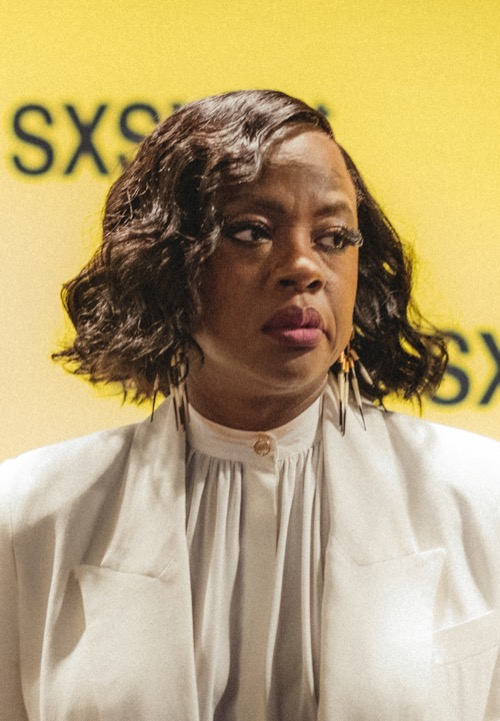
Actor; "How to Get Away with Murder"; "Fences"; "Doubt"; "The Help" · b. 1965 · St. Matthews, South Carolina → Central Falls, Rhode Island
Two calls made by hand, not formulas. how we score →
Summary
She grew up hungry in a condemned, rat-infested apartment, the only Black family in a struggling mill town.
Upward Bound put her on a stage at fourteen, and scholarships carried her through college and Juilliard. Sixteen years as a working actor passed before an eight-minute scene in Doubt made Hollywood notice her, and nearly everything she's earned since has come from fees, not ownership.
How it happened
Second youngest of six children, born in St. Matthews, South Carolina and raised in Central Falls, Rhode Island, where her family was the only Black household in a struggling mill town. Her father groomed horses; her mother worked as a maid and in factories. They lived for periods in condemned, rat-infested apartments without reliable heat or hot water, on food stamps that Davis has said never covered enough food. White classmates chased her home from school with rocks and racial slurs; she has said she ran "to save my life" more than once.
At fourteen she enrolled in Upward Bound, a federally funded program for low-income students, at Rhode Island College, where an acting coach put her in front of a stage for the first time. A summer scholarship to a performing-arts program the following year and then a full-ride scholarship to Rhode Island College kept the path open with no tuition bill for her family to carry. She graduated in 1988 and trained at Juilliard's Drama Division through 1993.
Her first professional job, an off-Broadway show in 1992, paid little. A one-day television role in 1996 earned her SAG card and $518. She won a Tony for a supporting role in King Hedley II in 2001 and kept working steadily in theater, film, and television through her thirties and into her forties without becoming a household name.
In 2008 she played a single scene opposite Meryl Streep in Doubt, on screen for roughly eight minutes, and it earned her an Oscar nomination. It's the moment casting directors and studios started treating her as a lead rather than a reliably strong supporting actor, after sixteen years of professional work most of the country hadn't noticed.
She and her husband, actor Julius Tennon, founded JuVee Productions in 2011, giving her a producing stake alongside her acting fees. The lead role in How to Get Away with Murder in 2014 made her, in 2015, the first Black woman to win the Emmy for lead actress in a drama. Fences brought an Oscar in 2017 and Ma Rainey's Black Bottom another nomination in 2021. A Grammy for narrating her memoir, Finding Me, completed an EGOT in 2023. By 2023 a single film role, Air, reportedly paid her $25 million — a number that shows both how far the fees can go and where the ceiling on a fee-based career still sits.
The coded evidence
Thirteen groups, every claim sourcedDescendant
↗ en.wikipedia.orgnot established
Not independently coded on a published scale. She has spoken publicly about colorism and being a dark-skinned Black actress competing for a narrower set of roles; see d13 for the reported commentary.
↗ finance.yahoo.comnot established
No documented career interruption for childbearing; her only child was adopted in 2011, after her career was already established.
↗ en.wikipedia.orgThe family home itself was the instability: periods in condemned, rat-infested apartments without reliable hot water or heat. No separate fallback beyond that household is established.
↗ en.wikipedia.orgNone established beyond her own wages. She has described going to bed hungry as a child, and her early acting years included a one-day TV role that paid $518 in 1996; no family income floor is documented during either period.
↗ en.wikipedia.org0
No dependents during the years she was building her career; she and Julius Tennon adopted a daughter in 2011, well after Doubt (2008).
↗ en.wikipedia.orgChildhood instability (condemned housing, hunger, food stamps that she has said never fully covered meals) predates the acting career itself; no comparable instability is documented during her adult build years in New York.
↗ en.wikipedia.orgThe hardship was imposed, not chosen. There was nothing to fall back on.
Childhood poverty was imposed, not chosen — food stamps, condemned housing, and hunger she has described in detail across interviews and her memoir, with no standing family home of greater means to return to.
↗ en.wikipedia.orgFather Dan Davis was a horse groomer/trainer; mother Mae Alice Davis worked as a maid, factory worker, and homemaker.
↗ en.wikipedia.orgNeither parent was self-employed.
↗ en.wikipedia.orgNeither parent completed higher education, but both prioritized schooling for their children.
↗ encyclopedia.comnot established
No documented instance of the family generating extra income specifically for tuition; her education past high school was scholarship- and federal-program-funded rather than family-funded.
↗ en.wikipedia.orgPeriods living in condemned, rat-infested apartments in Central Falls without reliable hot water or heat.
↗ en.wikipedia.orgHas written and spoken on the record (in her memoir "Finding Me" and related interviews) about growing up amid her father's alcoholism and physical abuse of her mother, and about sexual abuse of herself and her sisters by older men and a family member in childhood — something she has described as "shrouded in silence."
On-record, self-disclosed in her 2022 memoir and press. Attributed to her own account.
↗ etonline.comCentral Falls, Rhode Island, a small, struggling mill town; her family was described as the only Black household there at the time.
↗ encyclopedia.comCentral Falls High School, a public school.
↗ en.wikipedia.orgHer Juilliard Drama Division cohort ("Group 22," 1989–93) trained alongside several classmates who also went on to notable careers, giving her a peer network inside the profession before she had any public profile.
↗ en.wikipedia.orgAs a child she was chased home from school by white classmates throwing rocks, bricks, and other objects while shouting racial slurs; she has said she ran "literally to save my life" and that she eventually stopped one attacker by threatening him with a sewing needle.
↗ etonline.comBernard Masterson, director of the Young People's School for the Performing Arts in Massachusetts, recognized her ability at fifteen and gave her a summer scholarship there; separately, Upward Bound acting coach Ron Stetson gave her formal training the year before.
↗ coenet.orgnot established
An acting career doesn't map cleanly onto "employer count"; she has worked across dozens of stage, film, and TV productions rather than a small number of employers.
↗ en.wikipedia.orgUpward Bound (a federal TRIO program for low-income and first-generation students) at Rhode Island College, entered at fourteen in 1979, is where she first received drama instruction.
↗ coenet.orgB.A. in theater, Rhode Island College (1988), followed by training at the Juilliard School's Drama Division, Group 22 (1989–1993).
↗ en.wikipedia.orgnot established
Not established, though the funding structure (full scholarship to RIC, financial aid reported at Juilliard) argues against significant debt.
↗ en.wikipedia.orgDirect four-year public college, then a specialized conservatory.
↗ en.wikipedia.orgUpward Bound, a federal TRIO program for low-income, first-generation students, at Rhode Island College (entered 1979); reportedly followed by a "Preparatory Enrollment Program" full scholarship into Rhode Island College itself.
↗ coenet.orgJuilliard's Drama Division put her inside a small, closely tracked cohort of trained actors, a credential that reads as a peer and casting network as much as a course of study.
↗ en.wikipedia.org$518, for a one-day role in "The Substance of Fire" in 1996, the job that earned her SAG card.
↗ en.wikipedia.orgIt paid its own way from the start. Revenue came before any outside money.
Paid, fee-for-work from her first professional jobs; no capital was ever raised.
↗ en.wikipedia.orgJuVee Productions, founded with Julius Tennon in 2011, appears to be self-funded by the couple rather than outside-financed; it signed a first-look development deal with Universal Television, which funds specific projects rather than taking equity in the company.
↗ en.wikipedia.orgnot established
Not established. Her acting work is fee-based; specific rights or backend deals on individual projects aren't publicly disclosed.
↗ en.wikipedia.orgJuVee Productions grew out of her and Tennon's own careers as actors wanting more control over the material they worked on, rather than from an external market gap.
↗ en.wikipedia.org1
One adjacent category (television/film production, via JuVee) alongside her acting fees; her income is otherwise concentrated in fee-for-work rather than equity stakes across unrelated industries.
↗ en.wikipedia.orgnot established
An acting career doesn't produce discrete "failed ventures" in the way a founder path does; sixteen years of steady, unheralded work between her 1992 debut and the 2008 Doubt breakout is the closer analogue. See d9/d10 for timing.
↗ en.wikipedia.orgSelf, from her own acting wages, through the years before Doubt.
↗ en.wikipedia.orgnot established
No specific industry-cycle or macroeconomic condition is documented as driving the timing of her breakout; it reads as an individual casting decision (John Patrick Shanley casting her opposite Meryl Streep) rather than a market window.
↗ en.wikipedia.orgFilm, television, and stage acting
↗ en.wikipedia.org25000000
Aggregator estimates cluster mostly around $25M, with one aggregator (Celebrity Net Worth, updated March 2026) reporting $35M. No filing or disclosed methodology exists for a private individual paid mostly in per-project fees. Band only.
↗ businessupturn.comAggregator
↗ businessupturn.com25000000
Reported fee for "Air" (2023), corroborated across multiple entertainment-finance aggregators. No contract or court record is public; treat as a journalistic estimate, not a filing.
↗ celebritynetworth.comJournalistic estimate
↗ celebritynetworth.comIncome, not equity. Almost all of her documented earnings are per-project acting fees rather than an ownership stake in a studio, catalog, or company she controls outright; JuVee Productions is a secondary, largely fee-adjacent producing credit rather than the dominant source of her wealth.
↗ en.wikipedia.orgEGOT winner (Grammy, Oscar, Tony x2, Emmy), the first Black woman to win the Emmy for lead actress in a drama series (2015), and the most Oscar-nominated Black actress in Academy Award history.
↗ en.wikipedia.orgCapped
A fee-for-work path has a hard ceiling per project regardless of fame, unlike an owned studio or content library that can compound in value. JuVee gives her a partial, secondary exception to that ceiling.
↗ en.wikipedia.orgMeticulous, Fearless, outspoken about pay equity and colorism
She has spoken publicly about having to "hustle for my worth" relative to white, lighter-skinned peers despite comparable or greater acclaim.
↗ finance.yahoo.comPublic
↗ en.wikipedia.orgAsset
↗ en.wikipedia.orgThe reputation accrued from behaviour rather than being manufactured.
Reputation reads as accrued from decades of acclaimed work rather than a deliberate PR construction, though her 2022 memoir was a cultivated act of narrative control.
↗ en.wikipedia.orgStructural context
The cost-of-failure score comes from this person's own money and circumstances. But who they were in America carried its own weight, the same way their household or income did, and it shaped how hard the path was just as much. That part isn't in the cost-of-failure number. It's here instead.
Across film, music, and digital, ownership and control stay in far fewer women's hands than men's. For one measure, women directed only about 12% of 2023's top-grossing films.
↗ assets.uscannenberg.orgIn the creative and media industries, recognition comes far more easily to underrepresented creators than the ownership it should turn into. Among 2023's top-grossing film directors, for one measure, eight were Black.
↗ assets.uscannenberg.orgAmong the people recorded here — women: 68 · Black subjects: 58. Representation here is who reached these outcomes, not equal odds of reaching them.
Controlled comparisons
Each holds one thing constant and varies another, so the difference is the point. A list of similar names wouldn't tell you anything.