Anastasia Soare
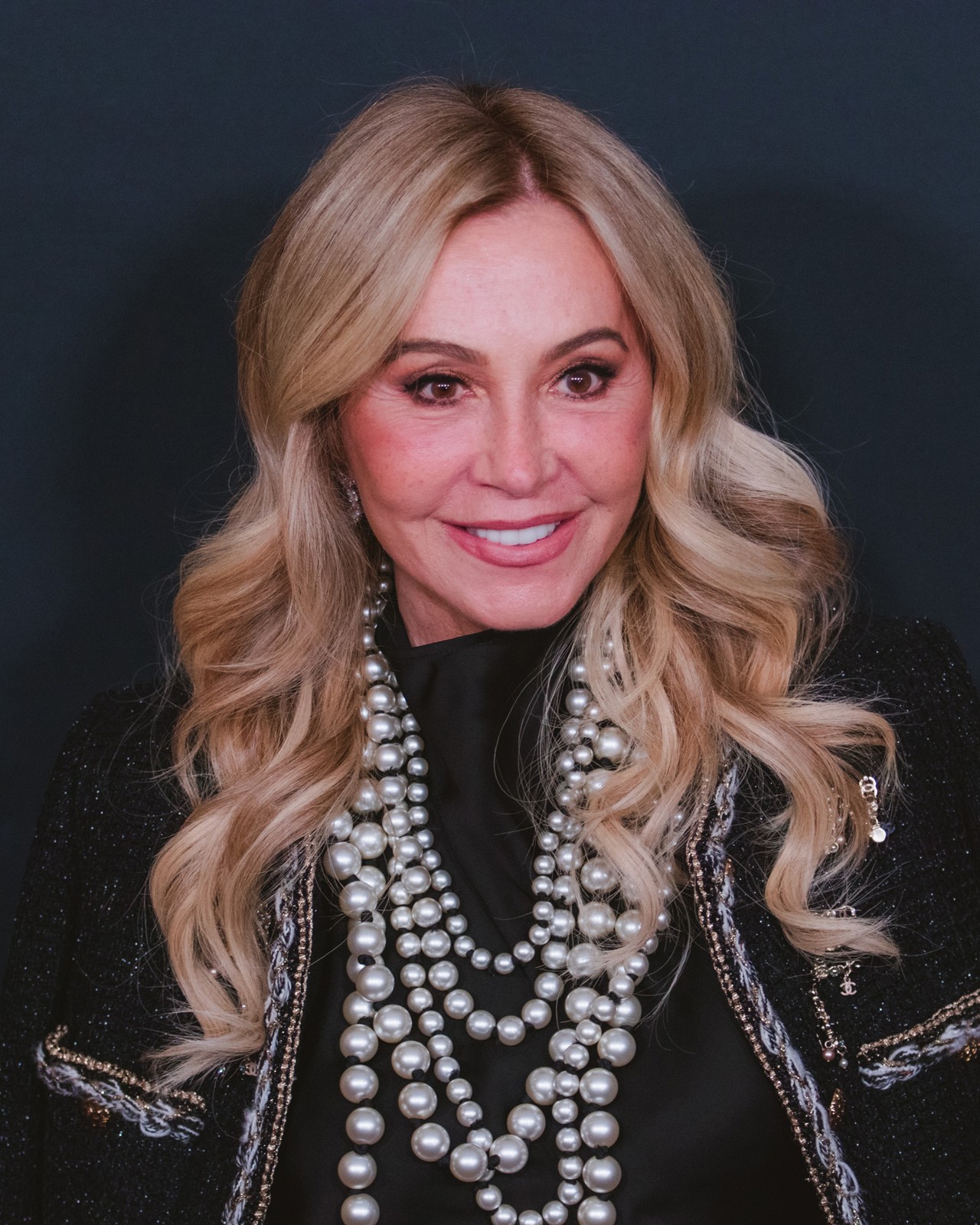
Founder and CEO, Anastasia Beverly Hills · b. 1957 · Constanța, Romania
Two calls made by hand, not formulas. how we score →
Summary
She studied art under Communist rule in Romania, where she first learned the golden ratio.
She reached Los Angeles in 1989 with little money, no credit history, and limited English, and spent a decade building a salon clientele before turning her proportion-based eyebrow method into a product line in 2000. Her fortune has since slipped below the billion-dollar line she briefly crossed in 2018.
How it happened
Born in 1957 to two tailors in the Black Sea port city of Constanța. Her father died when she was twelve. She studied fine art and architecture, and it was there, under a restrictive Communist economy, that she first encountered the golden ratio as a proportion used in art and design — the idea she would later apply to a face.
She married a ship's captain, Victor Soare, in 1978. In 1986 his vessel docked in Italy and he sought asylum there, reaching the United States the following year. Romanian authorities would not let Soare and their daughter Claudia leave the country to join him until 1989.
She arrived in Los Angeles speaking limited English, with no US credit history — banks wouldn't extend her a card until she talked a Wells Fargo branch manager into it by promising to be a loyal customer. She worked as an aesthetician and by 1992 was renting a room in a Beverly Hills salon, doing facials, waxing, and eyebrow shaping. Word of mouth built a client list that came to include Cindy Crawford and Naomi Campbell, and by 1997 she'd opened her own salon on Bedford Drive.
No eyebrow-specific cosmetics line existed yet, so she mixed her own brow formula from eyeshadow and aloe vera and launched Anastasia Beverly Hills in 2000, turning a technique she'd been selling one client at a time into a product she could sell at scale.
The brand grew into thousands of retail doors worldwide and, by one report, around $240 million in annual revenue by 2022. In 2018, TPG Capital took a minority stake at a valuation reported near $3 billion, and Forbes put her among that year's new self-made billionaires. Revenue setbacks since have pulled her Forbes-estimated net worth back under a billion. Her daughter Claudia, who performs under the name Norvina, is the company's president.
The coded evidence
Thirteen groups, every claim sourcedFirst-generation immigrant; arrived in the US at 32.
↗ en.wikipedia.orgRomanian growing up; she has said she arrived in the US in 1989 speaking limited English and learned it as an adult.
↗ money.comSteady service income from salon work — facials, waxing, eyebrow shaping — from her 1989 arrival onward, first renting a chair in an existing Beverly Hills salon, then running her own from 1997.
↗ money.comArrived with no US credit history and, by her own account, was turned down for a credit card by banks with no history to underwrite; she persuaded a Wells Fargo branch manager to extend her credit by promising loyalty as a customer. Not homelessness, but a genuine starting-from-zero financial position with no US safety net.
↗ money.comThe hardship was imposed, not chosen. There was nothing to fall back on.
An imposed immigrant reset, not a chosen austerity performance — she and her daughter were barred by the Romanian state from leaving the country until 1989, and the financial starting-from-zero was real, not staged against a fallback she could return to.
↗ en.wikipedia.orgBoth parents were tailors.
↗ en.wikipedia.orgnot established
Tailoring is often a trade practiced independently, but Communist-era Romania heavily restricted private enterprise, so whether her parents worked independently or through a state cooperative is not established.
↗ en.wikipedia.orgnot established
Public education under the Communist regime was state-provided; no record of a family funding effort for her schooling.
↗ en.wikipedia.orgHer father died when she was 12.
↗ en.wikipedia.orgShe has described conditions under Communist rule as harsh — no heat some winter evenings, going to bed dressed as if "going skiing" — and was separated from her husband for roughly three years after Romanian authorities refused to let her and her young daughter leave the country to join him in the US.
Attributed to her own account in interviews. No named third party is implicated; this is a state-imposed family separation, not a private allegation.
↗ money.comConstanța, a Black Sea port city in Communist-era Romania.
↗ en.wikipedia.orgHusband Victor Soare sought asylum in Italy in 1986 and reached the US in 1987. Soare and their daughter were barred from leaving Romania until 1989, when they immigrated to Los Angeles.
↗ en.wikipedia.orgShe had trained in fine art and architecture in Romania; on arrival in the US she started over in a different trade, working as an aesthetician. The golden-ratio training she'd studied for its own sake became, years later, the basis of her specialty rather than something she could use directly on arrival.
↗ money.comnot established
No single named introduction is documented; her early client list appears to have built organically by word of mouth.
↗ money.comCold walk-in salon clients at a rented chair, building to a celebrity clientele by reputation and referral rather than any institutional introduction.
↗ money.comA rented room inside an existing Beverly Hills salon starting around 1992, which put her in physical proximity to an affluent, image-conscious clientele.
↗ money.comNetwork
Proximity to clientele, not capital, credibility, or an existing skillset in the trade.
↗ money.com11
From her 1989 arrival to the 2000 launch of the Anastasia Beverly Hills product line.
↗ en.wikipedia.orgStudied fine art, art history, and architecture in Romania, where she first encountered the golden ratio. The specific institution and degree are not established in available English-language sources.
↗ en.wikipedia.orgSalon service income — facials, waxing, and eyebrow shaping — starting from a rented chair in 1989.
↗ money.comIt paid its own way from the start. Revenue came before any outside money.
A decade of profitable service revenue preceded the 2000 product launch.
↗ money.comNone at arrival. No US credit history; she had to persuade a bank manager to extend her credit rather than relying on any asset or co-signer.
↗ money.comThe 2000 product launch was built on roughly a decade of salon service earnings and her own salon's cash flow, not outside capital.
↗ en.wikipedia.orgTPG Capital took a minority stake in 2018 in a deal widely reported at roughly a $3 billion valuation. The exact percentage sold is not consistently reported; one lower-confidence aggregator cites approximately 38%.
Company valuation, not a personal net-worth figure. See d10 for her personal net worth, which is separately and lower estimated.
↗ forbes.comGrew from salon and product revenue for roughly eighteen years with no outside capital before TPG's 2018 minority investment, which came only after the brand was already valued in the billions. She retained majority ownership and operating control.
↗ en.wikipedia.orgPersonal expertise plus an observed market gap: no eyebrow-specific cosmetics line existed, so she formulated her own from eyeshadow and aloe vera.
↗ en.wikipedia.orgSelf, from salon service income.
↗ money.comBeverly Hills, California, where she already ran her own salon.
↗ en.wikipedia.orgBuilt a new product line and brand from nothing rather than acquiring an existing business.
↗ en.wikipedia.orgBeauty and cosmetics
↗ forbes.com740000000
Forbes's America's Richest Self-Made Women estimate as of June 2025. This is her personal net worth, not Anastasia Beverly Hills' company valuation, which TPG's 2018 minority investment put near $3 billion — using the company figure as her personal net worth would overstate it. Forbes named her a self-made billionaire in 2018; subsequent revenue setbacks at the company pulled her estimated personal net worth back under $1B by 2025. A lower-confidence aggregator (Celebrity Net Worth) separately estimates roughly $800M and describes "logistical errors and a significant drop in revenue" behind the decline — directionally consistent with Forbes but not independently verified here.
↗ forbes.comJournalistic estimate
Anastasia Beverly Hills is privately held; no SEC filing establishes her ownership stake.
↗ forbes.com2025
↗ forbes.comWealth from an owned, appreciating private company rather than a salary.
↗ forbes.comWidely credited with codifying eyebrow shaping as a proportion-based technique and helping create eyebrow-specific cosmetics as a retail category; commonly called the "Eyebrow Queen" or "Brow Queen" in press coverage.
↗ money.comUncapped
↗ en.wikipedia.orgSelf made, Meticulous, Pioneering, the "Brow Queen"
↗ money.comPress
↗ money.comBefore
Her salon reputation as a celebrity brow specialist (1989–2000) preceded the 2000 pivot into a product brand and was the foundation for it.
↗ money.comAsset
↗ forbes.comThe reputation accrued from behaviour rather than being manufactured.
Early reputation appears to have grown by word of mouth and press coverage rather than a deliberate media campaign.
↗ money.comA 2017 backlash over the "Subculture" eyeshadow palette's blendability and fallout drew public criticism; the company posted an apology, and the brand continued to grow afterward.
↗ en.wikipedia.orgStructural context
The cost-of-failure score comes from this person's own money and circumstances. But who they were in America carried its own weight, the same way their household or income did, and it shaped how hard the path was just as much. That part isn't in the cost-of-failure number. It's here instead.
Startups founded only by women have drawn about 2% of US venture capital, a share that has barely moved in a decade. Raising money as a woman was harder than any one record shows.
↗ techcrunch.comImmigrants and their children are overrepresented among America's biggest companies, as founders and as senior leaders. They got there through the visa, credential, and network hurdles that make the path harder to even start down.
↗ forbes.comAmong the people recorded here — women: 68 · white subjects: 12. Representation here is who reached these outcomes, not equal odds of reaching them.
Controlled comparisons
Each holds one thing constant and varies another, so the difference is the point. A list of similar names wouldn't tell you anything.