David Neeleman
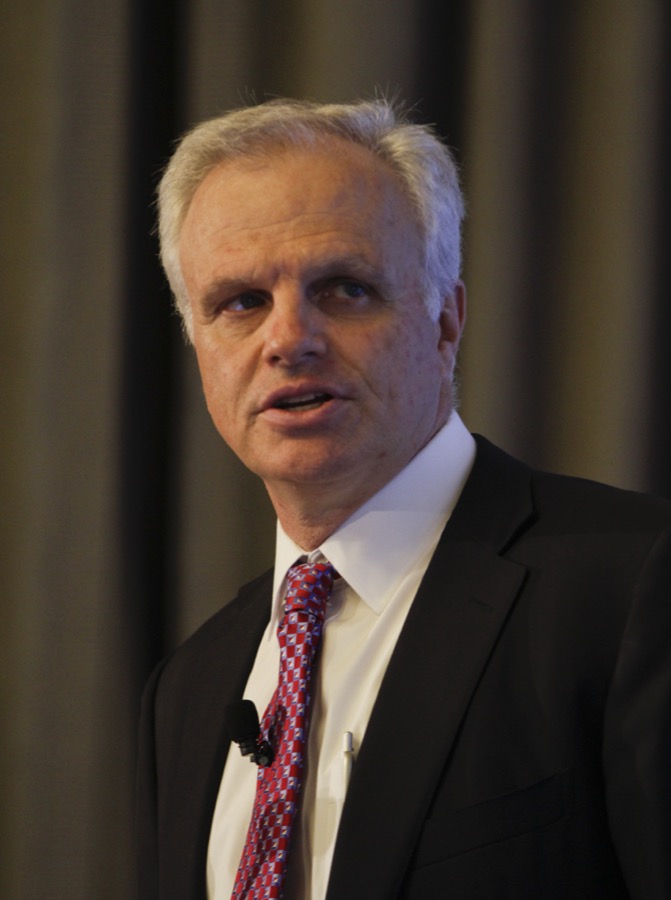
Founder of Morris Air, JetBlue Airways, Azul Brazilian Airlines and Breeze Airways, and co-founder of WestJet · b. 1959 · São Paulo, Brazil → Sandy, Utah
Two calls made by hand, not formulas. how we score →
Summary
The son of an American wire-service journalist and grandson of a Utah convenience-store founder, he left college, went bankrupt at 23 in a Hawaii travel venture, then co-founded Morris Air with a travel-agency owner and sold it to Southwest in 1993.
That payout and track record let him raise about $130 million for JetBlue, and he has since started two more airlines.
People in this set who share a company with David Neeleman.
Where they worked
How it happened
Neeleman was born in São Paulo in 1959 and lived in Brazil until he was five, then grew up in Sandy, Utah, per Wikipedia and the Deseret News. His father, Gary, worked his way up at United Press International and became its bureau chief for Central and South America, according to a 2021 Deseret News profile. His grandfather John ran a chain of convenience stores. Another profile says he was one of eight children.
He has said he graduated from Brighton High School "semi-illiterate" with mostly C's and D's. He served a two-year LDS mission in Brazil at 19, then started as a business major at the University of Utah and dropped out in his second year, per Deseret News, to chase a Hawaii condo-rental idea.
He sold cheap Hawaii getaway packages through newspaper ads and partnered with airlines and hotels. When the charter carrier Hawaiian Express collapsed, he went into bankruptcy at 23, per the same profile. The record is thin on who absorbed the losses.
Travel-agency owner June Morris saw something in him, and in 1984 the two started Morris Air, a low-fare charter operation. He was executive vice president until 1988, then president. The company is credited with pioneering ticketless travel. Morris had been running Morris Travel since 1970, so the venture came with an existing customer base.
Southwest bought Morris Air in 1993. Wikipedia puts the price at $130 million, with $25 million going to Neeleman. Other sources give slightly different figures. He worked about five months on Southwest's executive planning committee and then left under a five-year non-compete.
While barred from starting a US airline, he ran the reservation software company Open Skies, later bought by Hewlett-Packard, and helped found WestJet in Canada. Planning for NewAir took about 30 months. He raised about $130 million from investors including George Soros-linked funds, Chase Capital and Western Presidio, with his own group putting in $10.2 million, according to Reference for Business.
JetBlue began flying in February 2000 and went public in April 2002, raising $260 million. In February 2007 an ice storm led it to cancel nearly 1,700 flights, and in May the board replaced him as CEO with Dave Barger. He stayed on as chairman until 2008. He has described being fired as devastating.
He announced Azul in 2008, and by 2013 it was Brazil's largest airline by Wikipedia's account. It filed for Chapter 11 in May 2025. In 2018 he started Breeze Airways with about $100 million raised, and it began flying in May 2021. As of August 2026 Wikipedia lists a fleet of 64 Airbus A220s and him as CEO.
The coded evidence
Thirteen groups, every claim sourcedCoded from public photographs and family-origin descriptions, not a self-declaration.
↗ en.wikipedia.orgcoded.ethnicities uses the existing "European American" bucket. Wikipedia says his grandfather John was born in Utah to Dutch immigrants.
↗ en.wikipedia.orgBorn in São Paulo to American parents and lived in Brazil until age five, then raised in Utah. He holds Brazilian, US and (since 2017) Cypriot citizenship.
coded.migration is 1.5-gen as the closest fit for a childhood move from Brazil to the US in early childhood. His father's family was already American, so this was not an immigrant-barrier case.
↗ en.wikipedia.orgnot established
Not established. He is described as fluent in Portuguese after his early years in Brazil and his mission there.
↗ en.wikipedia.orgnot established
Whether his parents' home or money was a fallback in his early twenties is not stated.
↗ deseret.comnot established
How he supported himself after the 1980s Hawaii bankruptcy and before Morris Air paid well is not established.
↗ deseret.com10
Number of children over his lifetime, not at any one point in the build. He married in 1980.
↗ en.wikipedia.orgThe hardship was imposed, not chosen. There was nothing to fall back on.
The Hawaii bankruptcy was imposed by the collapse of a partner airline, though leaving school for it was his choice.
↗ deseret.comFather Gary Neeleman, a United Press International journalist who rose to bureau chief for Central and South America and later became Brazil's honorary consul for Utah; mother's occupation not established.
↗ deseret.comNeither parent was self-employed.
Father was a salaried wire-service executive per the source; the family business was the grandfather's.
↗ deseret.com7
Described as growing up with seven siblings. Wikipedia names brothers Stephen (a surgeon and HealthEquity co-founder) and Mark (an Azul co-founder).
↗ referenceforbusiness.comGrandfather John Neeleman, born in Utah to Dutch immigrants, ran a convenience-store chain (Miniature Markets, per Deseret News) that Wikipedia says numbered nine stores.
↗ en.wikipedia.orgADHD. He has said he read "Driven to Distraction" in his 30s and recognized himself in it, and that he did poorly in school, graduating with mostly C's and D's. He credits it with helping him quickly distill complex situations into workable solutions.
Self-disclosed on the record. It cost him school performance but, by his own account, did not hold back his business career, so it carries little weight in headwinds.
↗ deseret.comnot established
None documented. He did a two-year LDS mission, which is not military service.
↗ en.wikipedia.orgSandy, Utah (a Salt Lake City suburb); no ZIP-level mobility join performed.
↗ en.wikipedia.orgBrighton High School (public, Utah)
Public status is assumed from the school's name and not stated in the source.
↗ deseret.comSão Paulo to Utah at about age five; a mission back in Brazil at 19; later moves for work to the US East Coast (New York, Connecticut) and to Brazil for Azul.
↗ en.wikipedia.orgLDS community in Utah; Breeze is headquartered in Cottonwood Heights, Utah, and his brother and a nephew are in Utah business and sports.
How much the church network helped him commercially is not established.
↗ en.wikipedia.orgJune Morris, who ran Morris Travel and, per Deseret News, spotted his entrepreneurial talent and started Morris Air with him.
↗ deseret.comMorris Travel's existing customer base and travel-agency relationships, which Morris Air grew from.
↗ en.wikipedia.orgCapital, Credibility, Network
Inferred; the sources say Morris founded the travel agency in 1970 and started the airline with him, but not what each side contributed.
↗ en.wikipedia.orgJune Morris (Morris Air); brother Mark Neeleman (Azul); Robert Milton, Henri Courpron and Michael Lazarus among Breeze's founding backers.
↗ en.wikipedia.org24
Morris Air started in 1984, and he was born in 1959. He had worked in Hawaii travel packaging before that.
↗ en.wikipedia.orgMorris Air sold through its own travel-agency channel and, per Wikipedia, pioneered ticketless travel; JetBlue was built around direct booking.
The JetBlue half is not directly sourced here.
↗ en.wikipedia.orgNo degree. Studied at the University of Utah as a business major and left in his second year.
Reference for Business says accounting; Deseret News says business major.
↗ deseret.comnot established
Start-up money for the Hawaii packages and for Morris Air's early years is not stated in the sources used.
↗ deseret.comJetBlue raised about $130.2 million before launch, from George Soros-affiliated funds ($40 million combined), Western Presidio ($30 million), Chase Capital Partners ($20 million) and his own group ($10.2 million), per Reference for Business. Wikipedia gives a $128 million figure. Breeze raised about $100 million by 2018.
↗ referenceforbusiness.comJetBlue went public in April 2002, raising $260 million.
His own share count and ownership percentage at the IPO or at the 2007 CEO change are not established in the sources used.
↗ en.wikipedia.orgProceeds from the 1993 Morris Air sale ($25 million to him, per Wikipedia) preceded his later ventures; how much of it went into JetBlue is not established beyond his group's reported $10.2 million.
Reference for Business reports a lower figure for his payout (about $20 million).
↗ en.wikipedia.orgnot established
The board's 2007 decision to replace him as CEO shows he did not control JetBlue, though his ownership share is not established in the sources used. His voting position at Azul and Breeze is also not established.
↗ en.wikipedia.orgnot established
No documented rejection found. Wikipedia says JP Morgan threatened to pull $40 million of the initial money unless the planned name "Taxi" was changed.
↗ en.wikipedia.org1
The Hawaii travel venture, ending in bankruptcy at 23 after Hawaiian Express collapsed.
↗ deseret.comThe five-year Southwest non-compete: Open Skies (sold to HP) and a WestJet co-founding.
↗ deseret.comAirline deregulation (1978) had already opened the field to low-fare entrants; JetBlue's April 2002 IPO came after the September 2001 attacks had delayed it.
The deregulation point is general background, not drawn from the cited page.
↗ en.wikipedia.orgCommercial aviation; founder of low-fare and customer-service-focused airlines
↗ en.wikipedia.org290000
2002 JetBlue salary of $200,000 plus a $90,000 bonus, which Wikipedia says he donated to an employee crisis fund. It excludes equity gains.
↗ en.wikipedia.orgProxy statement
Wikipedia cites an academic paper for the pay figures; the proxy statement itself was not read.
↗ en.wikipedia.orgRealized cash and stock from the Morris Air sale ($25 million per Wikipedia, about $20 million per Reference for Business). Proceeds from JetBlue share sales after 2007 and the current value of his Azul and Breeze stakes are not established. Azul's 2025 Chapter 11 puts any remaining equity value there in question.
The only documented proceeds are the Morris Air payout. Magnitude 4 ($100 million to $1 billion) is an estimate from his role founding and leading JetBlue, Azul and Breeze, not from a verified figure, and it could be a band lower. No Forbes or filing-based net worth was available, so no net worth is entered.
↗ en.wikipedia.orgTony Jannus Award for contributions to commercial aviation (2005); founder of five airlines by Wikipedia's count; Breeze reported 88 destinations and about 2,300 employees as of August 2026.
↗ en.wikipedia.orgUncapped
↗ en.wikipedia.orgnot established
No regulatory action against him personally is documented in the sources used.
↗ en.wikipedia.orgCustomer service focused, serial founder, ADHD-driven problem solver
Deseret News headline calls him Utah's "Steve Jobs of the Skies." The other two traits come from his own descriptions of himself and his companies.
↗ deseret.comPress
↗ deseret.comAfter
↗ en.wikipedia.orgMixed
A founder name that helped raise money for later airlines, but the board replaced him as JetBlue CEO in May 2007 after the February ice storm cancellations. Wikipedia reports the board made that decision; he has said he was devastated.
↗ en.wikipedia.orgnot established
Not established for how he built his businesses. Coverage of his later public advocacy is outside the path this record tracks.
↗ en.wikipedia.orgAnnounced Azul in March 2008, about ten months after losing the CEO job, and later founded Breeze.
↗ en.wikipedia.orgStructural context
The cost-of-failure score comes from this person's own money and circumstances. But who they were in America carried its own weight, the same way their household or income did, and it shaped how hard the path was just as much. That part isn't in the cost-of-failure number. It's here instead.
Men founded the companies that took nearly all the venture funding and almost every top outcome, a tailwind that never shows up in one person's own circumstances.
↗ techcrunch.comImmigrants and their children are overrepresented among America's biggest companies, as founders and as senior leaders. They got there through the visa, credential, and network hurdles that make the path harder to even start down.
↗ forbes.comAmong the people recorded here — men: 225 · white subjects: 24. Representation here is who reached these outcomes, not equal odds of reaching them.
Controlled comparisons
Each holds one thing constant and varies another, so the difference is the point. A list of similar names wouldn't tell you anything.