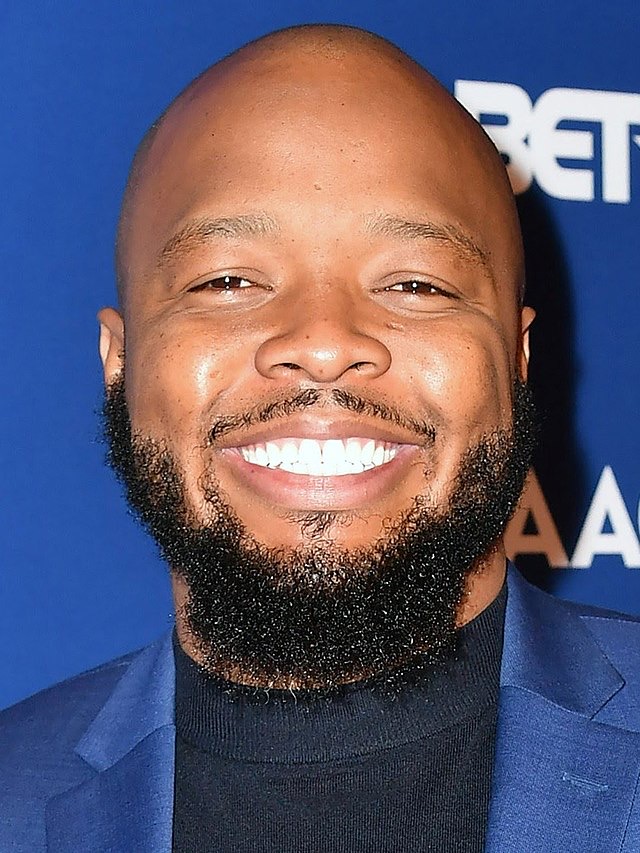
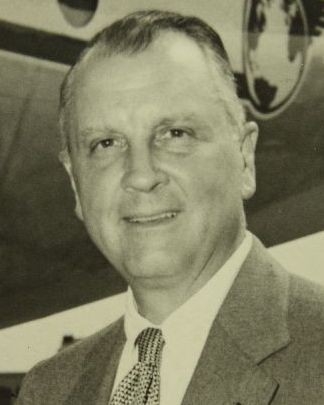
George Kurtz
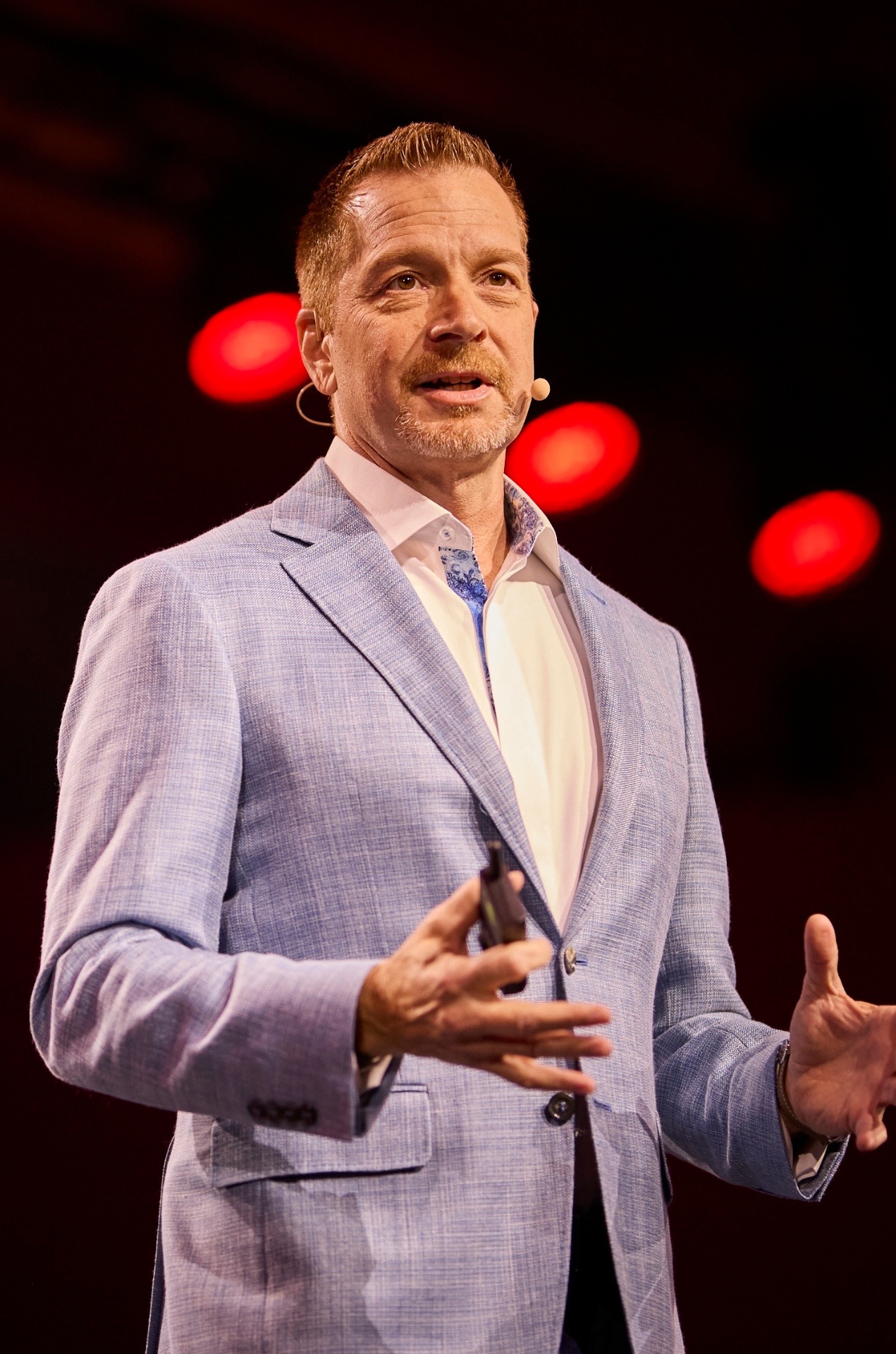
Co-founder and CEO of CrowdStrike; previously founded Foundstone and was McAfee's CTO · b. 1970 · Parsippany-Troy Hills, New Jersey
Two calls made by hand, not formulas. how we score →
Summary
Raised middle-class in suburban New Jersey, he trained as an accountant, moved into penetration testing, then built and sold a security firm to McAfee before co-founding CrowdStrike on venture money in 2011.
Founder equity carried through a 2019 IPO made him a billionaire. In 2024 a faulty update from the company he still runs caused what's been called the largest IT outage on record.
How it happened
George Kurtz was born October 14, 1970, and grew up in Parsippany-Troy Hills, New Jersey, where he attended Parsippany High School and played football. He started programming games on a Commodore computer in fourth grade and built bulletin board systems as a teenager. He earned a bachelor's degree in accounting from Seton Hall University, a private university in South Orange, New Jersey.
He started his career as a certified public accountant at Price Waterhouse in 1993, joining the firm's new security practice just as penetration testing was becoming its own discipline. He later moved to Ernst & Young doing similar work before leaving to start his own company.
In 1999 he founded Foundstone, a vulnerability-management firm, and co-wrote the bestselling "Hacking Exposed" security manual the same year. McAfee bought Foundstone in August 2004; Kurtz joined as a senior vice president and was promoted to chief technology officer in 2009, a role in which he handled the response to the Google-targeting Operation Aurora attacks and, in 2010, oversaw a McAfee antivirus update that itself crashed thousands of Windows XP machines worldwide. When Intel bought McAfee in 2011, Kurtz left.
In November 2011 he joined the private-equity firm Warburg Pincus as an entrepreneur-in-residence, and in February 2012 he, Dmitri Alperovitch, and Gregg Marston co-founded CrowdStrike in Irvine, California, with about $25 million in initial funding from Warburg Pincus. Kurtz took the CEO role. CrowdStrike priced its Nasdaq IPO at $34 a share in June 2019, in an offering that carried a dual-class structure giving founders' shares ten votes each; Kurtz went in holding about 10 percent of the company. That founder equity, held through nearly eight years of building the company before the IPO, is what turned into the wealth that followed.
CrowdStrike's stock has climbed many times over since the IPO, and the dual-class structure converted to a single share class in fiscal 2025. Kurtz's current SEC-disclosed stake is a little over two million shares, under one percent of the company, because he has sold down steadily along the way and put a large share of the proceeds into Arizona real estate: a Scottsdale shopping center with a Frank Lloyd Wright-designed spire, a planned mixed-use development on a former amusement-park site, and, in 2025, a minority stake in the Mercedes-AMG Petronas Formula One team. Forbes put his net worth at $13.5 billion in September 2026, though other trackers have placed it anywhere from under $10 billion to just above $11 billion in the same year, which says as much about CrowdStrike's stock swings as about his actual holdings. He also races competitively, winning his class at the 24 Hours of Le Mans in 2023.
On July 19, 2024, a faulty update to CrowdStrike's Falcon software crashed roughly 8.5 million Windows machines at once, grounding flights, disrupting hospitals, and knocking out bank systems in what has been widely described as the largest IT outage on record. Kurtz apologized publicly within a day and said the company would change how it tests and rolls out updates. The House Homeland Security Committee asked him to testify in person; CrowdStrike sent a different executive instead. A shareholder lawsuit naming Kurtz was dismissed by a federal judge in January 2026, who found the plaintiffs hadn't shown the company's public statements were false or made with intent to defraud.
The coded evidence
Thirteen groups, every claim sourcednot established
No specific national-origin or ancestry detail is documented in the sources reviewed.
↗ en.wikipedia.orgDescendant, multi-generational American
No documented recent-immigration history; coded from absence of evidence.
↗ en.wikipedia.orgA stable family home in Parsippany-Troy Hills, New Jersey, through adolescence; no housing precarity is documented at any point in his life.
↗ en.wikipedia.orgWhile building CrowdStrike from 2011 he had already sold Foundstone to McAfee for an undisclosed sum in 2004 and had drawn a senior executive salary as McAfee's CTO through 2011, plus initial company funding of about $25 million from Warburg Pincus; he did not need personal savings or a day job to survive the founding period.
↗ en.wikipedia.orgnot established
No period of documented hardship, chosen or imposed, appears in the record.
↗ en.wikipedia.orgnot established
Not documented in any source reviewed; profiles describe his upbringing only as suburban New Jersey.
↗ en.wikipedia.orgParsippany-Troy Hills, New Jersey, a middle-class suburb of New York City.
↗ en.wikipedia.orgParsippany High School, a public high school.
↗ en.wikipedia.orgSuburban New Jersey in the 1980s had no notable cybersecurity or technology-industry cluster; his early exposure to computing came from a home Commodore computer and self-taught bulletin-board-system building, not proximity to a working tech scene.
↗ en.wikipedia.orgMoved from New Jersey for a Price Waterhouse/Ernst & Young career, then to California to found CrowdStrike in Irvine in 2011-2012; no childhood relocation is documented.
↗ en.wikipedia.orgWarburg Pincus recruited him as an entrepreneur-in-residence in November 2011 on the strength of his McAfee CTO track record, then supplied CrowdStrike's initial roughly $25 million in funding three months later.
↗ en.wikipedia.orgMcAfee, where he rose to chief technology officer, and the entrepreneur-in-residence arrangement at Warburg Pincus that followed his departure, supplied the credibility, seed capital, and thesis behind CrowdStrike.
↗ en.wikipedia.orgCapital, Credibility, Network
Warburg Pincus supplied initial funding, an operating platform, and investor credibility rather than the underlying technical idea.
↗ en.wikipedia.orgDmitri Alperovitch, a former McAfee threat-intelligence executive, and Gregg Marston, who became CFO; both had worked with Kurtz previously in the security industry.
↗ en.wikipedia.org23
Joined Price Waterhouse's security practice in 1993, doing penetration testing; born October 1970.
↗ en.wikipedia.orgBy 2011 he was a well-known figure in enterprise security: co-author of the bestselling "Hacking Exposed" series, founder of a firm McAfee bought, and McAfee's own CTO through several high-profile incident responses (Operation Aurora, Night Dragon, Shady RAT).
↗ en.wikipedia.orgnot established
No documented sustained apprenticeship under a single named mentor.
↗ en.wikipedia.org3
Price Waterhouse, Ernst & Young, and McAfee, before founding CrowdStrike; excludes his own companies, Foundstone and CrowdStrike.
↗ en.wikipedia.orgBachelor of Science in accounting, Seton Hall University.
↗ en.wikipedia.orgCertified Public Accountant; practiced at Price Waterhouse beginning in 1993.
↗ techcrunch.comDirect — a private undergraduate accounting degree straight into a Big Four-style accounting firm, with no community-college, military, or transfer detour.
↗ en.wikipedia.orgSeton Hall is not documented as a specific pipeline into cybersecurity or Silicon Valley; his professional network formed later, inside Price Waterhouse's and Ernst & Young's security practices and then McAfee.
↗ en.wikipedia.orgnot established
CrowdStrike was capitalized from the start by Warburg Pincus as an entrepreneur-in-residence project rather than from Kurtz's own first dollar; how much of his own money, if any, went in alongside is not documented.
↗ en.wikipedia.orgIt needed capital up front, before it earned anything.
CrowdStrike was venture-funded from its 2011-2012 founding, two years before its Falcon product launched commercially in 2013.
↗ en.wikipedia.orgAbout $25-26 million in initial funding from Warburg Pincus at founding in February 2012, reported by different outlets as either figure; later rounds included Accel and, by 2015, a Series round with participation from Google's investment arm (later CapitalG).
↗ sec.govCrowdStrike raised across multiple private rounds before pricing its Nasdaq IPO at $34.00 per share on 18,000,000 shares in June 2019 (roughly $612 million raised), valuing the company at about $6.6 billion. The IPO used a dual-class structure — Class A common stock at one vote per share and Class B at ten votes per share — that gave Class B holders about 99% of voting power at listing. That structure sunset in fiscal 2025, converting the company to a single class of stock with one vote per share.
↗ sec.govSold down much of his CrowdStrike stake over time and reinvested heavily in Scottsdale, Arizona real estate — The Promenade shopping center, a planned mixed-use "Parque" development on a former amusement-park site, and the 2025 acquisition of Scottsdale Quarter for about $645 million — and, in 2025, a minority stake in the Mercedes-AMG Petronas Formula One team.
↗ en.wikipedia.orgPrior professional experience. As McAfee's CTO, Kurtz oversaw the response to nation-state attacks (Operation Aurora, Night Dragon, Shady RAT) and concluded that traditional, signature-based antivirus software could no longer keep up; CrowdStrike's cloud-native, intelligence-driven Falcon platform was built on that thesis.
↗ en.wikipedia.orgAt the May 2019 IPO, Kurtz held about 19.05 million shares, roughly 10.4% of the company and 10.1% of voting power after the offering. As of the April 2026 proxy statement, following the 2025 sunset of the dual-class structure, he beneficially owned about 2.38 million shares of a single class, under 1% of the company, after years of selling down his stake while remaining CEO.
↗ sec.gov0
No documented failed venture prior to CrowdStrike; Foundstone, his first company, sold successfully to McAfee in 2004.
↗ en.wikipedia.orgFounded in the wake of a wave of publicized nation-state cyberattacks (Operation Aurora in 2010, Stuxnet, the 2011 RSA breach) that pushed enterprise security budgets toward advanced threat detection, and during the early cloud/SaaS boom that made a cloud-delivered security product commercially viable.
↗ en.wikipedia.orgIrvine, California, where CrowdStrike was founded in 2011-2012.
↗ en.wikipedia.orgBuilt — CrowdStrike was created from scratch as a new product and company, not acquired.
↗ en.wikipedia.org15
From CrowdStrike's founding in 2011-2012 to 2026, with Kurtz as founder and CEO throughout.
↗ en.wikipedia.orgFounded in Irvine, California (Orange County) rather than Silicon Valley proper, before later establishing offices in Sunnyvale and moving its headquarters to Austin, Texas.
↗ en.wikipedia.orgCybersecurity (CrowdStrike); prior work in vulnerability management and enterprise security consulting (Foundstone, McAfee).
↗ en.wikipedia.org13500000000
Forbes real-time tracker figure retrieved September 16, 2026. Other trackers in the same period have put his net worth anywhere from under $10 billion (GuruFocus, citing a smaller disclosed share count) to roughly $7-11.5 billion (Leader Portfolio, Iconic Billionaires), a spread that reflects CrowdStrike's volatile stock price and the fact that his current SEC-disclosed stake (see d7.controlVsOwnership) is far smaller than it was at IPO, with the rest of his wealth held in diversified assets like real estate rather than disclosed equity.
↗ forbes.comAggregator
Forbes does not publish a full methodology reconciling this figure with his much smaller current disclosed CrowdStrike stake; the total likely blends current equity, historical stock sales, and real estate.
↗ forbes.com2026
↗ forbes.com247579143
Total compensation for fiscal 2026 (year ended January 31, 2026) per CrowdStrike's Summary Compensation Table: $1.1 million salary plus $242.1 million in stock awards (driven largely by a TSR-linked performance stock unit grant made in December 2025), $1.6 million in non-equity incentive pay, and $2.7 million in other compensation.
↗ sec.govProxy statement
↗ sec.govHis cash salary has stayed modest by executive standards (around $1 million a year), while almost all of his reported compensation and his broader net worth come from CrowdStrike equity grants and share-price appreciation.
↗ sec.govFortune named him one of the "100 Most Powerful People in Business" in 2024; he is also credited with helping create the vulnerability- management category in cybersecurity and, since 2025, co-owns a stake in the Mercedes-AMG Petronas Formula One team.
↗ en.wikipedia.orgUncapped
Public equity ownership and ongoing performance-based grants in a company he still runs, rather than a salaried or credentialed ceiling.
↗ sec.govThe Plymouth County Retirement Association filed a securities class action against CrowdStrike, Kurtz, and CFO Burt Podbere on July 30, 2024, in the U.S. District Court for the Western District of Texas, on behalf of shareholders who bought CrowdStrike stock between November 29, 2023 and July 29, 2024. The suit alleged the company had overstated the testing and reliability of its Falcon platform and failed to disclose deficient update-control procedures ahead of the July 2024 outage. U.S. District Judge Robert Pitman dismissed the case on January 14, 2026, finding the plaintiffs had not plausibly alleged that the company's statements were false or misleading, or made with intent to defraud investors.
↗ classaction.orgKurtz apologized publicly for the July 2024 outage on NBC's "Today" show the following day, saying company leaders were "deeply sorry for the impact that we've caused to customers, to travellers, to anyone affected by this," and committed to changing CrowdStrike's testing and update-rollout processes.
↗ en.wikipedia.orgAfter
The 2024 outage and its legal fallout came five years after CrowdStrike's 2019 IPO and thirteen years after its founding.
↗ en.wikipedia.orgIncidental
The outage and lawsuit followed years of prior growth and did not produce his original wealth or advantage; they concern how the company he built was run afterward.
↗ en.wikipedia.orgNone
The securities suit against Kurtz personally was dismissed with no finding of wrongdoing, no personal liability, and no settlement.
↗ classaction.orgveteran cybersecurity operator, among the faster corporate apologies of the crisis, per industry press, subject of press commentary noting this was the second major software failure associated with his leadership (a 2010 McAfee update, and the 2024 CrowdStrike outage)
↗ tech.yahoo.comPress
↗ en.wikipedia.org6
Wikipedia, Forbes, SEC filings, Cybersecurity Dive, the House Homeland Security Committee record, and Yahoo Tech, among others reviewed.
↗ en.wikipedia.orgBefore
His reputation as a cybersecurity pioneer and successful founder predates the 2024 outage by more than a decade; the more contested reputation from the outage formed well after CrowdStrike's founding and IPO.
↗ en.wikipedia.orgMixed
Largely an asset (credibility, fundraising, hiring, media profile) for most of his career; a liability in the weeks after the July 2024 outage, though the securities suit against him was later dismissed and CrowdStrike's stock recovered.
↗ en.wikipedia.orgThe reputation accrued from behaviour rather than being manufactured.
His early reputation grew from documented achievements (a bestselling security book, a company sale, a CTO role handling major incidents) rather than a deliberate PR campaign, though his profile as CEO and as a sponsor-driven racing-team owner has generated substantial media coverage since.
↗ en.wikipedia.orgCrowdStrike's stock recovered from its post-outage decline and the securities class action naming Kurtz was dismissed in January 2026; he returned to competitive racing in 2025 after sitting out the 2024 season.
↗ classaction.orgStructural context
The cost-of-failure score comes from this person's own money and circumstances. But who they were in America carried its own weight, the same way their household or income did, and it shaped how hard the path was just as much. That part isn't in the cost-of-failure number. It's here instead.
Men founded the companies that took nearly all the venture funding and almost every top outcome, a tailwind that never shows up in one person's own circumstances.
↗ techcrunch.comWhite founders are heavily overrepresented among funded companies and top-tier wealth relative to their share of the population, an edge that has nothing to do with a person's own money.
↗ techcrunch.comAmong the people recorded here — men: 169 · White subjects: 114. Representation here is who reached these outcomes, not equal odds of reaching them.
Controlled comparisons
Each holds one thing constant and varies another, so the difference is the point. A list of similar names wouldn't tell you anything.