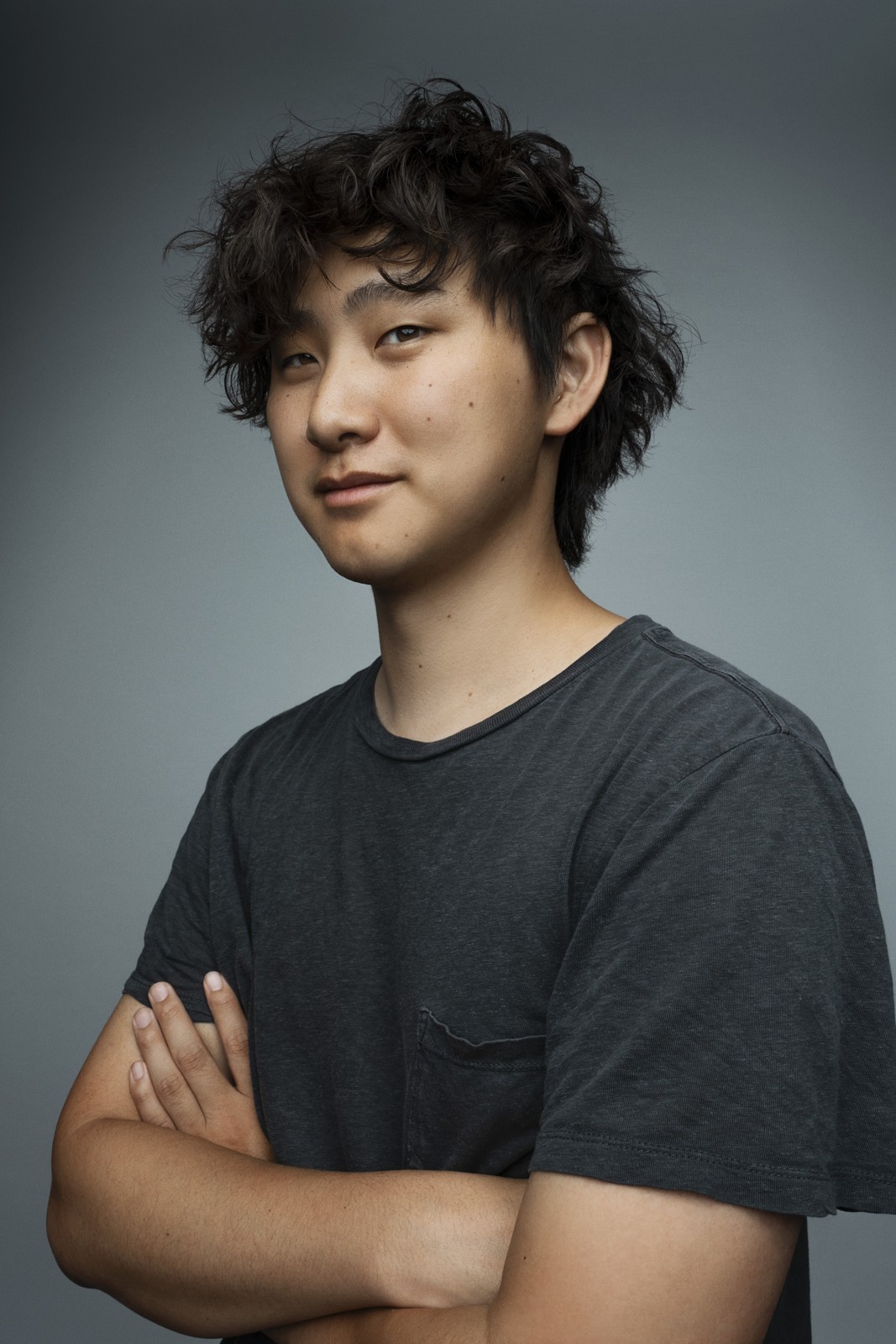
Ion Stoica

Berkeley computer science professor; co-founder of Databricks (executive chairman), Anyscale and Conviva · Romania → United States
Two calls made by hand, not formulas. how we score →
Summary
Stoica grew up in Romania, took an engineering degree in Bucharest, and came to the US in 1994 for a PhD.
He has been a Berkeley professor since 2000 and co-founded Conviva, Databricks and Anyscale from his lab's research. Forbes puts him at $7 billion, mostly a private Databricks stake. His family background is not established.
People in this set who share a company with Ion Stoica.
Where they worked
How it happened
Wikipedia says he grew up in Romania, earned a master's in electrical engineering and computer science from the Polytechnic University of Bucharest in 1989, and moved to the US in 1994 to start a PhD at Old Dominion University. It gives his birth year as 1964 or 1965 and treats the exact year as uncertain. It also says he holds Romanian and American citizenship; Forbes lists his citizenship as United States. Nothing opened for this review says what his parents did, what the household had, or how the Old Dominion place was paid for.
He transferred to Carnegie Mellon in 1996 and received a PhD in electrical and computer engineering in 2000 under Hui Zhang, per Wikipedia. His thesis work there included Chord and Internet Indirection Infrastructure, and Wikipedia says the dissertation shared an ACM award with his advisor. Forbes lists the Carnegie Mellon PhD as his education.
Wikipedia says he has been a UC Berkeley professor since 2000. In 2006 he and Zhang started Rinera Networks, renamed Conviva in 2008, a video streaming analytics company. Wikipedia describes him as its co-founder and CTO and says it grew out of a CMU research project. The article lists venture rounds from 2012 on; the earliest financing is not established here.
Databricks was founded in 2013 out of Berkeley's AMPLab, where Spark was built. Wikipedia lists seven founders, including Ali Ghodsi and Stoica, and a $13.9 million Series A led by Andreessen Horowitz in September 2013. Forbes and Wikipedia both say Stoica was the original CEO until early 2016, when Ghodsi took over and he became executive chairman. He was a sitting professor with a lab full of the people who wrote the software, which is what the company was built to sell. What he personally put in at the start is not established.
His Berkeley page lists him as a co-founder of Anyscale in 2019. Anyscale's own site says Ray was developed from 2016 to 2017 in Berkeley's RISELab and lists a16z, NEA, Addition and Intel Capital as investors. The site also announces that Anyscale is joining Nscale. His current role there was not found. He also directs Berkeley's Sky Computing Lab, per his page, which links a Chatbot Arena project without stating his part in it.
On October 21, 2026 Forbes showed $7 billion, rank 574, age 61, residence Berkeley, self-made score 8, and said private investors valued Databricks at $190 billion in August. That is an estimate of a private stake and the size of his holding is not established. Wikipedia carried a $1.6 billion Forbes figure for 2022. Wikipedia also says he gave $25 million to Berkeley's computing and data science efforts in 2021.
No litigation or regulatory action involving his companies turned up in the Wikipedia articles for him, Conviva or Databricks. That is the absence of reporting in summary sources and it is not a clearance.
The coded evidence
Thirteen groups, every claim sourcedRomanian-born; Romanian and American citizen
National origin only; Wikipedia calls him Romanian-American. Ethnicity proper is not stated.
↗ en.wikipedia.orgGrew up in Romania and moved to the US in 1994 for a PhD, as an adult.
Coded first-gen. Exact birth year is uncertain (1964 or 1965 per Wikipedia), so age at arrival is about 29 to 30.
↗ en.wikipedia.orgBerkeley faculty since 2000; pay not established.
Inferred from a salaried academic post held while founding Conviva and Databricks.
↗ en.wikipedia.orgnot established
Not established in sources opened. The household value in the coded block is a placeholder because the enum has no unknown option.
↗ en.wikipedia.orgLives in Berkeley, California, per Forbes.
↗ forbes.comRomania to the US in 1994 (Old Dominion University, Virginia), then Carnegie Mellon in Pittsburgh from 1996, then Berkeley from 2000.
Reasons for leaving Romania beyond the PhD are not established.
↗ en.wikipedia.orgDatabricks: Ali Ghodsi, Andy Konwinski, Patrick Wendell, Reynold Xin, Matei Zaharia and Arsalan Tavakoli. Conviva: Hui Zhang, his PhD advisor.
Conviva's co-founder is from the Conviva Wikipedia article.
↗ en.wikipedia.orgPhD under Hui Zhang at Carnegie Mellon, later his Conviva co-founder.
↗ en.wikipedia.orgPhD in electrical and computer engineering, Carnegie Mellon University, 2000; master's, Polytechnic University of Bucharest, 1989.
Forbes also lists the Carnegie Mellon PhD.
↗ en.wikipedia.orgnot established
Not established. credentialFunding is coded none as a placeholder; funding of the PhD (assistantship or otherwise) is not stated in sources opened.
↗ en.wikipedia.orgDatabricks Series A of $13.9 million led by Andreessen Horowitz in September 2013, then a Series B of $33 million led by NEA in 2014.
From Wikipedia; amounts not checked against company announcements. originCapital angel is a placeholder, since the first round was a venture fund and founder-contributed capital is not established.
↗ en.wikipedia.orgDatabricks is private; Wikipedia reports a round closed in August 2026 at a $190 billion post-money valuation. His stake is not established.
↗ en.wikipedia.orgnot established
Birth year is uncertain (1964 or 1965), so age at the 2013 Databricks founding is about 48 or 49. Not coded.
↗ en.wikipedia.orgData analytics and AI software
↗ forbes.com7000000000
Forbes real-time figure on October 21, 2026, rank 574, self-made score 8. A point-in-time estimate resting on a private company whose valuation is itself an estimate.
↗ forbes.comJournalistic estimate
↗ forbes.com2026
↗ forbes.comPresumably largely paper, since Databricks is private. Share sales are not established in the sources used.
↗ forbes.comWealth, not income. Forbes attributes it to data analytics and rates him self-made. His pay is not established.
↗ forbes.comBerkeley professor and Sky Computing Lab director. Wikipedia lists the ACM dissertation award (2001), PECASE (2002), a Sloan Fellowship (2003), the SIGOPS Mark Weiser Award (2019) and ACM Fellow, and a $25 million gift to Berkeley in 2021.
Honors taken from Wikipedia and not checked against the awarding bodies.
↗ en.wikipedia.orgUncapped
↗ forbes.comNone found. The Wikipedia articles on Stoica, Conviva and Databricks report no litigation, regulatory action or employment disputes. Only summary sources were checked, so this is not a clearance.
↗ en.wikipedia.orgStructural context
The cost-of-failure score comes from this person's own money and circumstances. But who they were in America carried its own weight, the same way their household or income did, and it shaped how hard the path was just as much. That part isn't in the cost-of-failure number. It's here instead.
Men founded the companies that took nearly all the venture funding and almost every top outcome, a tailwind that never shows up in one person's own circumstances.
↗ techcrunch.comImmigrants and their children are overrepresented among America's biggest companies, as founders and as senior leaders. They got there through the visa, credential, and network hurdles that make the path harder to even start down.
↗ forbes.comAmong the people recorded here — men: 225. Representation here is who reached these outcomes, not equal odds of reaching them.
Controlled comparisons
Each holds one thing constant and varies another, so the difference is the point. A list of similar names wouldn't tell you anything.