Matei Zaharia
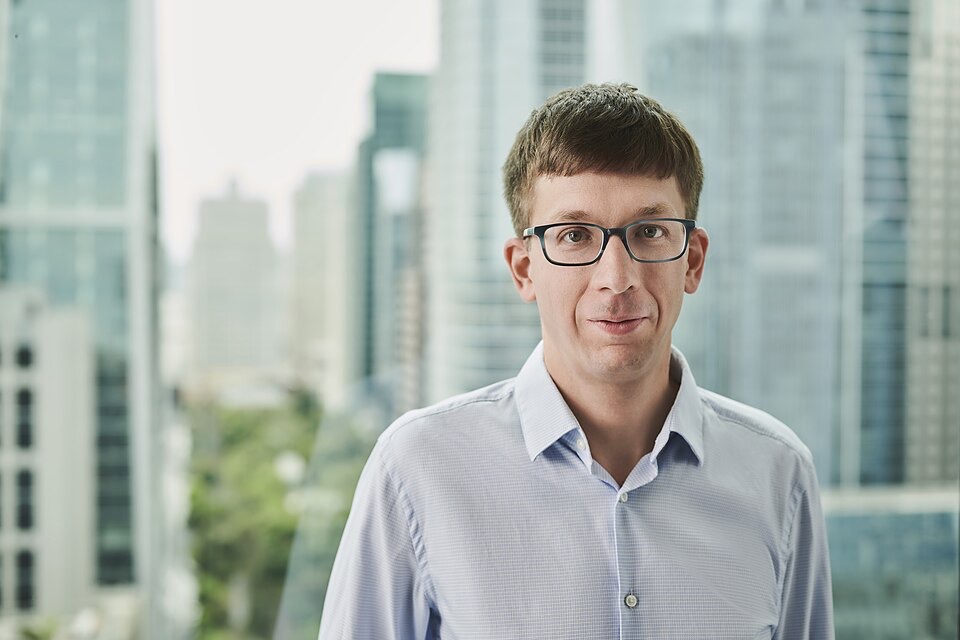
Creator of Apache Spark; co-founder and CTO of Databricks; Berkeley computer science professor · Romania → Canada → United States
Two calls made by hand, not formulas. how we score →
Summary
Zaharia was born in Romania and, per Romanian press, finished high school in Toronto before studying at Waterloo.
He started Spark as a Berkeley PhD student, then co-founded Databricks with six lab colleagues in 2013. Forbes puts him at $7 billion, almost all of it an estimate of a private stake. His family background is not established.
People in this set who share a company with Matei Zaharia.
Where they worked
How it happened
Wikipedia calls him Romanian-Canadian and gives his birth year as 1984 or 1985, with no birthplace. A Romanian outlet, Evenimentul Zilei, says he was born in Romania and later moved to Canada with his family, without saying when, and that he went to Jarvis Collegiate Institute in Toronto, where he won silver medals at informatics olympiads. A web search summary described the move as happening in childhood, but the article itself does not say that, so the age at arrival is not established. Forbes lists his citizenship as United States. Nothing opened for this review says what his parents did.
He studied at the University of Waterloo, where, per Wikipedia, his programming-contest team won gold at the ICPC and placed fourth worldwide in 2005. Forbes lists a bachelor's from Waterloo. How the degree was paid for is not established.
He did his PhD at UC Berkeley under Ion Stoica and Scott Shenker, per Wikipedia, finishing in 2013. Spark began in 2009 in Berkeley's AMPLab as a faster alternative to MapReduce, and Forbes says he started it as a PhD student at 24. His thesis won the 2014 ACM Doctoral Dissertation Award. Who funded the PhD is not established.
He co-founded Databricks in 2013 with six Berkeley collaborators, including Stoica and Ali Ghodsi, and the product is built on Spark. His thesis is dated 2013 as well, and the software the company was built to sell was already his own work. He is CTO, per Berkeley and Forbes. What he put in at the start, and what share of the company he holds, is not established.
Wikipedia says he joined MIT's faculty in 2015, moved to Stanford in 2016, and became an associate professor at Berkeley in 2023. His Berkeley page lists him there now, working in the Sky Lab, and says he helped develop MLflow and Delta Lake at Databricks. It also lists the DSPy framework and the GEPA prompt optimizer among recent projects, without stating his part in each. He won the 2025 ACM Prize in Computing, per Wikipedia.
On October 22, 2026 Forbes showed $7 billion, rank 574, age 41, residence Berkeley, self-made score 8, and said private investors valued Databricks at $190 billion in August. That is an estimate of a private stake and the size of his holding is not given. Romania Insider reported a $5 billion Forbes figure for him earlier in 2026, so the number moves with the valuation.
No litigation or regulatory action involving him or Databricks turned up in the pages opened. That is the absence of reporting in summary sources and not a clearance.
The coded evidence
Thirteen groups, every claim sourcedRomanian-born; described by Wikipedia as Romanian-Canadian
National origin only. Ethnicity proper is not stated, so coded.ethnicities is empty.
↗ en.wikipedia.orgBorn in Romania, moved to Canada with his family at an age not established, later to the US for graduate study.
Coded 1.5-gen on the strength of a Romanian outlet saying he went to a Toronto high school. If he arrived as an adult this would be first-gen; no source gives the year. Single outlet, not checked against a primary source.
↗ evz.roBerkeley PhD student, then faculty at MIT and Stanford while Databricks grew; pay not established.
Inferred from the academic posts.
↗ en.wikipedia.orgnot established
Not established in sources opened. The household value in the coded block is a placeholder because the enum has no unknown option.
↗ en.wikipedia.orgLives in Berkeley, California, per Forbes.
↗ forbes.comRomania to Canada (Toronto high school), then Waterloo, then UC Berkeley for the PhD, then MIT, Stanford and back to Berkeley.
Year and reason for the move to Canada are not stated. Faculty moves are from Wikipedia.
↗ evz.roDatabricks: Ali Ghodsi, Ion Stoica, Andy Konwinski, Patrick Wendell, Reynold Xin and Arsalan Tavakoli.
Founder list as recorded in the Ion Stoica profile from the Databricks Wikipedia article. Forbes says six Berkeley collaborators.
↗ en.wikipedia.orgPhD under Ion Stoica and Scott Shenker; Stoica later co-founded Databricks with him.
↗ en.wikipedia.orgPhD in computer science, UC Berkeley, 2013; bachelor's, University of Waterloo.
Forbes lists both; Wikipedia gives the 2013 thesis year.
↗ forbes.comnot established
Not established. credentialFunding is coded none as a placeholder; how Waterloo and the PhD were funded is not stated in sources opened.
↗ forbes.comDatabricks Series A of $13.9 million led by Andreessen Horowitz in September 2013.
Figure as recorded in the Ion Stoica profile from Wikipedia, not checked against a company announcement. originCapital angel is a placeholder, since the first round was a venture fund and founder-contributed capital is not established.
↗ en.wikipedia.orgDatabricks is private; Forbes says investors valued it at $190 billion in August 2026. His stake is not given.
↗ forbes.comData analytics and AI software
↗ forbes.com7000000000
Forbes real-time figure on October 22, 2026, rank 574, self-made score 8. A point-in-time estimate resting on a private company whose valuation is itself an estimate. Romania Insider reported $5 billion earlier in 2026.
↗ forbes.comJournalistic estimate
↗ forbes.com2026
↗ forbes.comPresumably largely paper, since Databricks is private. Share sales are not established in the sources used.
↗ forbes.comWealth, not income. Forbes attributes it to data analytics and rates him self-made. His pay is not established.
↗ forbes.comBerkeley associate professor. His Berkeley page lists the 2025 ACM Prize in Computing, the 2023 Mark Weiser Award, the 2022 SIGMOD Systems Award, a 2022 Sloan Fellowship, a 2019 PECASE and the 2014 ACM Doctoral Dissertation Award.
↗ people.eecs.berkeley.eduUncapped
↗ forbes.comNone found. No litigation, regulatory action or employment dispute involving him or Databricks appeared in the pages opened. Only summary sources were checked, so this is not a clearance.
↗ en.wikipedia.orgStructural context
The cost-of-failure score comes from this person's own money and circumstances. But who they were in America carried its own weight, the same way their household or income did, and it shaped how hard the path was just as much. That part isn't in the cost-of-failure number. It's here instead.
Men founded the companies that took nearly all the venture funding and almost every top outcome, a tailwind that never shows up in one person's own circumstances.
↗ techcrunch.comImmigrants and their children are overrepresented among America's biggest companies, as founders and as senior leaders. They got there through the visa, credential, and network hurdles that make the path harder to even start down.
↗ forbes.comAmong the people recorded here — men: 225. Representation here is who reached these outcomes, not equal odds of reaching them.
Controlled comparisons
Each holds one thing constant and varies another, so the difference is the point. A list of similar names wouldn't tell you anything.
Related companies
Companies connected to Matei Zaharia through the profiled people they worked with. Each card says who the link runs through.