Ali Ghodsi
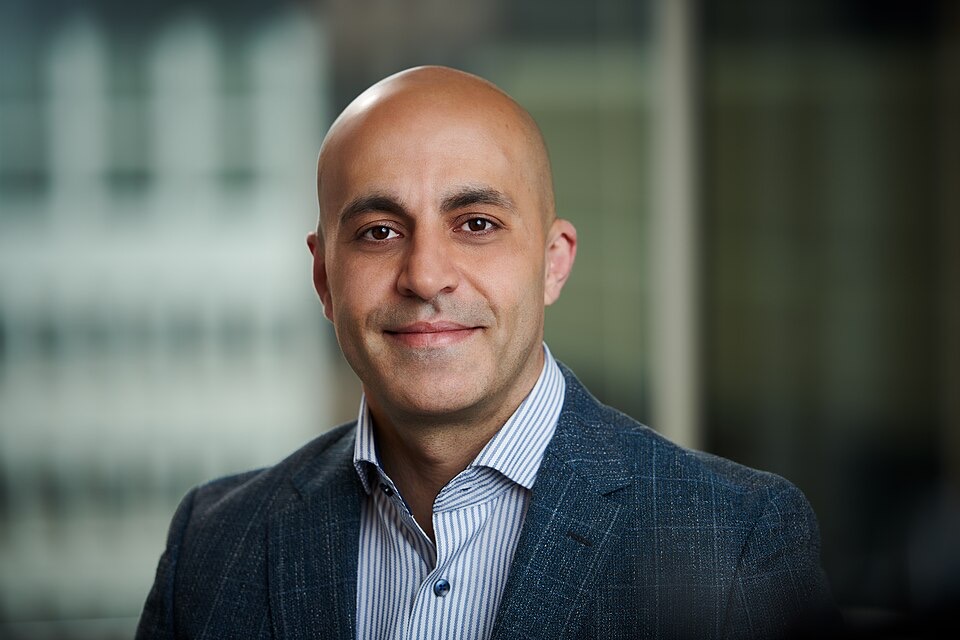
Co-founder and CEO, Databricks; computer scientist who helped start Apache Spark and Mesos at UC Berkeley · b. 1978 · Iran → Sweden → United States
Two calls made by hand, not formulas. how we score →
Summary
Ghodsi was born in Iran and educated in Sweden, then moved from a KTH doctorate and a short lectureship to Berkeley's lab that produced Spark.
He joined Databricks in 2013 as a part-time engineer and became CEO in 2016. Forbes puts him at $7.6 billion, mostly a private stake. His childhood and how his family got to Sweden are not established here.
People in this set who share a company with Ali Ghodsi.
Where they worked
How it happened
Wikipedia says he was born in Iran in 1978 and calls him an "Iranian-Swedish-American" computer scientist; Swedish Wikipedia gives the date as December 8, 1978. Forbes lists his citizenship as United States and says he is also Swedish. Neither source says when or why his family left Iran, what his parents did, or what the household had. A search summary attributed that story to his own interviews, but the interviews themselves could not be opened for this review, so none of it is used.
Per Wikipedia he earned a master's in computer engineering and an MBA in logistics and strategic marketing from Mid-Sweden University in 2002, then a PhD in distributed computing at KTH Royal Institute of Technology in 2006, advised by Seif Haridi. Forbes lists the same three degrees. Who paid for the schooling is not established, and the coding here assumes Swedish public university study with no tuition, which is an inference.
He co-founded Peerialism, a Stockholm peer-to-peer data company, and was a KTH assistant professor in 2008 and 2009, per Wikipedia. In 2009 he joined UC Berkeley as a visiting scholar, working with Scott Shenker, Ion Stoica, Michael Franklin and Matei Zaharia. Wikipedia credits him with helping start Apache Mesos and Apache Spark and co-inventing Dominant Resource Fairness. Spark itself was started by Zaharia at Berkeley's AMPLab in 2009, according to Wikipedia's Spark article.
Databricks was founded in 2013, and Wikipedia lists seven founders: Ghodsi, Andy Konwinski, Ion Stoica, Patrick Wendell, Reynold Xin, Matei Zaharia and Arsalan Tavakoli. Its first round was $13.9 million led by Andreessen Horowitz. Forbes says he joined as a part-time engineer and was named CEO in 2016, when the company was struggling to generate revenue, and that he led a turnaround by reworking leadership and products. What separated him from the other co-founders was taking the operating job when it opened up. His own account of that choice is not established in the sources used.
On October 19, 2026 Forbes showed $7.6 billion and a real-time rank of 522, rated him self-made at 9, and said private investors valued Databricks at $190 billion in August. Wikipedia reports a round of $5 billion that closed in August 2026 and a $7 billion revenue run rate. The figure is an estimate of a private stake. How much of the company he owns is not established.
Wikipedia's Databricks article reports no litigation, employment disputes, securities issues or privacy matters. That is the absence of reporting in one summary source, and it is not a clearance.
The coded evidence
Thirteen groups, every claim sourcedIranian-born; Swedish and American citizen
Nationality tags only; Wikipedia calls him Iranian-Swedish-American. Ethnicity proper is not stated.
↗ en.wikipedia.orgBorn in Iran, raised and educated in Sweden, now a US citizen. Age at leaving Iran is not established in sources opened.
Coded migration 1.5-gen as an approximation; first-gen is possible if he arrived as an older teen.
↗ en.wikipedia.orgHeld a KTH assistant professorship in 2008 and 2009, then a Berkeley visiting scholar post; adjunct professor at Berkeley now. Pay and terms are not established.
Forbes says he joined Databricks part-time, which suggests an outside income, but that is an inference.
↗ en.wikipedia.orgnot established
Not established in sources opened. The household value in the coded block is a placeholder because the enum has no unknown option.
↗ en.wikipedia.orgLives in San Francisco, per Forbes.
↗ forbes.comIran to Sweden (date and circumstances not established), then Sweden to California (Berkeley visiting scholar, 2009).
The 2009 Berkeley move is from Wikipedia; the Iran-to-Sweden step is inferred from his Swedish education and citizenship.
↗ en.wikipedia.orgSix others per Wikipedia: Andy Konwinski, Ion Stoica, Patrick Wendell, Reynold Xin, Matei Zaharia and Arsalan Tavakoli. Forbes describes the group as six UC Berkeley academics who built Spark.
Forbes says six Berkeley academics; Wikipedia's list of the other founders has six names, though not all are described as academics.
↗ en.wikipedia.orgSpark was open-sourced in 2010 and donated to the Apache Software Foundation in 2013, the year Databricks was founded.
↗ en.wikipedia.orgPhD in distributed computing, KTH Royal Institute of Technology, 2006; master's and MBA, Mid-Sweden University, 2002.
Degrees also listed on Forbes.
↗ en.wikipedia.orgnot established
Not established. credentialFunding is coded none as a placeholder for Swedish public study.
↗ en.wikipedia.orgSeries A of $13.9 million in 2013, led by Andreessen Horowitz, then a long series of larger rounds through August 2026.
From Wikipedia's funding table; amounts were not checked against the company's announcements.
↗ en.wikipedia.orgPrivate. Wikipedia reports a round of $5 billion closed in August 2026 with a $190 billion post-money valuation. His own stake is not established.
originCapital angel is approximate; the first round was a venture fund, not an individual angel.
↗ en.wikipedia.org34
Born December 1978 and joined in 2013 (age 34); became CEO at 37 in 2016. Forbes gives age 47 in October 2026.
↗ forbes.comData analytics and AI software
↗ forbes.com7600000000
Forbes real-time figure on October 19, 2026, rank 522, self-made score 9. A point-in-time estimate resting on a private company whose valuation is itself an estimate.
↗ forbes.comJournalistic estimate
↗ forbes.com2026
↗ forbes.comPresumably largely paper, since Databricks is private. Any share sales are not established in the sources used.
↗ forbes.comWealth, not income. Forbes attributes it to data analytics and rates him self-made. His pay is not established.
↗ forbes.comNamed to Time's 2026 list of the 100 most influential people in AI, per Wikipedia's citation; adjunct professor at UC Berkeley.
The TIME profile itself was not opened.
↗ en.wikipedia.orgUncapped
↗ forbes.comNone found. Wikipedia's Databricks article reports no litigation, employment disputes, securities issues or privacy matters. Only that article and the Forbes profile were checked, so this is not a clearance.
↗ en.wikipedia.orgStructural context
The cost-of-failure score comes from this person's own money and circumstances. But who they were in America carried its own weight, the same way their household or income did, and it shaped how hard the path was just as much. That part isn't in the cost-of-failure number. It's here instead.
Men founded the companies that took nearly all the venture funding and almost every top outcome, a tailwind that never shows up in one person's own circumstances.
↗ techcrunch.comImmigrants and their children are overrepresented among America's biggest companies, as founders and as senior leaders. They got there through the visa, credential, and network hurdles that make the path harder to even start down.
↗ forbes.comAmong the people recorded here — men: 225. Representation here is who reached these outcomes, not equal odds of reaching them.
Controlled comparisons
Each holds one thing constant and varies another, so the difference is the point. A list of similar names wouldn't tell you anything.
Related companies
Companies connected to Ali Ghodsi through the profiled people they worked with. Each card says who the link runs through.