Jim Koch
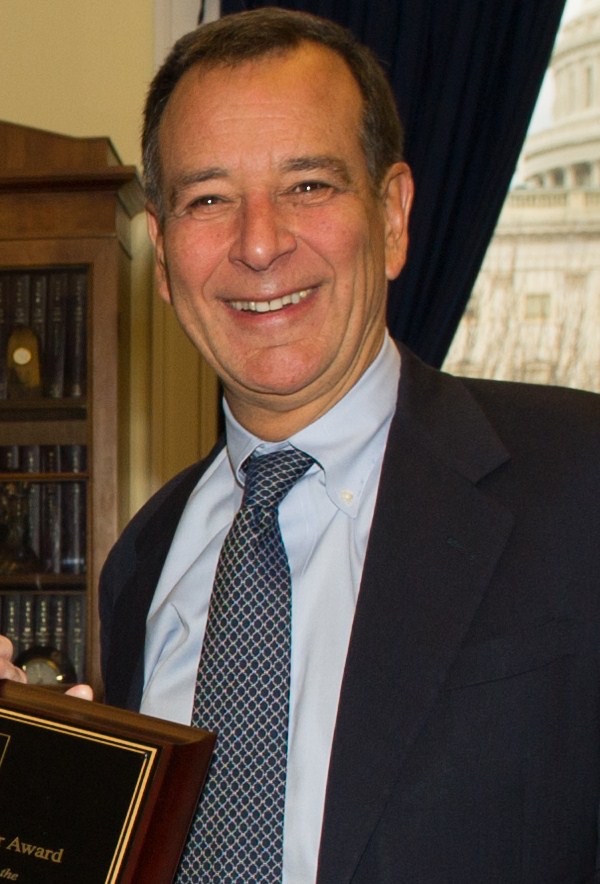
born C. James Koch
Founder and chairman of the Boston Beer Company, maker of Samuel Adams, and a pioneer of the American craft-beer movement · b. 1949 · Cincinnati, Ohio → Boston, Massachusetts
Two calls made by hand, not formulas. how we score →
Summary
The son of a fifth-generation brewer, he took three Harvard degrees to the Boston Consulting Group, then left a high-paying job in 1984 with $100,000 of his own savings and $140,000 from family and friends.
He brewed Samuel Adams on other people's equipment and kept control of the company through the 1995 IPO.
People in this set who share a company with Jim Koch.
Where they worked
How it happened
Koch was born in Cincinnati in 1949 into a family of German-descended brewers. His father was a fifth-generation brewer, and by one account his parents pushed him away from the trade. He went to Harvard instead, earning a BA in government in 1971.
From 1973 to 1977 he worked as an Outward Bound instructor. He then finished a joint JD and MBA at Harvard in 1978, in the same years as Mitt Romney.
He joined the Boston Consulting Group in 1979 and stayed until 1984. One profile puts his salary near $250,000 a year by the end, a figure repeated in secondary sources and not confirmed from a primary one. Either way, he had a well-paid career he could go back to.
In 1984, at 33, he left BCG with a lager recipe from his great-great-grandfather Louis Koch. He put in $100,000 of his own savings and borrowed another $140,000 from family and friends. He brewed test batches in his kitchen, then paid the Pittsburgh Brewing Company to make the beer in its spare capacity, so he never had to buy a brewery.
Distributors weren't interested, so Koch and Rhonda Kallman, his former secretary and later marketing vice president, walked Boston bars and restaurants themselves in 1985 and landed about 25 accounts. At around $20 a case against Heineken's $17, it was a hard sell. In March 1985 Samuel Adams was voted best beer in America at the Great American Beer Festival, and the brand grew from there.
Boston Beer listed on the New York Stock Exchange in 1995 under the ticker SAM. Koch holds all of the Class B shares, which let him elect a majority of the board, and he still chairs the company. In August 2025 he took the CEO role back from Michael Spillane while staying chairman, drawing no salary that year.
Forbes put his net worth at $1.3 billion in October 2026, with an ownership stake of roughly 18 to 22 percent depending on the source. The company's growth now comes mostly from products other than beer, such as Twisted Tea, Angry Orchard and Truly, rather than from Samuel Adams itself.
The coded evidence
Thirteen groups, every claim sourcedCoded from public photographs and family-origin descriptions, not a self-declaration.
↗ en.wikipedia.orgGerman-descended family from Cincinnati with five generations of brewers
coded.ethnicities uses the existing "European American" bucket rather than a new German American tag.
↗ encyclopedia.comMulti-generation US family; the lineage runs back to a great-great-grandfather brewing in St. Louis.
↗ en.wikipedia.orgnot established
No source consulted describes his housing situation in 1984 beyond brewing early batches in his kitchen.
↗ en.wikipedia.orgLeft a well-paid consulting job, so the floor was his own prior earnings plus the $100,000 of savings he put into the company.
↗ en.wikipedia.orgnot established
Wikipedia notes a first marriage ending around 1984; no source describes whether or how a partner supported the launch.
↗ en.wikipedia.org$140,000 raised from family and friends, described as loans in one account and as investment in others.
↗ encyclopedia.comThe hardship was chosen. There was a home to go back to if it failed.
He walked away from a well-paid job by choice and could have returned to consulting.
↗ en.wikipedia.orgFather a brewer, described as fifth-generation; mother Dorothy (née Kautz), occupation not established.
↗ en.wikipedia.orgnot established
Encyclopedia.com says his father worked as a brewer for a Cincinnati beer maker, which suggests employment rather than ownership, but this is not stated outright.
↗ encyclopedia.comFifth-generation brewing family. The recipe Koch used for Samuel Adams Boston Lager came from his great-great-grandfather, Louis Koch, a St. Louis brewer.
↗ en.wikipedia.orgHis parents steered him away from brewing as a career.
↗ encyclopedia.comCincinnati, Ohio; no ZIP-level mobility join performed.
↗ encyclopedia.comCincinnati to Cambridge and Boston for Harvard, and he stayed in the Boston area.
↗ en.wikipedia.orgRhonda Kallman, his former secretary, who became marketing vice president and worked the early Boston accounts with him.
↗ referenceforbusiness.comRhonda Kallman, credited as co-founder in 1984.
↗ en.wikipedia.org34
Born May 1949; the company was founded in 1984, so he was 34 or 35. Some sources say 33.
↗ en.wikipedia.orgFailed to get a distributor, so he and Kallman sold to bars and restaurants in downtown Boston door to door in 1985.
↗ referenceforbusiness.comBA (government, 1971), then joint JD and MBA (1978), all from Harvard
↗ encyclopedia.comnot established
How the Harvard degrees were paid for is not established, so coded.credentialFunding of self-funded is a placeholder and carries low confidence.
↗ encyclopedia.comDirect admission to an elite private university and its professional schools, followed by a management-consulting job.
↗ en.wikipedia.org$100,000 of his own savings, plus $140,000 from family and friends, put into the company in 1984.
↗ referenceforbusiness.comPart of the $140,000 came from family and friends; the split between relatives and friends is not stated.
↗ encyclopedia.comnot established
Not established whether early sales covered costs or the pooled capital did.
↗ referenceforbusiness.com$100,000 of personal savings, accumulated from consulting pay.
↗ referenceforbusiness.comA single informal raise from family and friends alongside his own money. The public offering in 1995 sold 3.1 million shares, with 990,000 directed to customers through mail-in coupons.
↗ referenceforbusiness.comClass A shares trade on the NYSE under SAM. Koch owns all Class B shares and holds their voting rights, which entitle him to elect a majority of the board. The proxy defines a change in control as Koch and his family ceasing to control a majority of the Class B shares.
↗ sec.govA family lager recipe from his great-great-grandfather Louis Koch, which Koch found in the family attic and reworked into Samuel Adams Boston Lager.
The attic detail comes from secondary retellings.
↗ en.wikipedia.orgThe 2026 proxy lists him as beneficial owner of 2,271,472 shares, 21.8 percent of Class A and B combined, while his Class B voting rights give him board control well beyond that economic stake. Forbes describes the stake as 18.5 percent.
↗ sec.govnot established
No documented institutional funding rejection in the sources consulted.
↗ referenceforbusiness.comUsed the idle capacity at established breweries, starting with Pittsburgh Brewing, instead of building one, so his capital went to selling and marketing.
↗ en.wikipedia.orgHimself and the family and friends who put in $140,000; no failure occurred, so the cost was never actually borne.
↗ encyclopedia.comThe US market in 1984 was dominated by a few mass-market lagers, with few domestic full-bodied beers and imports priced at a premium. A beer sold roughly 15 percent above leading imports found an opening.
↗ encyclopedia.comBoston, Massachusetts
↗ en.wikipedia.orgCraft beer, hard cider, hard tea and other alcoholic beverages
↗ en.wikipedia.org1300000000
Forbes real-time figure on the retrieval date; Forbes lists the stake at 18.5 percent while the 2026 proxy shows 21.8 percent. Peak net worth was not checked, so the band reflects current wealth only.
↗ forbes.comJournalistic estimate
↗ forbes.com2026
↗ forbes.com493076
Total reported compensation for fiscal 2024, the highest of the three years in the 2026 proxy table. Earlier years were not checked. In 2025 he took no salary or bonus.
↗ sec.govProxy statement
↗ sec.govSalary and bonus run well under $1 million a year; the wealth is almost entirely his stock in the company he founded.
↗ sec.govWidely credited with helping launch American craft brewing. He wrote Quench Your Own Thirst: Business Lessons Learned Over a Beer or Two (2016) and, per Forbes, still tastes every batch of beer himself.
↗ en.wikipedia.orgUncapped
↗ en.wikipedia.orgReported disputes with Anheuser-Busch over Samuel Adams advertising claims and the contract-brewing description on its labels. The details and outcomes are not established in the sources consulted.
↗ referenceforbusiness.comLost a trademark dispute with Boston Beer Works in 1994, according to a company history.
↗ referenceforbusiness.comUnrelated
↗ referenceforbusiness.comLegal gray
↗ referenceforbusiness.comNone
No fine, judgment or personal liability against Koch is documented in the sources consulted.
↗ referenceforbusiness.comhands-on brewer, Quality obsessed, self-described protector of the beer, Salesman
↗ forbes.comPublic
↗ en.wikipedia.orgAfter
↗ en.wikipedia.orgAsset
He fronted the brand himself in advertising. In August 2018 he was criticized after praising the 2017 corporate tax cut at a dinner with President Trump, per Wikipedia; this is the only reputational controversy found.
↗ en.wikipedia.orgThe reputation was deliberately built, through books, press, and PR.
↗ encyclopedia.comStructural context
The cost-of-failure score comes from this person's own money and circumstances. But who they were in America carried its own weight, the same way their household or income did, and it shaped how hard the path was just as much. That part isn't in the cost-of-failure number. It's here instead.
Men founded the companies that took nearly all the venture funding and almost every top outcome, a tailwind that never shows up in one person's own circumstances.
↗ techcrunch.comAmong the people recorded here — men: 225 · white subjects: 24. Representation here is who reached these outcomes, not equal odds of reaching them.
Controlled comparisons
Each holds one thing constant and varies another, so the difference is the point. A list of similar names wouldn't tell you anything.
Related companies
Companies connected to Jim Koch through the profiled people they worked with. Each card says who the link runs through.