Lady Gaga
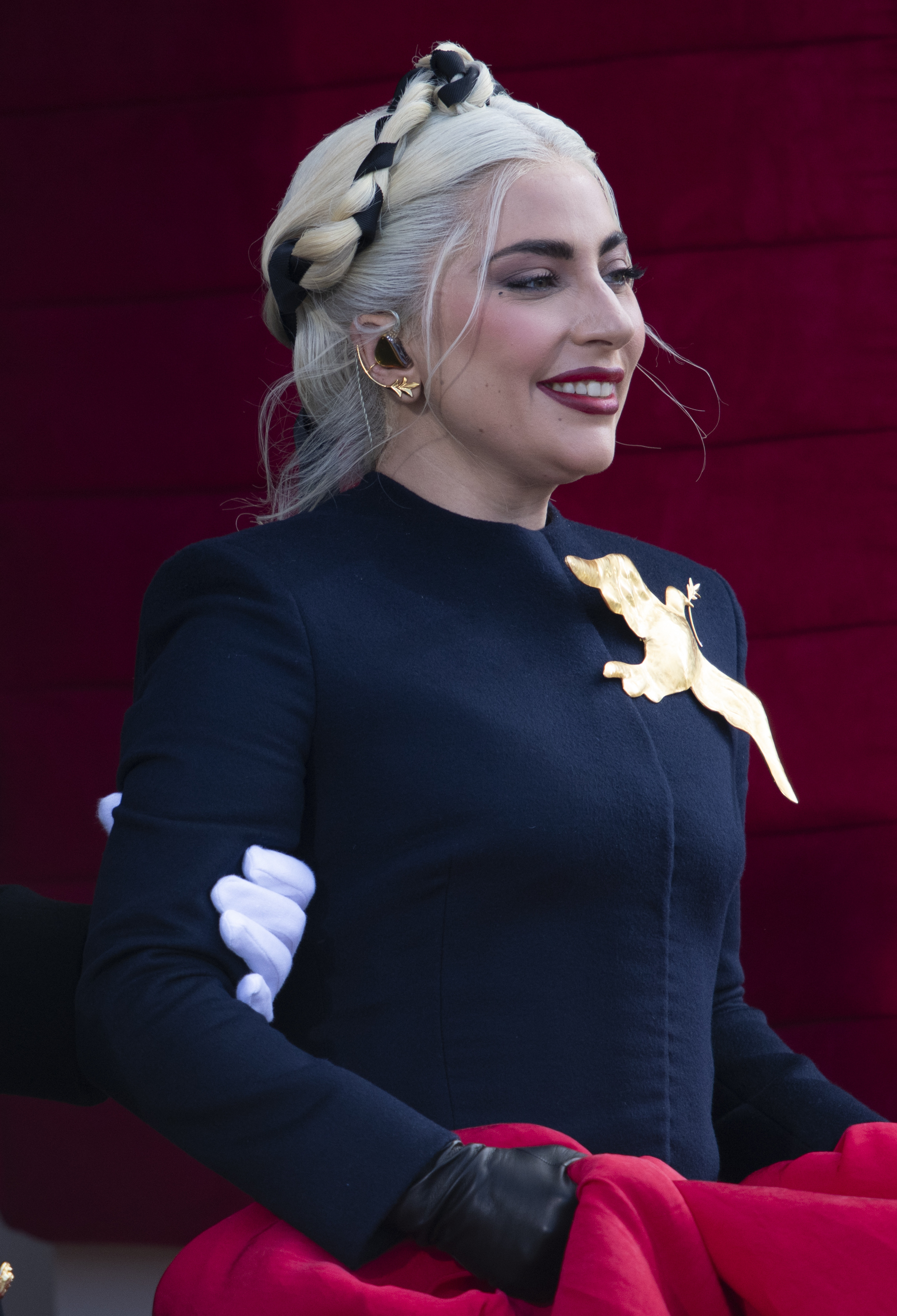
born Stefani Joanne Angelina Germanotta
Singer, songwriter, and actress (Lady Gaga); founder, Haus Labs · b. 1986 · Manhattan, New York
Two calls made by hand, not formulas. how we score →
Summary
Two working professionals on the Upper West Side paid for private school, an NYU Tisch slot, and her rent while she spent three years grinding through Lower East Side clubs on odd jobs.
A talent-scout referral led to the Interscope/KonLive deal and the persona that made her a career act. Decades of fee-for-work music and film followed, plus one company she actually owns: a cosmetics line.
How it happened
Born Stefani Joanne Angelina Germanotta on March 28, 1986, to Joseph Germanotta, an internet entrepreneur who later ran a hotel Wi-Fi company and a Manhattan restaurant, and Cynthia Germanotta, a telecommunications sales and management executive at Verizon. Raised with a younger sister, Natali, in an upper-middle-class Catholic household on the Upper West Side. Piano lessons started at four, and from eleven she attended the Convent of the Sacred Heart, a private girls' school, then studied acting at the Lee Strasberg institute for a decade alongside it. She won early admission to NYU Tisch's CAP21 program at seventeen.
She withdrew from NYU in 2005 to chase music, formed a band called SGBand with friends, and became a fixture of the Lower East Side club circuit, taking jobs including go-go dancing to get by. Her father covered the rent on her $1,100-a-month walk-up on Stanton Street the whole time. Def Jam signed her in September 2006 and dropped her three months later.
A talent scout named Wendy Starland connected her to producer Rob Fusari, who developed her songs and, by his account, helped land on the "Lady Gaga" name. In November 2007, Vincent Herbert signed her to his new Streamline Records, an Interscope imprint. Akon heard her sing a reference vocal in the studio and pushed Jimmy Iovine to add her to his own KonLive label too, calling her his "franchise player." She moved to Los Angeles and set up the Haus of Gaga, a Warhol Factory-style creative collective, and released The Fame in August 2008. "Just Dance" and "Poker Face" both went to number one; "Poker Face" ended up the best-selling single of 2009.
Born This Way (2011) debuted at number one with 1.1 million first-week US sales. Artpop (2013) followed, then a hard turn into jazz standards with Tony Bennett on Cheek to Cheek (2014), which won a Grammy. She moved into television with American Horror Story: Hotel in 2015, winning a Golden Globe, and by 2016 was headlining the Super Bowl LI halftime show. Through the Netflix documentary Gaga: Five Foot Two (2017), she went public with a chronic pain condition, fibromyalgia, that forced her to cancel the final ten dates of the Joanne tour in February 2018.
Her lead role in A Star Is Born (2018) brought an Academy Award for the song "Shallow" and an Oscar nomination for Best Actress. In September 2019 she launched Haus Laboratories, a vegan cosmetics line backed by Lightspeed Venture Partners, first sold only on Amazon. It relaunched in June 2022 as Haus Labs by Lady Gaga through Sephora, rolling out to more than 500 stores.
Estimates of her net worth vary widely and none rests on a filing: a 2020 Forbes list put her self-made fortune at $150 million, aggregator sites now put it near $300 million, and Forbes' own 2025 profile briefly showed a much lower figure. What's better documented is the shape of the money: touring and film fees dominate, Haus Labs is the one asset she actually owns a piece of, and sixteen Grammys and a run of number-one albums are the more reliably counted part of the record.
The coded evidence
Thirteen groups, every claim sourcedBoth parents described as having Italian ancestry and coming from lower-class immigrant-descended families.
↗ en.wikipedia.orgMulti-generation descendant; no documented immigrant parent. Both parents are US-born with Italian ancestry further back in the family line.
↗ en.wikipedia.orgRaised Catholic; attended Convent of the Sacred Heart, a Catholic girls' school, from age eleven.
↗ en.wikipedia.orgHer father paid the rent, roughly $1,100 a month, on her Lower East Side walk-up on Stanton Street from 2005 to 2007, while she worked odd jobs and built a music career with no income of her own. The family home on the Upper West Side remained available the whole time.
↗ scmp.comBoth parents held stable professional income throughout: her father ran his own hotel Wi-Fi business, her mother worked in sales and management at Verizon. Combined with the rent being covered directly, there was no point at which the household could not absorb her not earning.
↗ en.wikipedia.orgShe worked several jobs, including a stint as a go-go dancer, while trying to break into music after leaving NYU. No homelessness, car living, or comparable instability is documented; her rent was covered throughout by her father.
↗ biography.comThe hardship was chosen. There was a home to go back to if it failed.
The low-paid, odd-jobs period reads as hardship in most retellings, but the apartment was rented and paid for by her father the entire time, and the Upper West Side family home was a standing fallback. If it had gone on five more years, she'd have gone home. Coded voluntary rather than imposed.
↗ scmp.comFather Joseph Germanotta founded a hotel Wi-Fi provider and later opened Joanne Trattoria, a restaurant near Lincoln Center, in 2012. Mother Cynthia Germanotta worked in sales and management at Verizon.
Exact founding date of the father's Wi-Fi business is inconsistently reported across secondary sources; not independently confirmed here.
↗ en.wikipedia.orgA parent worked for themselves, the strongest known predictor of founding.
↗ scmp.comParents enrolled her in piano at four and later a creative arts camp, and encouraged her music. When she left NYU at nineteen to chase a recording career, her father responded by paying her rent rather than steering her back toward a conventional path.
↗ en.wikipedia.orgDiagnosed with fibromyalgia, a chronic pain condition, which she went public with in the 2017 Netflix documentary Gaga: Five Foot Two. It forced her to cancel the final ten shows of the Joanne World Tour in February 2018.
↗ edition.cnn.comHas said publicly, since 2014, that she has post-traumatic stress disorder, and separately, in a November 2019 interview, that she went through a period of self-harm ("cutting") earlier in her life. She has said therapy, and telling someone rather than showing them, helped her stop.
Self-declared and on-record across multiple interviews. The PTSD dates to her come-up years, so it is treated as a headwind of that period. What she has attributed it to remains sequestered in its own sensitive field and is not surfaced or asserted here.
↗ today.comHas said publicly, since a December 2014 radio interview, that she was sexually assaulted by a music-industry producer at nineteen, early in her career, and has attributed lasting PTSD to it. The person has never been publicly named and no legal case is on the record.
Her own on-record disclosure of her own experience. The accused is unnamed and unadjudicated and is not named or asserted against here; the fuller account stays in the sequestered personalLifeAllegations field.
↗ theguardian.comUpper West Side, Manhattan
↗ en.wikipedia.orgConvent of the Sacred Heart, a private Catholic girls' school on the Upper East Side, from age eleven.
↗ en.wikipedia.orgCame up inside the downtown Lower East Side club scene of the mid-2000s alongside performance artist Lady Starlight and the crew that became the Haus of Gaga; not documented as producing other major acts from the same rooms in the same years.
↗ en.wikipedia.orgnot established
Raised entirely in Manhattan; moved to Los Angeles as an adult once signed, not before.
↗ en.wikipedia.orgTalent scout Wendy Starland recommended her to producer Rob Fusari after a 2006 Songwriters Hall of Fame showcase; Fusari's material eventually reached Vincent Herbert, who signed her.
↗ en.wikipedia.orgStreamline Records (an Interscope imprint) and KonLive Distribution, a joint deal arranged after Akon championed her to Interscope chairman Jimmy Iovine.
↗ en.wikipedia.orgCapital, Credibility, Network
↗ en.wikipedia.orgA real but small following from the SGBand and Lower East Side club shows before the 2007 label deal; not a platform-scale audience.
↗ en.wikipedia.orgA decade of paid method-acting instruction at the Lee Strasberg Theatre and Film Institute, running alongside her schooling.
↗ en.wikipedia.orgDef Jam signed and then dropped her within three months in late 2006. She kept working the same club circuit and signed with Streamline the following November.
↗ en.wikipedia.orgPiano lessons from age four and a decade of paid acting training at the Lee Strasberg institute, both funded by her parents.
↗ en.wikipedia.orgEarly admission to NYU Tisch's CAP21 program at seventeen, one of a small cohort selected that year.
↗ biography.comNo degree. Attended NYU's Tisch School of the Arts (CAP21 program) on early admission starting 2003; withdrew in 2005 to pursue music.
↗ en.wikipedia.orgDirect enrollment via a competitive early-admission arts program, not transfer or military.
↗ en.wikipedia.orgIt paid its own way from the start. Revenue came before any outside money.
Music career funded by label advances and fees from the 2007 deal onward; no outside investment raised for it.
↗ en.wikipedia.orgHaus Laboratories launched in 2019 with venture backing from Lightspeed Venture Partners; her personal ownership percentage in the company is not disclosed.
↗ en.wikipedia.orgnot established
Masters and publishing terms of the Streamline/Interscope/KonLive deal are not disclosed in the sources reviewed.
↗ en.wikipedia.orgHaus Labs grew out of her own long-running interest in makeup as performance and identity, co-founded with former beauty-industry executive Ben Jones.
↗ en.wikipedia.org1
Haus Labs is the one venture where she holds an actual ownership stake rather than a fee. Earlier commercial tie-ins (Monster Cable headphones, Polaroid creative directorship) read as licensing and title arrangements, not equity.
↗ en.wikipedia.orgHerself, via odd jobs including go-go dancing, and her father, who covered her rent throughout.
↗ biography.comAbout eleven months between the Def Jam drop (late 2006) and the Streamline/KonLive signing (November 2007).
↗ en.wikipedia.orgSigned during a period when major labels were still investing heavily in dance-pop acts ahead of streaming's rise, with iTunes-driven single sales; "Poker Face" was the best-selling single of 2009 largely on download sales.
↗ en.wikipedia.orgBuilt a fee-earning music, film, and touring career from scratch over two decades, and separately built (rather than acquired) Haus Labs as a new company.
↗ en.wikipedia.orgMusic, film, and cosmetics
↗ en.wikipedia.org300000000
No filing exists for a private individual with fee-based income. Estimates diverge sharply across sources reviewed: a 2020 Forbes Self-Made Women list put her at $150 million; aggregator sites in 2025-26 report $300-320 million; Forbes' own real-time profile page, fetched directly, briefly showed $52 million with no visible methodology, which reads as either a data error or a very conservative liquid-asset figure. Treated here as a wide, low-confidence band, not a point estimate.
↗ celebritynetworth.comAggregator
↗ celebritynetworth.comDocumented earnings are overwhelmingly fee-for-work: touring grosses (the Chromatica Ball, $112.4 million in 2022; the Joanne tour, $95 million), a Las Vegas residency, and per-film paychecks, rather than an appreciating asset she owns outright. Haus Labs is the exception, and its value to her is not disclosed.
↗ celebritynetworth.com16 Grammy Awards, 2 Golden Globes, an Academy Award (Best Original Song, "Shallow," 2019), a Sports Emmy, and 22 MTV Video Music Awards; first female artist with four singles each selling at least 10 million copies globally.
↗ en.wikipedia.orgCapped
Most documented income is negotiated per-tour or per-film fee work. Haus Labs is the uncapped exception, but its scale to her personally is undisclosed.
↗ en.wikipedia.orgIn 2010, former producer and ex-boyfriend Rob Fusari sued her production entity, Mermaid Music LLC, claiming a 20% share of its earnings from their pre-fame collaboration. She countersued. The New York Supreme Court dismissed both the lawsuit and the countersuit; the parties dropped the dispute later that year.
↗ en.wikipedia.orgAfter
↗ en.wikipedia.orgIncidental
A revenue-share dispute over pre-fame material, arriving after the deal that actually made her career.
↗ en.wikipedia.orgCivil wrong
↗ en.wikipedia.orgProvocative, Theatrical, Reinventive
↗ en.wikipedia.orgPublic
↗ en.wikipedia.orgBefore
The theatrical, persona-driven reputation was already forming during the pre-deal burlesque and club performances with Lady Starlight, ahead of the 2007 signing.
↗ en.wikipedia.orgAsset
The spectacle and persona are core to what the label and later Haus Labs sold.
↗ en.wikipedia.orgStructural context
The cost-of-failure score comes from this person's own money and circumstances. But who they were in America carried its own weight, the same way their household or income did, and it shaped how hard the path was just as much. That part isn't in the cost-of-failure number. It's here instead.
Across film, music, and digital, ownership and control stay in far fewer women's hands than men's. For one measure, women directed only about 12% of 2023's top-grossing films.
↗ assets.uscannenberg.orgWhite creators hold most of the ownership and catalog control relative to their share of the population. Recognition turns into ownership most reliably for them.
↗ assets.uscannenberg.orgAmong the people recorded here — women: 54 · White subjects: 74. Representation here is who reached these outcomes, not equal odds of reaching them.
Controlled comparisons
Each holds one thing constant and varies another, so the difference is the point. A list of similar names wouldn't tell you anything.