Jimmy Iovine
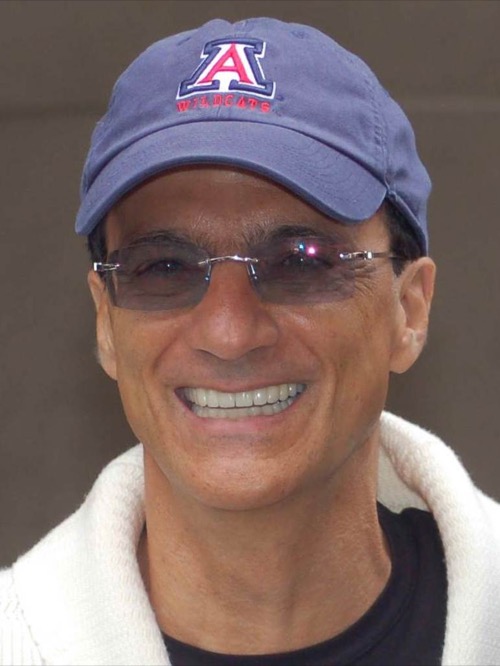
Co-founder, Interscope Records and Beats Electronics · b. 1953 · Brooklyn, New York
Two calls made by hand, not formulas. how we score →
Summary
He grew up working-class in Brooklyn, son of a dockworker, and dropped out of college at nineteen to clean floors at a recording studio.
Engineering hits for Lennon, Springsteen, and U2 built the standing he needed. In 1989 he used it to co-found Interscope with a wealthy film producer, then turned a joke about sneakers into Beats Electronics with Dr. Dre and sold it to Apple for three billion.
How it happened
His father, Vincent, worked the Brooklyn docks as a longshoreman; his mother was a secretary. They raised him and an older sister in Red Hook and sent him through Catholic school. There was no money in the family and no one in the music business.
He enrolled at John Jay College of Criminal Justice and dropped out at nineteen. A songwriter he met around then helped him find work cleaning a New York recording studio. Within a couple of years he was engineering, on staff at the Record Plant by 1973, working sessions for John Lennon and Bruce Springsteen, including "Born to Run."
He became one of the most in-demand engineers and producers of the era: Patti Smith's "Easter," Tom Petty's "Damn the Torpedoes," Stevie Nicks' "Bella Donna," U2's "Rattle and Hum." None of it made him an owner of anything, but it built a reputation and an address book that weren't for sale.
In 1989 he co-founded Interscope Records with Ted Field, an heir to the Marshall Field department-store fortune who brought money and film-industry standing Iovine didn't have on his own. A distribution deal gave Atlantic Records half the label from year one. Interscope broke Tupac, Dr. Dre, Snoop Dogg, and No Doubt, and by 1996 MCA was paying $200 million for its own half.
In 2006 he told Dr. Dre, "fuck sneakers, we need to do speakers," and the two co-founded Beats Electronics. HTC and the Carlyle Group put in hundreds of millions of dollars over the next several years before Apple bought the company outright for $3 billion in 2014, its largest acquisition to that point.
He left Interscope the same year Beats sold, then worked at Apple until 2018 helping build Apple Music. He and Dr. Dre have since put tens of millions of dollars into arts-and-technology schools around Los Angeles. His net worth is estimated near a billion dollars, though no filing discloses an exact figure.
The coded evidence
Thirteen groups, every claim sourcedDescribed as born to "an Italian working-class family" in Brooklyn.
↗ en.wikipedia.orgnot established
Family is documented as Italian American in Brooklyn; how many generations removed from Italy is not established in the sources reviewed.
↗ en.wikipedia.orgAttended Catholic school through high school. A former girlfriend's memoir describes his family as "a wonderful, close-knit Italian Catholic family from Brooklyn and Staten Island."
↗ en.wikipedia.orgLived at home with two working parents, a longshoreman and a secretary, in Brooklyn's Red Hook neighborhood. No family wealth or property fallback beyond the household itself is documented.
↗ en.wikipedia.orgNone beyond his own wages. He supported himself as a studio cleaner and then a working engineer from age nineteen, with no family capital behind the move into music.
↗ en.wikipedia.orgnot established
No personal debt at the start of his career is documented either way.
↗ en.wikipedia.orgnot established
No homelessness, eviction, or comparable instability is documented at any point in the record reviewed. The household reads as stable if modest throughout.
↗ en.wikipedia.orgnot established
Neither imposed hardship nor chosen austerity is documented as a distinct period.
↗ en.wikipedia.orgFather Vincent Iovine worked on the docks as a longshoreman; mother worked as a secretary.
↗ en.wikipedia.orgNeither parent was self-employed.
↗ en.wikipedia.orgRed Hook, Brooklyn, a working-class dockworker neighborhood.
↗ en.wikipedia.orgCatholic school in Brooklyn, graduating from the since-closed Bishop Ford Central Catholic High School.
↗ en.wikipedia.orgAn unnamed songwriter he met around age nineteen helped him get his first job, cleaning a New York recording studio.
↗ en.wikipedia.orgThe Record Plant's New York studio, where he made staff by 1973 and worked alongside the top producers and artists of the era.
↗ en.wikipedia.orgSkill, Network
↗ en.wikipedia.orgTed Field, an heir to the Marshall Field department-store fortune and founder of the film label Interscope Communications, co-founded Interscope Records with him in 1989. Dr. Dre, an artist he brought to Interscope through the Death Row distribution deal, co-founded Beats Electronics with him in 2006.
↗ en.wikipedia.orgWorked up from studio cleaner to staff engineer at the Record Plant's New York studio by 1973, engineering for John Lennon and Bruce Springsteen (including "Born to Run") within a few years, then building a roughly fifteen-year run producing Patti Smith, Tom Petty and the Heartbreakers, Stevie Nicks, Dire Straits, and U2.
↗ en.wikipedia.orgNo degree. Attended John Jay College of Criminal Justice in New York and dropped out at nineteen.
↗ en.wikipedia.orgIt paid its own way from the start. Revenue came before any outside money.
Interscope launched in 1990 with an Atlantic Records distribution deal already in place, generating revenue from the start rather than running on outside investment alone.
↗ en.wikipedia.orgAtlantic Records took a 50% stake in Interscope from its first year in exchange for distribution. In 1996 MCA paid $200 million for its own 50% stake, and Interscope was folded into Universal's label group in stages through 1999.
↗ en.wikipedia.orgTed Field was an operating partner rather than a passive investor: his own capital, his existing film-industry standing as founder of Interscope Communications, and his hands-on role as co-chairman until he left the label in 2001.
↗ en.wikipedia.orgOutside capital was present from the start at both companies. Interscope never operated without a major-label distribution or ownership partner. Beats took a $309 million investment from HTC in 2010, bought HTC's stake back in stages by 2013, and took a $500 million minority investment from the Carlyle Group the same year, valuing the company near $1 billion ahead of the Apple sale.
↗ en.wikipedia.orgPut $70 million, split with Dr. Dre, into founding the USC Jimmy Iovine and Andre Young Academy in 2013, funded out of Beats and Interscope wealth rather than spent down personally.
↗ en.wikipedia.orgBeats grew out of a direct conversation with Dr. Dre about durable, well-designed audio hardware rather than celebrity sneaker-style licensing: "fuck sneakers, we need to do speakers."
↗ en.wikipedia.org2
Converted recognition into ownership twice, in unrelated categories: a record label and a consumer-electronics brand, rather than working only for a production fee.
↗ en.wikipedia.orgnot established
No failed prior ventures are documented; the record reads as a continuous rise from studio cleaner to engineer to label founder.
↗ en.wikipedia.orgMajor labels were expanding distribution deals with independent-minded labels in the late 1980s, and gangsta rap and hip-hop were about to become the industry's biggest commercial growth story of the 1990s. Beats later rode the shift from CDs to digital downloads and then streaming, when a hardware-and-software brand could sit directly inside how people were starting to listen.
↗ en.wikipedia.orgBuilt both times: Interscope from a distribution deal with no existing label behind it, and Beats from a headphone-and-software idea with no existing product line.
↗ en.wikipedia.org25
1989 Interscope founding to his 2014 departure as chairman and CEO of Interscope Geffen A&M.
↗ en.wikipedia.orgMusic production, record labels, and consumer audio technology
↗ en.wikipedia.org1000000000
Aggregator estimate with no disclosed methodology; band only. Forbes separately placed him at about $800 million in an August 2015 "Hollywood's Richest Power Brokers" ranking.
↗ celebritynetworth.comAggregator
↗ celebritynetworth.comWealth from ownership stakes realized in large, discrete sales rather than salary: MCA's $200 million purchase of half of Interscope in 1996, and Apple's $3 billion purchase of Beats in 2014, of which his and Dr. Dre's combined share was reported at roughly $3.24 billion including stock that vested over time.
↗ en.wikipedia.orgRock and Roll Hall of Fame inductee (2022, Ahmet Ertegun Award); credited with discovering or elevating artists including Eminem, 50 Cent, and Lady Gaga; his and Dr. Dre's names are on a USC academy and two public high schools built around arts-and-technology education.
↗ en.wikipedia.orgUncapped
↗ en.wikipedia.orgSteven Lamar, an early creative partner on Beats headphone design, sued Iovine and Dr. Dre for $100 million in unpaid royalties. A jury ordered them to pay him $25 million in June 2018, after Apple's 2014 acquisition of the company had already closed.
↗ en.wikipedia.orgAfter
The suit was filed in 2015 and decided in 2018, after the Apple sale that produced the wealth.
↗ en.wikipedia.orgIncidental
The dispute concerns royalty allocation for design work, not the ownership stake and brand recognition that produced the Apple sale itself.
↗ en.wikipedia.orgCivil wrong
↗ en.wikipedia.orgPersonal liability
The $25 million verdict was a personal liability, not a corporate one; Beats had already been absorbed into Apple by the time of the ruling.
↗ en.wikipedia.orgExacting, Hard driving, Restless
A press-consensus characterization built up over decades around his "magic ears" nickname and reputation as a demanding studio and label boss, rather than a single named account.
↗ en.wikipedia.orgPress
↗ en.wikipedia.orgAsset
The demanding reputation is described as central to his hit-making track record and dealmaking rather than as something that closed doors on him.
↗ en.wikipedia.orgStructural context
The cost-of-failure score comes from this person's own money and circumstances. But who they were in America carried its own weight, the same way their household or income did, and it shaped how hard the path was just as much. That part isn't in the cost-of-failure number. It's here instead.
Men hold most of the ownership and gatekeeping across the creative and media industries, the default that recognition and deals flow toward.
↗ assets.uscannenberg.orgWhite creators hold most of the ownership and catalog control relative to their share of the population. Recognition turns into ownership most reliably for them.
↗ assets.uscannenberg.orgAmong the people recorded here — men: 169 · White subjects: 114. Representation here is who reached these outcomes, not equal odds of reaching them.
Controlled comparisons
Each holds one thing constant and varies another, so the difference is the point. A list of similar names wouldn't tell you anything.