will.i.am
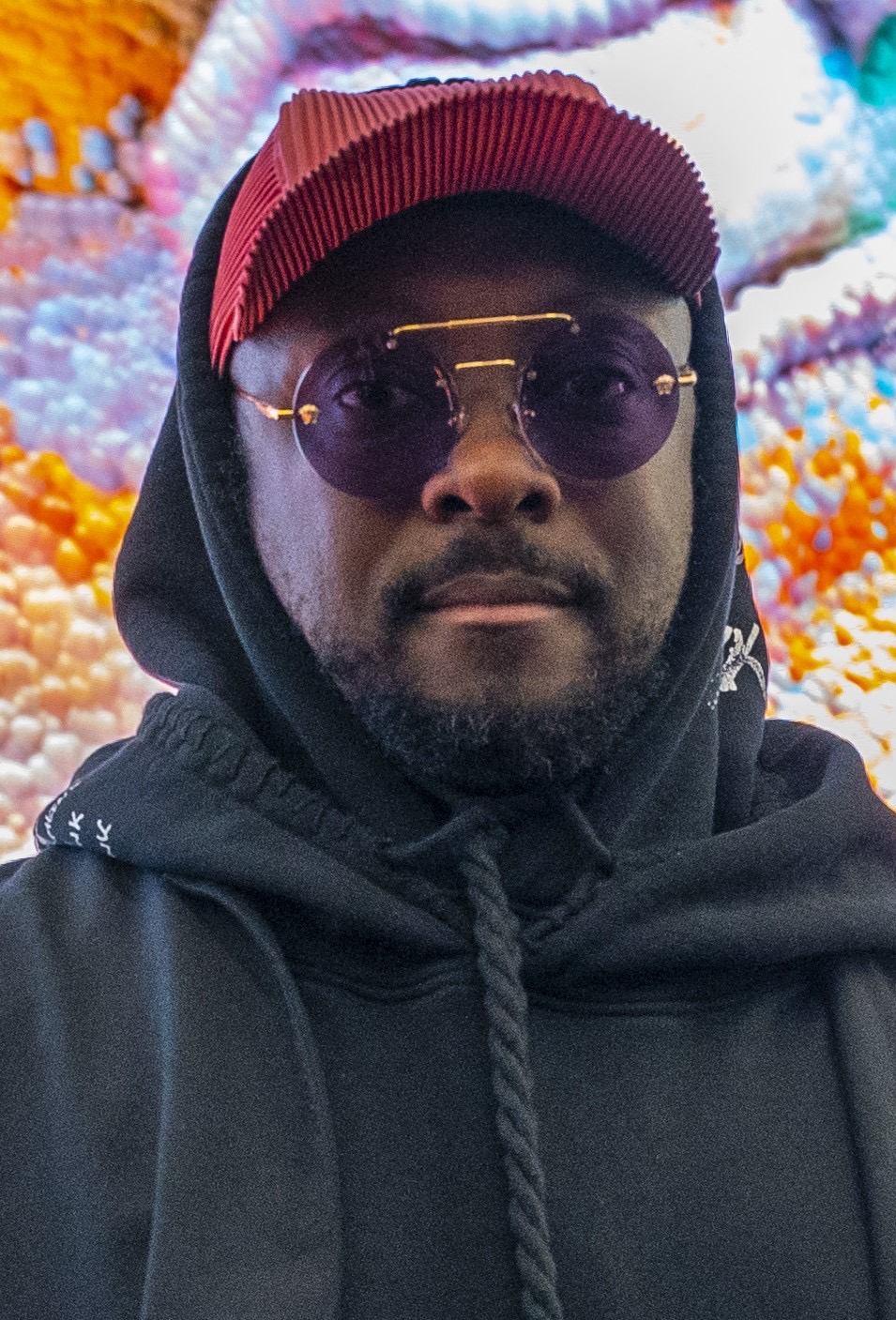
born William James Adams Jr.
Founder, Black Eyed Peas; co-founder, Beats Electronics · b. 1975 · Los Angeles, California
Two calls made by hand, not formulas. how we score →
Summary
Raised in the Estrada Courts housing project in Boyle Heights by a single mother, then bused across town to schools in the Pacific Palisades his own neighborhood didn't reach.
After a decade of working as a rapper and producer, he started trading his name for equity instead of a fee — a headphone company built with Jimmy Iovine and Dr. Dre, then a run of tech ventures with a mixed record.
How it happened
William James Adams Jr. grew up in the Estrada Courts housing project in Boyle Heights, raised by his mother Debra. His father, a Jamaican immigrant, left before he can remember it, and he has said he's never met the man. He's described the household he grew up in as "on welfare, two minutes from homeless."
His mother had him bused out of the neighborhood, first to Paul Revere Middle School and then to Palisades Charter High School, both on the far more affluent west side of Los Angeles rather than the schools closer to home. He didn't find out his own full legal name until he was 25, when a passport application forced him to look at his birth certificate for the first time.
He and a friend from the neighborhood, Allan Pineda, formed a group that Eazy-E signed to Ruthless Records in 1992. The album never came out. Eazy-E died in 1995 before it could be released, and the deal died with him.
He rebuilt the group under a new name and got it signed to Interscope in 1998. It took three albums and five years before "Elephunk" broke through in 2003, and six more years after that before "Boom Boom Pow" put the group at number one worldwide.
In 2006, instead of taking another production credit, he put his name and, by his own account, some of his own money behind a headphone startup with Interscope executive Jimmy Iovine and producer Dr. Dre. He's described himself as the venture's third equity partner, behind Iovine and Dre, for a contribution he's summed up as thinking and "seeing around corners." When Apple bought Beats Electronics for close to $3 billion in 2014, his exact share was never made public, but he was in the room as an owner, not paid as a hired hand.
He kept trying to repeat the move — a phone-accessory and wearables company, a smart-home hub bought from Flextronics, a title as Intel's "director of creative innovation," an AI venture more recently — with a mixed record; his tech company drew reported tax liens in 2019. None of it has changed the basic shape of the thing: the equity habit, not the music catalog, is where most of what he has reportedly ends up.
The coded evidence
Thirteen groups, every claim sourcedDescendant, through the mother who raised him. His father was a first- generation Jamaican immigrant, but with no relationship of any kind, that side supplied no household immigration experience.
↗ en.wikipedia.orgNo family property or savings behind him. Estrada Courts public housing was the family's floor, not a cushion above one — by his own description, the household was "on welfare, two minutes from homeless."
↗ biography.comnot established
No documented homelessness, eviction, or comparable instability during his adult build years (1992 Ruthless deal through the 2003 Elephunk breakthrough), unlike the childhood hardship, which is well documented. Treated as a real distinction, not an oversight.
↗ en.wikipedia.orgThe hardship was imposed, not chosen. There was nothing to fall back on.
Imposed by family circumstance, not a chosen austerity.
↗ biography.comnot established
His mother's occupation isn't established in the sources reviewed; the household is described as on public assistance. His father is undocumented entirely — he has said he's never met the man.
↗ en.wikipedia.orgA maternal uncle, Lynn Cain, played in the NFL. No sustained mentorship or access role for him is documented; noted here only as the one connection to a successful relative that does appear in the record.
↗ en.wikipedia.orgHis mother pushed him toward a wider world than the one immediately around him — sending him across the city to better-resourced schools rather than the ones assigned to his own neighborhood, and, by his account, encouraging him not to conform to what was expected of kids around him.
↗ oprah.comnot established
Raised by his mother alone throughout; no custodial transfer documented.
↗ en.wikipedia.orgPublicly disclosed suffering from tinnitus — constant ringing in his ears — in December 2010, attributing it to years of performing and studio work.
Self-disclosed and occupational in origin rather than present during childhood, so it's coded as a career-era condition rather than a pre-existing headwind to the climb itself.
↗ mtv.comPublicly disclosed having ADHD in 2013, and has spoken about it repeatedly since, including in the 2022 documentary "The Disruptors": "I have ADHD. I'll admit it." He's connected it directly to his creative process — "if you listen to the songs I write, they are the most ADHD songs ever, they have five hooks in one and it all happens in three minutes" — framing a trait that was a headwind through school as the engine of his output as an adult.
For a Black boy in an under-resourced Los Angeles public school system in the 1980s, undiagnosed or mislabeled ADHD more often produced discipline than accommodation — a compounding headwind through his formative years rather than a manageable, medicated condition, unlike the more forgiving reception it tends to get for white kids in well-resourced schools. No contemporaneous school record of a diagnosis is documented; this is his own adult, retrospective account.
↗ contactmusic.comnot established
No self-disclosed abuse, assault, or comparable trauma is documented. Absence here means not established, not that none occurred.
↗ en.wikipedia.orgEstrada Courts, a public housing project in Boyle Heights, Los Angeles. His family was among the few Black households in a complex and neighborhood that was, and remains, predominantly Latino.
↗ abc7.comBused daily out of his own neighborhood to Paul Revere Charter Middle School and then Palisades Charter High School, both public schools on the far wealthier west side of Los Angeles rather than the schools zoned to Boyle Heights.
↗ en.wikipedia.orgMet Allan Pineda (later apl.de.ap, his Black Eyed Peas co-founder) as a teenager through the same local breakdancing and all-ages club scene, both members of a crew called Tribal Nation before either had any industry connection.
↗ en.wikipedia.orgnot established
No household relocation is documented — he stayed in Boyle Heights through childhood; the daily cross-town commute was for school, not a family move.
↗ en.wikipedia.orgnot established
How Eazy-E's Ruthless Records came to sign the group isn't documented in detail in the sources reviewed.
↗ en.wikipedia.orgRuthless Records gave the first deal, but the record never came out. Interscope Records, which signed the reconstituted Black Eyed Peas in 1998, was the platform that actually reached an audience.
↗ en.wikipedia.orgCredibility, Network
↗ en.wikipedia.orgAllan Pineda (apl.de.ap), met as a teenager in the same Los Angeles breakdancing scene, well before either had any label or industry relationship.
↗ en.wikipedia.orgnot established
The group's route to an audience ran through conventional label deals (Ruthless, then Interscope), not a channel built around the gatekeepers.
↗ en.wikipedia.orgThe Atban Klann album he made for Ruthless Records was shelved after Eazy-E's 1995 death, ending that deal entirely. Rather than stay inside a failed arrangement, he rebuilt the group under a new name and found a new label three years later.
↗ en.wikipedia.orgNo college degree is documented as completed. Wikipedia states he attended the Fashion Institute of Design & Merchandising in Los Angeles before joining Black Eyed Peas, but no duration, completion, or degree is given, and it isn't corroborated elsewhere in the sources reviewed. Treated here as unconfirmed rather than as a credential.
↗ en.wikipedia.orgnot established
No personal capital is documented as funding his entry into music. The early work was funded through label deals (Ruthless, then Interscope), not self-financed.
↗ en.wikipedia.orgHis tech company, i.am+, raised roughly $117 million in outside capital in 2017 rather than growing on reinvested profit alone.
↗ finance.yahoo.comBeyond the Beats windfall, he's built a running side career as a tech investor and operator — an early stake in Tesla in 2006, plus Twitter, Pinterest, Dropbox, OpenAI, and Anthropic — and has said passing on a chance to put up to $200,000 into Airbnb's early round, put off by its shortfall against the luxury hotels he was used to, is the one he regrets most.
↗ finance.yahoo.comFounded his own recording imprint in 1998, run alongside the Black Eyed Peas' major-label deal. The larger shift came with Beats, where he was a direct equity co-founder rather than a paid contributor — by his own account the company's third equity partner, behind Jimmy Iovine and Dr. Dre.
His exact percentage in Beats has never been publicly disclosed.
↗ revolt.tvBeats grew out of the same frustration Dr. Dre has described — studio- quality sound compared with what ordinary consumer headphones delivered — developed with Jimmy Iovine, an Interscope executive he had worked with for years by that point.
The precise origin story as it involved him specifically isn't documented in detail in the sources reviewed.
↗ en.wikipedia.org1
Beats (2006) is the one role with a clearly documented equity stake. Later titles — Intel's "director of creative innovation" (2011), 3D Systems chief creative officer (2014) — are well documented as roles but not confirmed as equity-for-endorsement arrangements rather than paid positions, so they aren't counted here.
↗ revolt.tv3
The Atban Klann album shelved after Eazy-E's death, and two solo albums — "Lost Change" (2001) and "Must B 21" (2003) — that failed to chart. Counted loosely; none of the sources reviewed frame these as a formal "failure count" the way a founder's shut-down ventures would be.
↗ en.wikipedia.orgThe labels bore the direct financial losses on the shelved album and the two solo records; he absorbed the career delay and kept working inside the group in the meantime.
↗ en.wikipedia.orgThe same convergence that funded Dr. Dre's crossover — celebrity branding, premium consumer electronics, and the early streaming-music land grab — arriving for the same company at almost the same time.
↗ en.wikipedia.orgBuilt. Beats was a new brand and product category, not an acquired company.
↗ en.wikipedia.orgMusic and consumer technology
↗ en.wikipedia.org50000000
An aggregator figure with no disclosed methodology; other outlets put him anywhere from $50M to $85M. No filing or court-derived number exists for a private individual whose largest asset was an undisclosed minority stake in a company that was later sold. Treat as a wide band, not a point estimate.
↗ celebritynetworth.comAggregator
↗ celebritynetworth.comA mix rather than one or the other — music income and fees from The Voice franchises on one side, an undisclosed but real equity stake in a company sold for billions on the other. Unlike Dr. Dre or Jay-Z, there's no public accounting of how much of his fortune sits in which bucket.
↗ en.wikipedia.orgSeven Grammy Awards, a Daytime Emmy for the "Yes We Can" music video supporting Barack Obama's 2008 campaign, and the i.am Angel Foundation, which funds STEM scholarships and brought free high-speed internet to Estrada Courts, the housing project where he grew up, during the pandemic.
↗ abc7.comUncapped
↗ en.wikipedia.orgFaced a reported $2 million lawsuit in the mid-2000s over an abandoned Antik Denim clothing-line partnership, with the two sides disputing whether the agreement had already run its course; the outcome isn't established. Separately, his tech company i.am+ was reported in 2019 to be carrying tax liens of more than $1.5 million in delinquent taxes.
Sourced to a single aggregator for the tax-lien detail and to a thin Wikipedia mention for the denim suit; resolution of neither is well documented. Included for completeness rather than as an established finding.
↗ celebritynetworth.comUnrelated
Both matters postdate and sit outside the Beats windfall that this record exists to explain.
↗ celebritynetworth.comRestless, Hyper networked, Self promotional, Tech obsessed
↗ finance.yahoo.comPublic
↗ finance.yahoo.comBefore
The prolific, always-working reputation was established through the Black Eyed Peas years, well before Beats existed.
↗ en.wikipedia.orgAsset
Jimmy Iovine has credited him with sparking the idea that became Beats, and his standing as a hitmaking producer is what made his name worth putting on the product.
↗ revolt.tvStructural context
The cost-of-failure score comes from this person's own money and circumstances. But who they were in America carried its own weight, the same way their household or income did, and it shaped how hard the path was just as much. That part isn't in the cost-of-failure number. It's here instead.
Men hold most of the ownership and gatekeeping across the creative and media industries, the default that recognition and deals flow toward.
↗ assets.uscannenberg.orgIn the creative and media industries, recognition comes far more easily to underrepresented creators than the ownership it should turn into. Among 2023's top-grossing film directors, for one measure, eight were Black.
↗ assets.uscannenberg.orgAmong the people recorded here — men: 115 · Black subjects: 58. Representation here is who reached these outcomes, not equal odds of reaching them.
Controlled comparisons
Each holds one thing constant and varies another, so the difference is the point. A list of similar names wouldn't tell you anything.