Greg Brockman
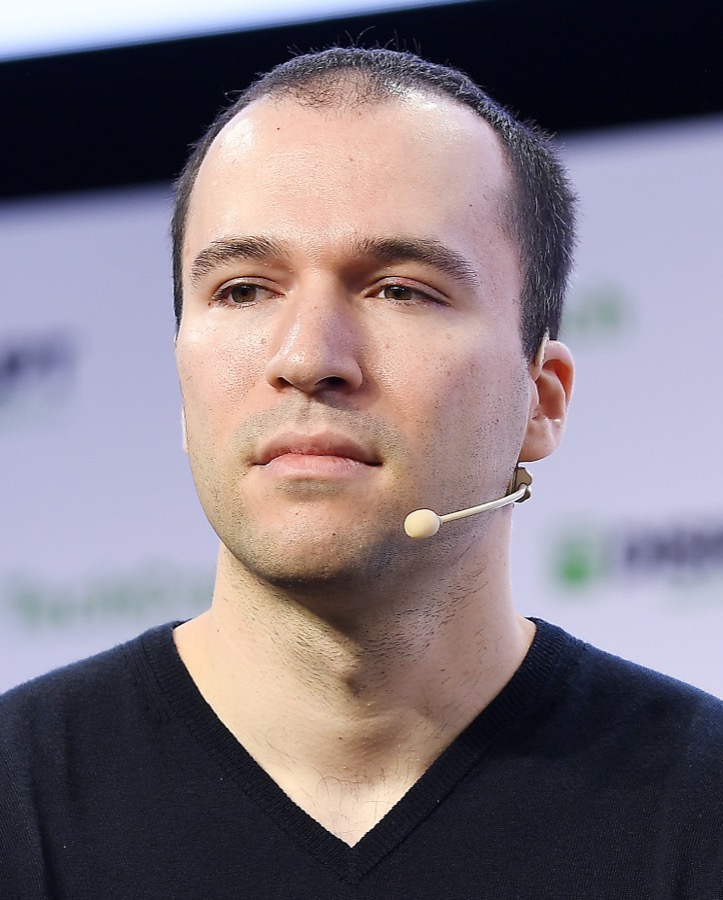
born Gregory Brockman
Co-founder and president, OpenAI; early engineer and first CTO, Stripe · b. 1987 · Thompson, North Dakota
Two calls made by hand, not formulas. how we score →
Summary
Brockman grew up on a hobby farm in North Dakota with two physicians for parents, left Harvard and then MIT, and joined Stripe in 2010 as an early engineer, where he became CTO.
He left in 2015 to help found OpenAI. Forbes estimates his net worth at $25.5 billion, nearly all of it a private-company stake he said under oath he did not pay for.
People in this set who share a company with Greg Brockman.
Where they worked
How it happened
Born in 1987 in Thompson, North Dakota. MIT Technology Review reports he grew up on a hobby farm there, and the Grand Forks Herald names his parents as two physicians at Altru Health System. At Red River High School he had finished the school's math courses and was taking classes at the University of North Dakota. In 2007 he became the first North Dakota finalist in the Intel Science Talent Search since 1973. He also won a silver medal at the 2006 International Chemistry Olympiad.
He has written that he started programming in earnest during a gap year after high school, after reading Turing's paper on machine intelligence. He entered Harvard in 2008, planning to study mathematics and computer science, then transferred to MIT. He left MIT in 2010 without a degree.
He joined an unlaunched payments startup in Palo Alto, founded by his MIT classmate Patrick Collison and Patrick's brother John, and stayed about five years. In his own telling the company went from 4 people to 250 while he was there, and he became its first CTO in 2013. This is the step that separated him. A dropout from a Dakota farm town was standing inside one of the most closely watched startups of the decade, with the title and the contacts that came with it, before he turned 28.
He left Stripe in May 2015. In his account he spent the following weeks talking with AI researchers, then heard Sam Altman say the goal was to build safe human-level AI, and had dinner in Menlo Park with Elon Musk, Ilya Sutskever and others. OpenAI's December 2015 announcement, which he co-authored, named him CTO and said funders including Musk, Altman, Reid Hoffman, Peter Thiel and AWS had committed $1 billion to a nonprofit. Reporting says the company first operated from his living room.
On November 17, 2023, the board that removed Sam Altman as CEO also told Brockman he was off the board. He announced he was quitting, Microsoft's CEO said the two would join Microsoft, and within days Altman was reinstated and Brockman came back. He took a sabbatical from August to November 2024 and returned as president.
Forbes lists his net worth at $25.5 billion on October 9, 2026, and says it comes mainly from OpenAI, with some Stripe equity. In May 2026 court testimony he put his OpenAI stake at about 2.5% to 3% (per Forbes) and said he had not invested any money of his own in the company (per the AP). In the same trial, a jury found Elon Musk's claims against him, Altman and OpenAI were barred by the statute of limitations. It did not rule on whether the allegations were true.
The coded evidence
Thirteen groups, every claim sourcedMulti-generation American
Born and raised in North Dakota; family origins beyond that are not established in the sources used.
↗ en.wikipedia.orgTwo physician parents in North Dakota. No source describes a period when he needed to rely on them, and none says he did not.
↗ grandforksherald.comnot established
His salary and equity terms at Stripe and OpenAI are not established in the sources used.
↗ blog.gregbrockman.comBoth parents are physicians at Altru Health System in Grand Forks: Dr. Ron Brockman and Dr. Ellen Feldman.
As reported in February 2007; their positions today are not established.
↗ grandforksherald.comBoth parents hold medical degrees.
Inferred from the "Dr." titles and physician employment in the cited article.
↗ grandforksherald.comThompson, North Dakota, a small town in Grand Forks County. MIT Technology Review describes him growing up on a hobby farm.
A hobby farm means a small holding kept alongside other work, not a farm that supported the household. Nothing found says the parents farmed for a living.
↗ technologyreview.comRed River High School, a public high school in Grand Forks. He also took classes at the University of North Dakota while a student there.
The article names the school; that it is public is not stated in the article.
↗ grandforksherald.comGrew up far from any tech cluster. He moved east for Harvard in 2008 and to the Bay Area to join Stripe in 2010.
↗ en.wikipedia.orgNorth Dakota to Cambridge, Massachusetts for Harvard (2008) and MIT, then to Palo Alto and San Francisco for Stripe (2010).
↗ blog.gregbrockman.comPatrick Collison, an MIT classmate, founded Stripe with his brother John. Brockman joined the company before it launched.
↗ en.wikipedia.orgCo-founded OpenAI in December 2015 with Sam Altman, Ilya Sutskever and others; Elon Musk and Altman were its co-chairs.
↗ web.archive.org22
Joined Stripe in 2010; birth year of 1987 per Wikipedia. Forbes's page lists his age as 37, which would imply 1988, so the year is uncertain by one.
↗ en.wikipedia.orgTaught himself to program during a gap year after high school, working first on a chatbot. Earlier access to computing at home is not established in the sources used.
↗ blog.gregbrockman.comHe led recruiting of OpenAI's founding research team, which included researchers who left well-paid jobs elsewhere to join.
↗ en.wikipedia.orgNo degree. Entered Harvard in 2008, transferred to MIT, and left MIT in 2010 to join Stripe.
↗ en.wikipedia.orgnot established
Not established; how Harvard and MIT were paid for is not reported in the sources used.
↗ en.wikipedia.orgMIT put him in the same cohort as Patrick Collison, whose startup he joined. His own account is that he moved to MIT to be around people he could learn from.
↗ blog.gregbrockman.comnot established
Early earnings and his Stripe equity terms are not established in the sources used.
↗ blog.gregbrockman.comOpenAI began as a nonprofit. Its December 2015 announcement says donors, including Musk, Altman, Reid Hoffman, Jessica Livingston, Peter Thiel, AWS, Infosys and YC Research, had committed $1 billion, while expecting to spend only a small fraction of it in the first years.
Coded originCapital as angel and raisedOutsideCapital as true because outside backers, not his own money, funded the start. The pledges were donations, not equity purchases, so neither enum fits cleanly.
↗ web.archive.orgHeld Stripe equity from his years as an early employee and CTO. The size is not established in the sources used.
↗ forbes.comTold by Sam Altman that the goal was to build safe human-level AI, and followed a dinner in Menlo Park with Musk, Sutskever and others, per his own account.
His own account; not independently corroborated here.
↗ blog.gregbrockman.comForbes reports that in 2026 court testimony he said he owns about 2.5% to 3% of OpenAI. The AP reports he said he did not personally invest money in OpenAI, and put the stake at nearly $30 billion.
The AP and Forbes give different values for the same stake ($30 billion versus over $20 billion, at different valuations of a private company). How and when the equity was granted is not established in the sources used.
↗ finance.yahoo.comJoined Stripe as online payments were being rebuilt for developers, then co-founded OpenAI just before deep learning became a heavily funded field.
Interpretive framing; the OpenAI announcement describes deep learning's recent results.
↗ web.archive.orgArtificial intelligence
↗ en.wikipedia.org25500000000
Forbes's figure as shown on its profile page on October 9, 2026. It is a point-in-time estimate. Most of it rests on his stake in OpenAI, a private company whose value is an estimate that moves with each funding or secondary-sale price.
↗ forbes.comJournalistic estimate
↗ forbes.com2026
↗ forbes.comLargely paper. Both OpenAI and Stripe are private, and no sale of his shares is established in the sources used.
↗ forbes.comWealth, not income. Forbes attributes it to OpenAI equity and, to a smaller degree, Stripe equity. His salary is not established in the sources used.
↗ forbes.comPresident and co-founder of OpenAI, which he helped build from a nonprofit research lab into a company valued at $852 billion, according to the AP.
↗ finance.yahoo.comUncapped
↗ forbes.comOn May 18, 2026, the jury ruled for Altman, Brockman and OpenAI, finding Musk's claims barred by the statute of limitations. The jury did not rule on whether the allegations were true.
Wikipedia cites a Wall Street Journal report of the verdict. Whether an appeal followed is not established in the sources used.
↗ en.wikipedia.orgElon Musk sued Sam Altman, Brockman and OpenAI, alleging they double-crossed him by moving the company away from its founding nonprofit mission and into moneymaking, behind his back. The AP reported this as Musk's allegation.
The defendants' position at trial is not described in the sources used.
↗ finance.yahoo.comAfter
↗ en.wikipedia.orgIncidental
The suit concerns the company's conversion, which bears on the value of his stake, so this coding is a judgment call.
↗ en.wikipedia.orgIn November 2023 the board that removed Altman also took Brockman off the board, and he announced he was quitting. Microsoft's CEO said both would join Microsoft; within days Altman was reinstated and Brockman returned. Public coverage treated the two as a pair.
↗ en.wikipedia.orgReturned to OpenAI after the November 2023 episode, took a sabbatical from August to November 2024, and came back as president.
↗ en.wikipedia.orgStructural context
The cost-of-failure score comes from this person's own money and circumstances. But who they were in America carried its own weight, the same way their household or income did, and it shaped how hard the path was just as much. That part isn't in the cost-of-failure number. It's here instead.
Men founded the companies that took nearly all the venture funding and almost every top outcome, a tailwind that never shows up in one person's own circumstances.
↗ techcrunch.comWhite founders are heavily overrepresented among funded companies and top-tier wealth relative to their share of the population, an edge that has nothing to do with a person's own money.
↗ techcrunch.comAmong the people recorded here — men: 225 · White subjects: 125. Representation here is who reached these outcomes, not equal odds of reaching them.
Controlled comparisons
Each holds one thing constant and varies another, so the difference is the point. A list of similar names wouldn't tell you anything.
Related companies
Companies connected to Greg Brockman through the profiled people they worked with. Each card says who the link runs through.