Dario Amodei
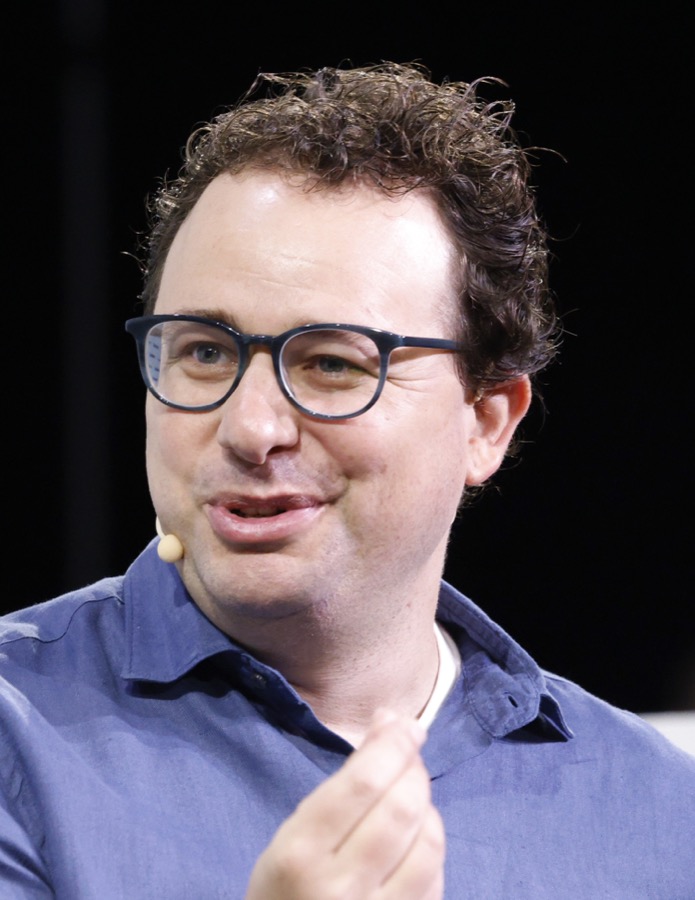
Co-founder and CEO, Anthropic; former VP of Research, OpenAI · b. 1983 · San Francisco, California
Two calls made by hand, not formulas. how we score →
Summary
Amodei grew up in San Francisco with a leatherworker father and a mother who managed library projects.
He earned a physics degree and a Princeton PhD on a Hertz fellowship, did a postdoc, then worked at Baidu, Google Brain and OpenAI. In 2021 he co-founded Anthropic with six other ex-OpenAI staff. Forbes puts his net worth at $15.5 billion, almost all a private stake.
People in this set who share a company with Dario Amodei.
- Tom Brown 4/1 OpenAI · Google · Anthropic
- Andrew Ng 2/2 Google · Baidu
- Daniela Amodei 3/2 OpenAI · Anthropic
- Jack Clark 5/2 OpenAI · Anthropic
- Jared Kaplan 3/1 OpenAI · Anthropic
- Sam McCandlish 3/1 OpenAI · Anthropic
- will.i.am 8/8 OpenAI · Anthropic
- Chad Hurley 3/0 Google
- Elon Musk 2/2 OpenAI
- Greg Brockman 2/0 OpenAI
- Jawed Karim 2/2 Google
- Jeff Bezos 2/1 Google
- Jewel Burks Solomon 3/8 Google
- John Doerr 2/0 Google
- Kevin Mandia 3/1 Google
- Kevin Systrom 1/0 Google
- Larry Page 2/1 Google
- Marian Croak 5/8 Google
- Max Levchin 5/4 Google
- Reed Hastings 2/1 Anthropic
- Reid Hoffman 2/0 OpenAI
- Sam Altman 2/2 OpenAI
- Sergey Brin 2/3 Google
- Steve Chen 3/2 Google
- Sundar Pichai 5/5 Google
Where they worked
How it happened
Wikipedia reports he was born in San Francisco in 1983 to Riccardo Amodei, an Italian-American leather craftsman, and Elena Engel, a Jewish American project manager for libraries. His sister Daniela was born four years later. He attended Lowell High School in the city. The same article says his father died of a disease when Dario was 23. How the family got by is not described in the sources used.
He started at Caltech, where he worked with physicist Tom Tombrello, then transferred to Stanford and took a bachelor's in physics. At Princeton he earned a PhD in biophysics in 2011, with Michael Berry and William Bialek as advisors, on the collective behavior of neural circuits. He held a Hertz Foundation Fellowship from 2007 and won the Hertz Thesis Prize in 2011. A postdoc at Stanford School of Medicine followed.
He worked at Baidu from November 2014 to October 2015, then at Google Brain, and joined OpenAI in 2016. As its VP of Research he is credited with work on GPT-2, GPT-3 and reinforcement learning from human feedback. Forbes says he co-invented the last of these.
Anthropic was incorporated on January 26, 2021 as a public benefit corporation. Forbes says Amodei founded it with six other former OpenAI employees, including his sister Daniela, who is its president. Wikipedia says the siblings were among those who left OpenAI over differences in direction. What separated him was not capital but a research record at the major AI labs, which let him raise money for a lab of his own while still in his thirties.
Outside investors have funded Anthropic in successive rounds. Wikipedia lists a $65 billion round at a $965 billion valuation in May 2026, and Forbes repeats that valuation. Forbes lists Amodei's net worth at $15.5 billion on October 10, 2026. It is an estimate of a stake in a private company, and it is not clear from the sources used how the cofounders' shares divide.
In Bartz v. Anthropic, authors sued over books used to train the company's models. Per Wikipedia, a court held in June 2025 that training on lawfully obtained copies was fair use but that keeping over seven million pirated library copies was not. Anthropic then agreed to a $1.5 billion settlement, which Wikipedia calls the largest known in a U.S. copyright case. Music publishers have also sued the company.
The coded evidence
Thirteen groups, every claim sourcedItalian-American father; mother described as Jewish American.
As Wikipedia states the parents' backgrounds. His own description is not established in the sources used.
↗ en.wikipedia.orgBorn in the United States. Wikipedia describes his father as Italian-American; when the family arrived is not established.
Coded migration none because Amodei himself was born in the US.
↗ en.wikipedia.orgnot established
His salary and equity terms at Baidu, Google Brain, OpenAI and Anthropic are not established in the sources used.
↗ en.wikipedia.orgFather Riccardo Amodei, a leather craftsman. Mother Elena Engel, a project manager for libraries.
Wikipedia's account; the primary source behind it was not checked.
↗ en.wikipedia.orgWikipedia reports his father died of a disease when Dario was 23.
The father's death came while Amodei was in his twenties and in graduate school, not during childhood. Whether he has described it himself is not established in the sources used.
↗ en.wikipedia.orgSan Francisco, California.
↗ en.wikipedia.orgLowell High School, San Francisco.
Whether he attended as a public school student is not stated in the article.
↗ en.wikipedia.orgGrew up in the city that became a center of the technology industry, and lives there now per Forbes.
↗ forbes.comSix other former OpenAI employees, including his sister Daniela Amodei, who is Anthropic's president per Forbes. Wikipedia also names Jared Kaplan and Chris Olah.
↗ forbes.com3
Baidu, Google Brain and OpenAI before Anthropic; the postdoc at Stanford is not counted.
↗ en.wikipedia.orgAnthropic was founded by a group of senior OpenAI staff who left together.
↗ forbes.comPhD in biophysics, Princeton University (2011), after a bachelor's in physics at Stanford. He began at Caltech.
↗ en.wikipedia.orgnot established
Not established. He held a Hertz Foundation Fellowship from 2007, a graduate-school award.
↗ en.wikipedia.orgHertz Foundation Fellowship (2007) during the PhD and Hertz Thesis Prize (2011).
↗ en.wikipedia.orgAnthropic is a public benefit corporation incorporated January 26, 2021. Wikipedia lists a $124 million round in May 2021 and later rounds including $3.5 billion (March 2025), $13 billion (September 2025), $30 billion (February 2026) and $65 billion (May 2026, at a $965 billion valuation), with Amazon and Google among investors.
Coded originCapital as angel and raisedOutsideCapital as true because outside investors, not his own savings, funded the start. Who the first investors were is not established in the sources used, so the angel label is approximate.
↗ en.wikipedia.orgThe founders left OpenAI over differences in direction, per Wikipedia.
↗ en.wikipedia.orgForbes lists him as cofounder and CEO. His share of Anthropic and the split among the seven founders are not established in the sources used.
↗ forbes.comSan Francisco Bay Area.
Forbes lists his current residence as San Francisco; where the company was based at founding is not checked.
↗ forbes.comArtificial intelligence
↗ forbes.com15500000000
Forbes's figure as shown on its profile page on October 10, 2026. It is a point-in-time estimate. It rests on a stake in Anthropic, a private company whose value is itself an estimate. Forbes lists several Anthropic cofounders at similar figures, and the sources used do not say how the stakes divide.
↗ forbes.comJournalistic estimate
↗ forbes.com2026
↗ forbes.comPresumably largely paper, since Anthropic is private. No sale of his shares is established in the sources used.
↗ forbes.comWealth, not income. Forbes attributes it to his Anthropic stake. His pay is not established in the sources used.
↗ forbes.comCEO of a company that private investors valued at $965 billion as of May 2026, per Forbes. Earlier, a co-inventor of reinforcement learning from human feedback per Forbes.
↗ forbes.comUncapped
↗ forbes.comIn Bartz v. Anthropic, Wikipedia reports a June 2025 ruling that training on lawfully obtained copies of the plaintiffs' works was fair use, and that using over seven million pirated library copies was not. In September 2025 Anthropic agreed to pay $1.5 billion to settle, about $3,000 per book plus interest.
The suit is against the company, not Amodei personally. Wikipedia's summary of the court ruling and settlement was not checked against the court docket.
↗ en.wikipedia.orgMusic publishers including Concord, Universal and ABKCO sued Anthropic in October 2023, alleging infringement of song lyrics. Anthropic said the examples were bugs. Wikipedia also reports a further suit by Sony, EMI and Warner Chappell in August 2026. Outcomes are not established in the sources used.
Company litigation; Amodei is not described as personally liable.
↗ en.wikipedia.orgAfter
↗ en.wikipedia.orgIncidental
The settlement concerned how training data was obtained, which relates to the company's product, so this coding is a judgment call.
↗ en.wikipedia.orgWikipedia reports that in February 2026 Amodei refused Pentagon requests to drop contract limits on mass domestic surveillance and fully autonomous weapons, that the Defense Department then labeled Anthropic a supply-chain risk, and that a federal judge issued a temporary injunction on March 26, 2026. The case was ongoing in the sources used.
Policy dispute reported by Wikipedia citing AP and Reason; not checked against the original reports.
↗ en.wikipedia.orgStructural context
The cost-of-failure score comes from this person's own money and circumstances. But who they were in America carried its own weight, the same way their household or income did, and it shaped how hard the path was just as much. That part isn't in the cost-of-failure number. It's here instead.
Men founded the companies that took nearly all the venture funding and almost every top outcome, a tailwind that never shows up in one person's own circumstances.
↗ techcrunch.comWhite founders are heavily overrepresented among funded companies and top-tier wealth relative to their share of the population, an edge that has nothing to do with a person's own money.
↗ techcrunch.comAmong the people recorded here — men: 225 · White subjects: 125. Representation here is who reached these outcomes, not equal odds of reaching them.
Controlled comparisons
Each holds one thing constant and varies another, so the difference is the point. A list of similar names wouldn't tell you anything.
Related companies
Companies connected to Dario Amodei through the profiled people they worked with. Each card says who the link runs through.