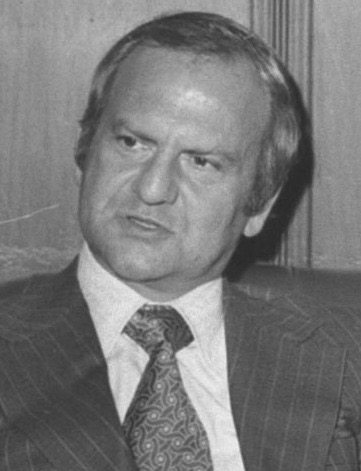
Marian Croak
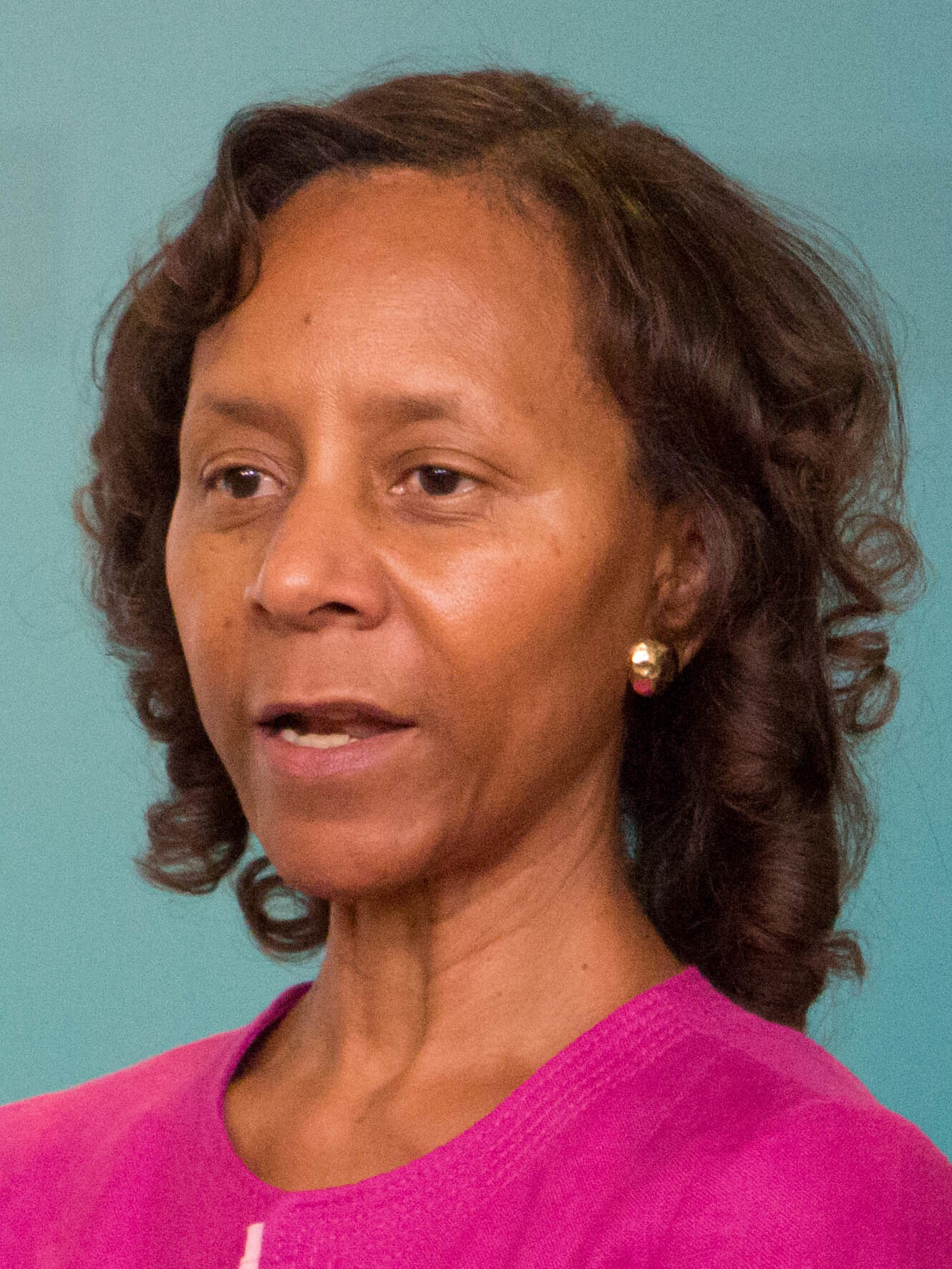
VoIP pioneer and inventor; VP of Engineering, Google (Responsible AI) · b. 1955 · New York City
Two calls made by hand, not formulas. how we score →
Summary
She spent three decades inside AT&T pushing the company to build the technology that would eventually make its own landline business obsolete, then filed roughly 200 patents doing it.
No founding story, no equity, just seniority and later a title at Google. A case for what a long career inside one institution can produce, and how slowly that institution recognized her for it.
How it happened
Raised in New York City in a two-parent household. Her father had only an elementary-school education himself but built her a chemistry set as a child and never discouraged her experiments, even the ones that ended in small kitchen fires — he just wanted to know what she'd learned. She has said she grew up fascinated by the plumbers and electricians who came to fix things in the house and wanted to be the one people called instead.
She transferred out of private school into a New York City public high school in tenth grade because its teachers could take her further in science. From there she went to Princeton for her undergraduate degree, finishing in 1977, then to the University of Southern California for a PhD in social psychology and quantitative analysis, completed in 1982.
Bell Labs hired her out of USC in 1982 into its Human Factors research group. By the early-to-mid 1990s she was pushing AT&T to invest seriously in transmitting voice over internet protocol instead of its own circuit-switched network — a technology that, if it worked, would undercut the long-distance business the company still made real money from. She kept pushing it through a period when that argument was genuinely unwelcome inside a phone company.
She rose to Senior Vice President of Applications and Services Infrastructure at AT&T, eventually overseeing more than 2,000 engineers and computer scientists across 500-plus programs, and filed roughly 200 patents, about half of them in VoIP. A separate invention, text-to-donate giving by SMS, raised $130,000 for Hurricane Katrina relief in 2005 and $43 million after the 2010 Haiti earthquake. She left for Google in 2014 as VP of Engineering, later founding its Center for Responsible AI. In 2022, at 67, she became one of the first two Black women inducted into the National Inventors Hall of Fame — four decades after she was hired.
The coded evidence
Thirteen groups, every claim sourcedDescendant
No immigration narrative appears anywhere in the record; coded as a multi-generation domestic background by absence rather than a positive statement of it.
↗ en.wikipedia.orgnot established
Not established. No source describes housing insecurity or, on the other side, a family home available as a fallback.
↗ blackpast.orgNot a founder path, so there was no venture-building period to fund. Her income floor from age 27 onward was a Bell Labs/AT&T salary.
↗ invent.orgnot established
No documented period of poverty, chosen or imposed, at any life stage.
↗ blackpast.orgnot established
Her father's occupation is not stated in any source; only that he had "only an elementary school education." Household accounts of calling in plumbers and electricians to fix things suggest the family could pay for outside repairs rather than a member of the household doing that trade themselves, a mild signal against acute poverty. Mother's occupation is not established at all.
↗ en.wikipedia.orgFather: elementary school only. Mother: not established.
↗ invent.orgnot established
Not established. One secondhand account attributes a quote to a "Rita" commenting on young Marian's chemistry experiments, but the relationship (sister, other relative, or unrelated source) isn't independently confirmed, so it isn't used to code a sibling.
↗ en.wikipedia.orgHer father, despite having only an elementary-school education himself, built her a home chemistry set as a child and never discouraged her experiments even after one produced a small kitchen fire — he wanted to know what she'd learned from it rather than that she stop. It was permission and encouragement toward an unconventional interest, without money behind it.
↗ invent.orgNew York City (specific neighborhood not established).
↗ en.wikipedia.orgAttended a private school through ninth grade, then transferred into a New York City public high school for tenth through twelfth grade specifically because its teachers could take her further in science.
The private-school attendance implies some family capacity to pay tuition, or a scholarship there too; neither is confirmed.
↗ invent.orgRecruited directly out of USC graduate school at a campus job fair in 1982 by AT&T Bell Laboratories, starting in its Human Factors research division.
↗ invent.orgPhD in social psychology and quantitative analysis, University of Southern California (1982); BA, Princeton University (1977).
↗ invent.orgDirect — undergraduate degree straight into a funded PhD program, then straight into industry.
↗ invent.orgAn Ivy League undergraduate credential (Princeton) and a research doctorate (USC) gave her a credential that opened a direct hire into Bell Labs at a campus job fair, without a pre-existing industry contact.
↗ invent.org38
Approximate. Her push for VoIP investment inside AT&T is generally placed in the early-to-mid 1990s; no source gives a precise year for when the internal argument began, so this is estimated from her 1982 start date and the technology's documented timeline.
↗ invent.orgThe rise of packet-switched internet data networks through the 1990s, which threatened the circuit-switched long-distance business that was still a core AT&T revenue line at the time.
↗ invent.orgTelecommunications and computer science engineering
↗ invent.orgnot established
No credible net-worth estimate exists for Croak anywhere in the public record — she does not appear on Forbes or comparable wealth aggregators. That is itself informative: her significance is in invention and influence (VoIP underlies most modern internet telephony; her text-to-donate patent enabled mass mobile charitable giving), not in a wealth figure. The magnitude band below is estimated from a plausible cumulative senior-executive compensation trajectory (AT&T SVP for roughly two decades, then Google VP for over a decade), not from any disclosed number, and should not be read as a real figure.
↗ forbes.comnot established
AT&T's proxy statements disclose compensation only for named executive officers (CEO, CFO, and a handful of top roles); Croak's SVP compensation was never one of the disclosed lines. No figure is available for her Google compensation either. Not established.
↗ sec.govSalaried and equity-comp income across two large public companies, never ownership of a venture or a stake she controls. A capped path by construction.
↗ invent.orgRoughly 200 patents, about half in VoIP, the technology underlying most modern internet-based voice calling. A separate patent for text-to-donate SMS charitable giving (with co-inventor Hossein Eslambolchi) raised $130,000 for Hurricane Katrina relief in 2005 and $43 million after the 2010 Haiti earthquake. Inducted into the National Inventors Hall of Fame in 2022, one of the first two Black women to be inducted; also elected to the National Academy of Engineering and the American Academy of Arts and Sciences that year.
↗ invent.orgCapped
Salaried corporate executive compensation throughout, not founder equity. Real significance of the path is invention and institutional seniority rather than personal wealth.
↗ invent.orgQuiet, Self reflective, Introspective, prolific inventor
Self-description in her own words, from a first-person retrospective piece.
↗ acentech.comPress
↗ invent.org6
Approximate count of genuinely distinct profiles/citations found (NIHF, Google, Lemelson-MIT, BlackPast, IEEE, AT&T-era WITI Hall of Fame), several of which clearly recirculate the same handful of facts.
↗ invent.orgBefore
Her reputation as a prolific inventor built up over three decades of patent filings inside AT&T, well before the 2022 Hall of Fame induction that formally recognized it.
↗ invent.orgAsset
↗ invent.orgThe reputation accrued from behaviour rather than being manufactured.
Reputation accrued from patent output and internal advancement rather than a deliberate media or publicity campaign; Google's own promotion of her as a Responsible AI figurehead came only after the fact.
↗ acentech.comStructural context
The cost-of-failure score comes from this person's own money and circumstances. But who they were in America carried its own weight, the same way their household or income did, and it shaped how hard the path was just as much. That part isn't in the cost-of-failure number. It's here instead.
Women ran 10.4% of Fortune 500 companies in 2023, an all-time high and still only a tenth of the seats. A 'broken rung' thins their numbers at every level below the top.
↗ forbes.comJust eight Fortune 500 CEOs were Black in 2023, about 1.6%, against roughly 13% of the labor force. The ladder narrows sharply by race near the top.
↗ finance.yahoo.comAmong the people recorded here — women: 54 · Black subjects: 58. Representation here is who reached these outcomes, not equal odds of reaching them.
Controlled comparisons
Each holds one thing constant and varies another, so the difference is the point. A list of similar names wouldn't tell you anything.