Elon Musk
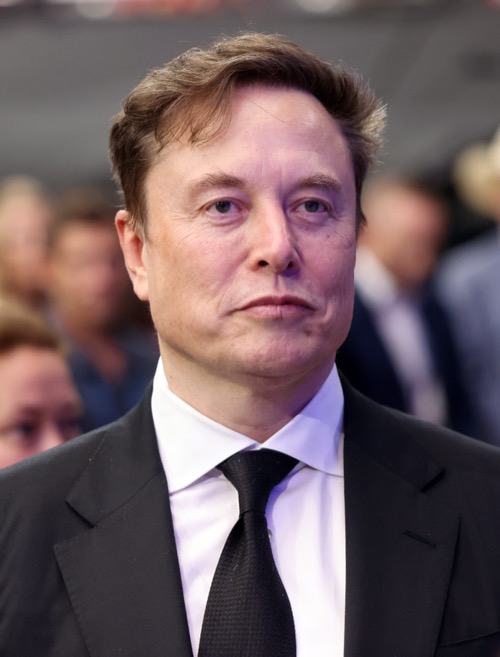
CEO, Tesla and SpaceX; owner, X (formerly Twitter) · b. 1971 · Pretoria, South Africa → Canada → United States
Two calls made by hand, not formulas. how we score →
Summary
Born into a wealthy Pretoria family, he never really built from nothing.
An angel check from his father helped seed his first company; that company's sale funded the next two. By 2008 those recycled exit proceeds were what kept SpaceX and Tesla alive through their worst year. The risk-tolerance he's known for is real. The downside, at every stage, was never fully his to bear.
How it happened
Born in Pretoria in 1971 to a model-and-dietitian mother and a father who worked as an electromechanical engineer, pilot, consultant, emerald dealer, and property developer. His parents divorced when he was about nine; he chose to live with his father, who by his own account once kept so much cash in a home safe it wouldn't close. Errol Musk has said he was a part owner of Zambian emerald mines; in 2023 he revised that to a share of what three small mines produced, a dispute the two have never fully resolved. Either way, the household was wealthy inside an apartheid economy neither Elon nor his siblings had to survive the losing side of.
At 17 he used his Canadian-born mother's citizenship to leave for Canada, avoiding apartheid South Africa's mandatory military service. He's said he arrived with about $2,000 and worked odd jobs, including a lumber mill, before Queen's University and a transfer to the University of Pennsylvania, where he finished dual degrees in physics and economics in 1997. He's described those years as lean. They were lean the way a gap year is lean: a wealthy father remained one phone call away the entire time.
In 1995 he and his brother Kimbal founded Zip2, an online city-guide company, with a few thousand dollars each from themselves and a friend, then a roughly $200,000 angel round their father contributed 10 percent of. Compaq bought Zip2 in 1999 for $307 million; Musk's 7 percent stake was worth $22 million. He put much of it into X.com, an online bank that merged into PayPal, where the board twice removed him from the CEO seat. eBay bought PayPal in 2002 for $1.5 billion in stock; Musk's share came to $175.8 million.
He put roughly $100 million of that PayPal money into founding SpaceX in 2002, then became Tesla's lead investor and chairman in 2004. Both companies nearly failed at once: SpaceX lost its first three rockets, and by 2008 the two ventures had eaten through most of what he had. He was, by several accounts, close to broke. Falcon 1 finally reached orbit that September, and a $1.6 billion NASA contract followed in December, a rescue funded, in the end, by the same recycled fortune that had backstopped every attempt before it.
Tesla and SpaceX both compounded for two more decades into the anchors of his wealth. He bought Twitter for $44 billion in 2022 and renamed it X. In 2018 the SEC charged him with securities fraud over a tweet claiming he had "funding secured" to take Tesla private; he and Tesla each paid a $20 million fine and he gave up the board chairmanship for three years, without admitting wrongdoing. A Delaware court later voided his 2018 pay package as unfair to shareholders; Tesla shareholders approved a new one in 2025, tied to an $8.5 trillion market-cap milestone. He became the world's richest person in 2025 and, briefly, its first trillionaire in mid-2026.
The coded evidence
Thirteen groups, every claim sourcedFirst-generation immigrant: South Africa to Canada in 1989 at 17, then to the United States for university; naturalized US citizen in 2002.
↗ en.wikipedia.orgNo move was made for a partner's career.
No relocation subordinated to a partner's career is documented at any point.
↗ en.wikipedia.orgA wealthy father whose household could reportedly not close its own safe for cash. No housing risk is documented at any point in his career, including the leanest years in Canada and at Zip2.
↗ en.wikipedia.orgNo employer salary funded his ventures; personal savings and, later, proceeds from Zip2 and PayPal did. The floor under those savings was a family that could have absorbed a total loss.
↗ en.wikipedia.orgnot established
No student debt or other non-dischargeable debt is established in the record.
↗ en.wikipedia.orgnot established
No documented homelessness or eviction. The "lean years" stories are chosen austerity (see voluntaryScarcity), not imposed instability.
↗ en.wikipedia.orgThe hardship was chosen. There was a home to go back to if it failed.
Applies to the often-repeated "arrived with $2,000," odd-jobs, slept-on-the-office-couch narrative from his Canada and Zip2 years. Test: had it gone on five more years, he'd have gone home to a wealthy father. The 2008 SpaceX/Tesla near-collapse is a distinct, more genuine risk event, coded separately in d9 and the narrative.
↗ en.wikipedia.orgFather Errol Musk: electromechanical engineer, pilot, sailor, consultant, emerald dealer, and property developer, part owner of a rental lodge at Timbavati Private Nature Reserve. Mother Maye Musk: model and dietitian, Canadian-born, raised in South Africa.
↗ en.wikipedia.orgA parent worked for themselves, the strongest known predictor of founding.
↗ en.wikipedia.org2
Younger brother Kimbal and younger sister Tosca, plus four paternal half-siblings.
↗ en.wikipedia.orgMusk has said he chose to live with his father partly because Errol owned an Encyclopaedia Britannica set and a computer, resources he credits with feeding his early technical interests.
↗ en.wikipedia.orgAfter his parents' 1979 divorce, Musk, around age nine, chose to live with his father rather than his mother. He later said he regretted the decision and became estranged from Errol.
↗ en.wikipedia.orgPublicly self-declared as having Asperger's syndrome, which he disclosed while hosting Saturday Night Live in May 2021 ("I'm actually making history tonight as the first person with Asperger's to host SNL"). He has described being socially isolated as a child and reading compulsively.
↗ en.wikipedia.orgAn affluent, white household in Pretoria under apartheid; family wealth and legally enforced racial status placed the household on the advantaged side of the system.
↗ en.wikipedia.orgWaterkloof House Preparatory School, Bryanston High School, then Pretoria Boys High School — private and well-resourced schooling throughout, though he was reportedly an unexceptional student.
↗ en.wikipedia.orgEmigrated to Canada in June 1989 at 17, using his Canadian-born mother's citizenship, partly to avoid apartheid South Africa's mandatory military conscription and partly to ease a later move to the US. Enrolled at Queen's University (Ontario) in 1990, transferred to the University of Pennsylvania in 1992, then moved to California in 1995. The Washington Post reported in 2024, citing former business associates, that Musk lacked legal authorization to work in the US after declining to enroll in Stanford's graduate program in 1995; Musk disputed this, saying his student visa had transitioned to an H-1B.
The work-authorization detail is contested reporting about his own early venture, not a family or personal-life matter, and is rendered here attributed to both sides rather than as settled fact.
↗ en.wikipedia.orgNone. Unlike a genuine class-inversion migration, the family's wealth and his access to it were never seriously in question. The "arrived with $2,000" framing describes chosen minimalism during a few years of study and odd jobs, not the family's actual position.
↗ en.wikipedia.orgNo prior employer platform. Two 1994 Silicon Valley internships (Pinnacle Research Institute; Rocket Science Games) supplied early exposure and skill the year before he founded Zip2.
↗ en.wikipedia.orgSkill
↗ en.wikipedia.orgZip2 was co-founded with his brother Kimbal Musk and family friend Greg Kouri in 1995.
↗ en.wikipedia.orgBachelor of Arts in physics and Bachelor of Science in economics (Wharton School), University of Pennsylvania; degrees awarded 1997.
↗ en.wikipedia.orgnot established
Not established either way. A wealthy family is the likely backstop but no source states who paid tuition or whether he borrowed.
↗ en.wikipedia.orgQueen's University from 1990, transferred to the University of Pennsylvania in 1992, graduated 1997. Accepted to a Stanford materials-science PhD program in 1995 but did not enroll, choosing the internet boom instead.
↗ en.wikipedia.orgBy Musk's own account, in a December 2019 tweet: roughly $2,000 of his own money plus his home-built computer, about $5,000 from Kimbal, and about $8,000 from Greg Kouri seeded Zip2 in 1995.
This self-admitted figure contradicts the frequently repeated claim that his father supplied roughly $28,000 toward Zip2's founding; no primary source for that specific figure was found in this pass. See familyTransfer below for what Musk himself has said his father contributed.
↗ en.wikipedia.orgPer the same tweet, Errol Musk contributed 10 percent of a roughly $200,000 angel round Zip2 raised later, by which point, in Musk's telling, the venture's risk had already been reduced and the round "would've happened anyway."
The elder Musk's broader wealth is itself contested: both father and son once described Errol as part owner of a Zambian emerald mine; in 2023 Errol revised this to a share of three small mines' output. Reported here as an attributed, unresolved dispute, not fact.
↗ en.wikipedia.orgA roughly $200,000 angel round for Zip2; the full investor list is not itemized in the public record consulted here.
↗ en.wikipedia.orgTesla has a single class of common stock, no dual-class structure. His influence rests on stake size (roughly 11 percent, the largest individual holder, per Forbes), board support, and outsized incentive-option packages rather than super-voting shares. SpaceX and X are privately held with Musk holding a much larger personal stake; Forbes estimated his SpaceX stake, including options, at about 38 percent as of August 2026.
↗ forbes.comReinvested Zip2's $22 million proceeds into founding X.com in 1999, then PayPal's $175.8 million proceeds into founding SpaceX in 2002 (roughly $100 million) and a $6.35 million Tesla Series A investment in 2004. Exit capital was recycled directly into the next venture rather than banked.
↗ en.wikipedia.orgSpaceX won a $1.6 billion NASA Commercial Resupply Services contract in 2008 for Falcon 9/Dragon flights to the ISS, awarded shortly after Falcon 1 first reached orbit. Tesla has separately drawn on federal and state EV incentives and tax credits over its history.
↗ nasa.govZip2 and X.com were personal ventures launched into the 1990s dot-com boom. SpaceX was founded on his own ambition around Mars exploration. Tesla was an existing company, founded by Martin Eberhard and Marc Tarpenning in 2003, that Musk joined as lead investor and board chairman in 2004; a 2009 lawsuit settlement later recognized him as one of five co-founders.
↗ en.wikipedia.orgTesla's 2018 CEO Performance Award, with a grant-date accounting value of roughly $2.28 billion, was voided by the Delaware Chancery Court in Tornetta v. Musk (January 2024) under an "entire fairness" standard, as not fair to shareholders, and ordered rescinded. In 2025 Tesla shareholders approved a new, larger CEO Performance Award, tied to milestones including an $8.5 trillion market capitalization for the maximum payout.
↗ sec.gov0
Zip2, his first venture, sold successfully. He was removed as CEO of both X.com (1999) and the merged PayPal (2000) by his own boards — a leadership loss, not a venture failure; both companies went on to succeed under other leadership.
↗ en.wikipedia.orgNo documented case of him personally absorbing a venture-ending loss. By 2008 he had put much of his Zip2 and PayPal proceeds into SpaceX and Tesla and was, by several accounts, close to exhausting it before Falcon 1's fourth launch reached orbit.
↗ en.wikipedia.org24
Zip2's founding in 1995, the first in a serial-founder career with several later inflections.
↗ en.wikipedia.orgApartheid-era conscription and racial hierarchy shaped the decision to emigrate in 1989. Zip2 and X.com launched into the 1990s dot-com boom. SpaceX and Tesla built on 2000s-2010s NASA commercial- spaceflight contracting and EV tax-credit policy.
↗ en.wikipedia.orgMixed. Built Zip2, X.com, SpaceX, and xAI from nothing. Joined Tesla two years after Eberhard and Tarpenning founded it, later formalized as a co-founder. Acquired Twitter outright in 2022 and SolarCity via Tesla in 2016.
↗ en.wikipedia.org24
SpaceX and, from 2004, Tesla have both run without interruption or reset for over two decades.
↗ en.wikipedia.orgTechnology, aerospace, and automotive
↗ en.wikipedia.org864200000000
Forbes real-time tracker, August 16, 2026. Fluctuates significantly day to day given concentration in a small number of holdings.
↗ forbes.comPublic equity
Tracks public Tesla shares plus SpaceX shares, public since SpaceX's June 2026 IPO; xAI became a SpaceX subsidiary in February 2026.
↗ forbes.com2026
↗ forbes.com2284044884
Tesla's FY2018 Summary Compensation Table total for Musk, driven almost entirely ($2,283,988,504) by the ASC 718 grant-date fair value of the 2018 CEO Performance Award, a 10-year option package vesting only against market-cap and operating milestones. His reported salary that year, $56,380, was not accepted in cash.
↗ sec.govProxy statement
↗ sec.govAlmost entirely unrealized equity and options. Base salary has been $0 in practice for years. The FY2018 compensation figure was a grant-date accounting value, not cash received, and a large piece of that same award was later voided by a Delaware court and replaced by a new 2025 package.
↗ sec.govFirst person tracked at a trillion-dollar net worth (June 2026, on SpaceX's public offering); world's wealthiest person since 2025; served as a senior White House adviser leading DOGE, January-May 2025.
↗ en.wikipedia.orgUncapped
↗ sec.govThe SEC charged Musk with securities fraud over an August 7, 2018 tweet claiming "funding secured" to take Tesla private at $420 a share. Settled September 29, 2018: Musk and Tesla each paid a $20 million penalty ($40 million total), Musk stepped down as board chairman and was barred from re-election to that role for three years, and Tesla agreed to new board oversight of his public communications about the company. Neither admitted nor denied the SEC's allegations.
↗ sec.govTornetta v. Musk: a Delaware Chancery Court ruling (January 2024) voided Tesla's 2018 CEO Performance Award, then the largest pay package in US corporate history, as not entirely fair to shareholders. Tesla shareholders approved a new, larger package in 2025 after the ruling.
↗ sec.govAfter
↗ sec.govIncidental
The tweet risked rather than produced his position; Tesla's underlying value came from the business.
↗ sec.govCivil wrong
↗ sec.govFine absorbed
A $20 million personal fine against a net worth in the hundreds of billions; no admission of wrongdoing, no personal liability beyond the fine, and he remained CEO throughout.
↗ sec.govVisionary, Erratic, Combative, Polarizing
↗ en.wikipedia.orgPublic
↗ en.wikipedia.orgBefore
A reputation as a bold, eccentric entrepreneur predates the Twitter/X-era political controversies.
↗ en.wikipedia.orgMixed
An asset for attention and capital-raising; a liability in some regulatory and reputational contexts.
↗ en.wikipedia.orgThe reputation was deliberately built, through books, press, and PR.
Extensive, direct personal use of X to shape his own coverage and narrative.
↗ en.wikipedia.orgRegarded by many as a singular engineering and business talent behind SpaceX and Tesla, while increasingly criticized, especially after 2024, for far-right political alignment, misinformation, and his conduct running X and DOGE. The two views coexist rather than resolve.
↗ en.wikipedia.orgStructural context
The cost-of-failure score comes from this person's own money and circumstances. But who they were in America carried its own weight, the same way their household or income did, and it shaped how hard the path was just as much. That part isn't in the cost-of-failure number. It's here instead.
Men founded the companies that took nearly all the venture funding and almost every top outcome, a tailwind that never shows up in one person's own circumstances.
↗ techcrunch.comWhite founders are heavily overrepresented among funded companies and top-tier wealth relative to their share of the population, an edge that has nothing to do with a person's own money.
↗ techcrunch.comImmigrants and their children are overrepresented among America's biggest companies, as founders and as senior leaders. They got there through the visa, credential, and network hurdles that make the path harder to even start down.
↗ forbes.comAmong the people recorded here — men: 169 · White subjects: 114. Representation here is who reached these outcomes, not equal odds of reaching them.
Controlled comparisons
Each holds one thing constant and varies another, so the difference is the point. A list of similar names wouldn't tell you anything.