Gwynne Shotwell
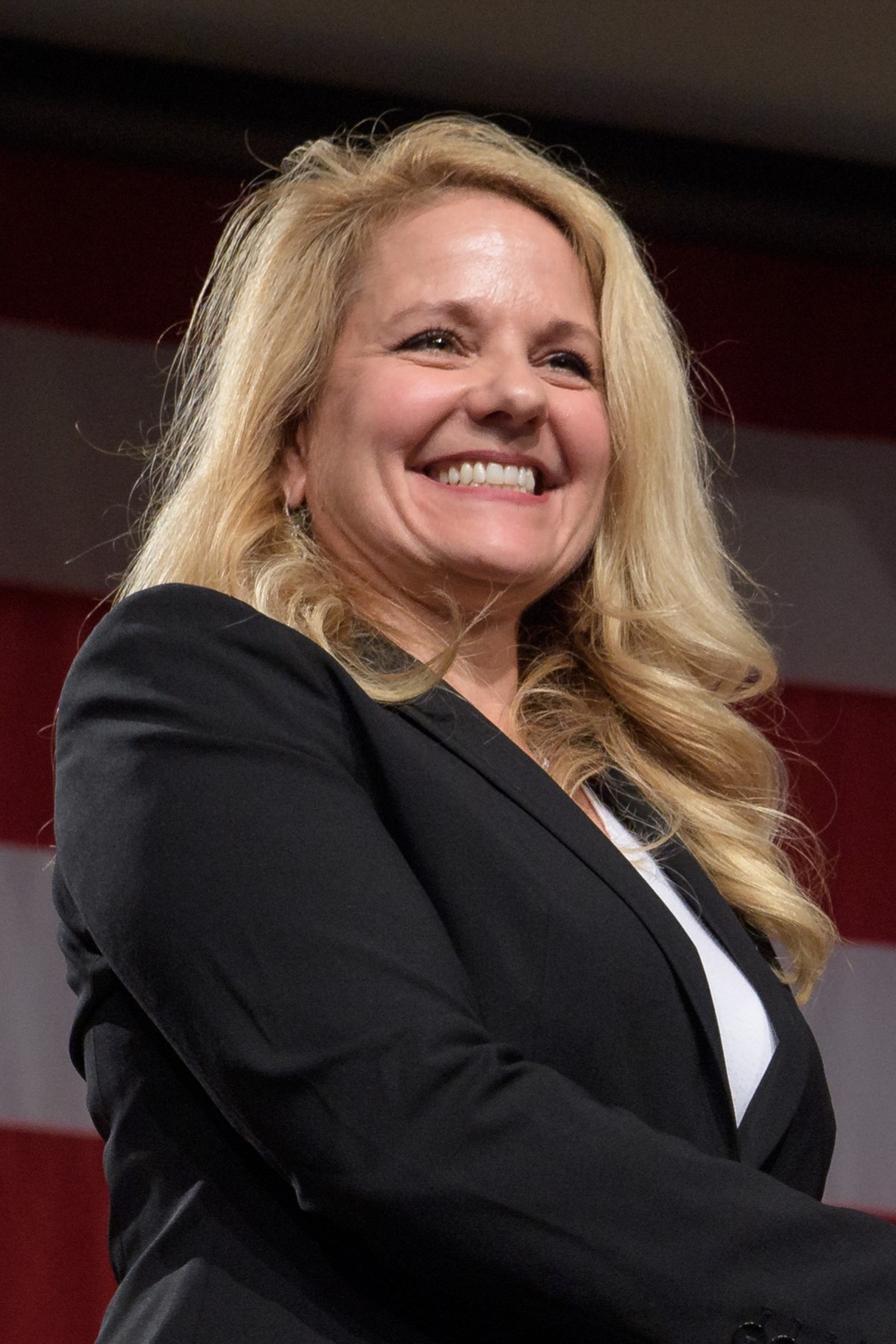
President and Chief Operating Officer, SpaceX · b. 1963 · Evanston, Illinois
Two calls made by hand, not formulas. how we score →
Summary
A neurosurgeon's daughter from a comfortable Chicago suburb earned two engineering degrees at Northwestern, then spent fourteen years in aerospace before joining an unproven rocket startup in 2002 as its eleventh employee.
She was hired, not founded, into it: two decades running its operations turned an executive's equity grant into a multibillion-dollar stake once SpaceX went public in 2026.
How it happened
Gwynne Rowley was born November 23, 1963, in Evanston, Illinois, and grew up in Libertyville, an affluent Chicago suburb, the middle of three daughters. Her father was a neurosurgeon and her mother an artist. As a teenager she went with her mother to a Society of Women Engineers meeting, which she has credited as the moment that pointed her toward engineering.
She earned a bachelor's degree in mechanical engineering and a master's in applied mathematics from Northwestern University in a field where women were rare then and stayed rare for most of her career: mechanical engineering, space-systems engineering, and business development in the space industry were all heavily male-dominated throughout the years she worked in them. It was a technical credential that traveled on its own, without her having to build a network first.
She started in Chrysler's management training program, then spent a decade at The Aerospace Corporation working on military space systems and thermal analysis, followed by four years at Microcosm, a small spaceflight company, where she ran business development and sat on the executive committee. By the time she left, she had a technical reputation people in the industry would vouch for.
In September 2002 she joined SpaceX as its eleventh employee and vice president of business development, a few months after Elon Musk had put most of his PayPal money into founding a rocket company with no launch record and no revenue. It was a senior-level bet on an unproven venture, not a founding stake of her own, and it is the decision everything else traces back to: the equity she was granted as an early executive hire, not the ownership she would have needed to found something herself.
SpaceX's first three Falcon 1 launches failed. Days after the fourth succeeded, she helped close a NASA Commercial Resupply Services contract worth roughly $1.6 billion that kept the company solvent, and in December 2008 she was named President. A colleague from those early years, Hans Koenigsmann, later called her the bridge between Musk and the rest of the company; she has said she tries to run it the way she thinks he would want, adding that it's irritating how often he's right. As President and COO she has run day-to-day operations, sales, and customer relations ever since, building the Falcon manifest past fifty launches and roughly five billion dollars in revenue, closing deals like the 2010 Iridium launch contract, overseeing the first orbital booster landing and reused-booster flights, and personally leading the 2022 negotiations that kept Starlink running for Ukraine.
SpaceX went public on the Nasdaq on June 12, 2026, at $135 a share, the largest IPO on record. The equity she had held as an operating executive for twenty-four years was suddenly a priced, disclosed stake of roughly 0.11 percent, and Forbes put her net worth at about two billion dollars that September. She never founded the company or put her own capital into starting it; she was hired into it early and stayed.
The coded evidence
Thirteen groups, every claim sourcednot established
No specific European ethnic heritage is documented in sources reviewed; coded.ethnicities carries the broad "European American" tag for the facet.
↗ en.wikipedia.orgnot established
No immigration history is documented; treated as multi-generational American absent evidence otherwise.
↗ en.wikipedia.orgnot established
She has two children; whether any career interruption accompanied either birth is not documented in sources reviewed.
↗ en.wikipedia.orgA stable two-parent household in Libertyville, an affluent Chicago suburb, on a neurosurgeon father's income. No housing instability is documented at any point in her life.
↗ en.wikipedia.orgContinuously salaried across her whole career: Chrysler, then a decade at The Aerospace Corporation, four years at Microcosm, and SpaceX from 2002 on. She never had personal capital or a founder's stake at risk.
↗ en.wikipedia.orgThe hardship was imposed, not chosen. There was nothing to fall back on.
No period of chosen austerity is documented; her origin was comfortable throughout.
↗ en.wikipedia.orgHer father was a neurosurgeon and her mother an artist.
↗ en.wikipedia.orgnot established
Not specified whether her father worked in private practice or was hospital-employed.
↗ en.wikipedia.orgA medical degree is implied by her father's profession as a neurosurgeon, but the specific institution is not documented. Her mother's education is not documented.
↗ en.wikipedia.orgnot established
No documented account of a specific family sacrifice aimed at tuition.
↗ en.wikipedia.orgHer mother brought her to a Society of Women Engineers meeting as a teenager, a deliberate nudge toward an engineering career in a field with almost no women in it at the time.
↗ en.wikipedia.orgLibertyville, Illinois, an affluent Chicago suburb.
↗ en.wikipedia.orgLibertyville High School, a public high school; she graduated in 1982.
↗ en.wikipedia.orgnot established
No single named door-opener into SpaceX is documented in sources reviewed; she was hired on the strength of her Aerospace Corporation and Microcosm track record.
↗ en.wikipedia.orgSpaceX. She joined in September 2002 as vice president of business development, its eleventh employee, when the company had no orbital launch to its name.
↗ en.wikipedia.org24
Age at joining The Aerospace Corporation in 1988, her first sustained aerospace-industry role after a brief stint at Chrysler.
↗ en.wikipedia.orgReported directly to founder and CEO Elon Musk as President and COO from December 2008 onward, running day-to-day operations and customer relations for the whole company. A colleague, Hans Koenigsmann, later described her as the bridge between Musk and the rest of the company.
↗ elonx.netBS mechanical engineering and MS applied mathematics, Northwestern University (mid-1980s).
Sources vary slightly on the exact graduation year.
↗ en.wikipedia.orgDirect: public high school to a mechanical-engineering and applied-mathematics program at Northwestern, then straight into industry.
↗ en.wikipedia.orgJoined SpaceX in September 2002 as VP of business development, its eleventh employee, when the company had not reached orbit and had no revenue at scale. The equity granted as a senior early executive hire, not a founder's stake, is what compounded over twenty-four years into a disclosed position worth roughly $2 billion after SpaceX's 2026 IPO.
Her exact grant terms and vesting history are not disclosed; the inference connects her documented early-employee join to the disclosed post-IPO stake.
↗ forbes.com0
No independent venture of her own is documented; her career is a sequence of employee and executive roles.
↗ en.wikipedia.orgContinuously salaried throughout, at Chrysler, The Aerospace Corporation, Microcosm, and then SpaceX. No employment gaps are documented.
↗ en.wikipedia.orgShe joined during NASA's 2000s shift toward commercial cargo and crew contracts. SpaceX's first three Falcon 1 launches failed before a NASA Commercial Resupply Services contract, closed days after the fourth succeeded, kept the company solvent.
↗ en.wikipedia.orgAerospace and space transportation
↗ en.wikipedia.org2000000000
Forbes real-time tracker as of September 20, 2026, based on her disclosed SpaceX stake (about 0.11%, roughly 12.6 million Class A and Class B shares per contemporaneous reporting) following SpaceX's June 2026 IPO on the Nasdaq. This is a market-priced estimate on a newly public, volatile stock, not an audited figure; SpaceX has not yet filed a post-IPO proxy statement disclosing her exact holdings or compensation.
↗ forbes.comPublic equity
↗ forbes.com2026
↗ forbes.comnot established
SpaceX only went public in June 2026 and has not yet filed a proxy statement disclosing named-executive-officer compensation. Prior to the IPO it was a private company with no disclosed executive pay.
↗ sec.govEntirely paper wealth in newly public, likely lock-up-restricted SpaceX shares as of this writing; no realized liquidity event is documented.
↗ forbes.comHer wealth is almost entirely SpaceX equity accumulated over two decades as a senior early hire, not a founder's initial stake, high cash income, or an inherited asset base.
↗ forbes.comElected to the National Academy of Engineering (2020); named to Time's 100 Most Influential People (2020); repeated placement on Forbes' and Fortune's most-powerful-women lists; led SpaceX's 2022 negotiations that kept Starlink service running for Ukraine.
↗ en.wikipedia.org6
From her September 2002 SpaceX join date to her December 2008 promotion to President.
↗ en.wikipedia.orgUncapped
A real, disclosed equity stake in a newly public company rather than a board-set salary, though her compensation package itself has not yet been disclosed in a proxy statement.
↗ forbes.comPragmatic, operationally disciplined, Trusted
↗ elonx.netPress
↗ elonx.netBefore
Her reputation as an effective operator was established well before SpaceX's 2026 IPO.
↗ elonx.netAsset
Consistently described as SpaceX's steady operational leader. Press and political controversy tied to Musk's other ventures and public conduct is not documented as attaching to her personally.
↗ elonx.netThe reputation accrued from behaviour rather than being manufactured.
No book, media-training operation, or comparable self-cultivated public-profile project is documented, unlike some peer executives.
↗ elonx.netStructural context
The cost-of-failure score comes from this person's own money and circumstances. But who they were in America carried its own weight, the same way their household or income did, and it shaped how hard the path was just as much. That part isn't in the cost-of-failure number. It's here instead.
Women ran 10.4% of Fortune 500 companies in 2023, an all-time high and still only a tenth of the seats. A 'broken rung' thins their numbers at every level below the top.
↗ forbes.comWhite executives hold most Fortune 500 CEO seats relative to their share of the population, an edge that adds up at every rung of the climb.
↗ finance.yahoo.comAmong the people recorded here — women: 68 · White subjects: 114. Representation here is who reached these outcomes, not equal odds of reaching them.
Controlled comparisons
Each holds one thing constant and varies another, so the difference is the point. A list of similar names wouldn't tell you anything.