Luke Nosek
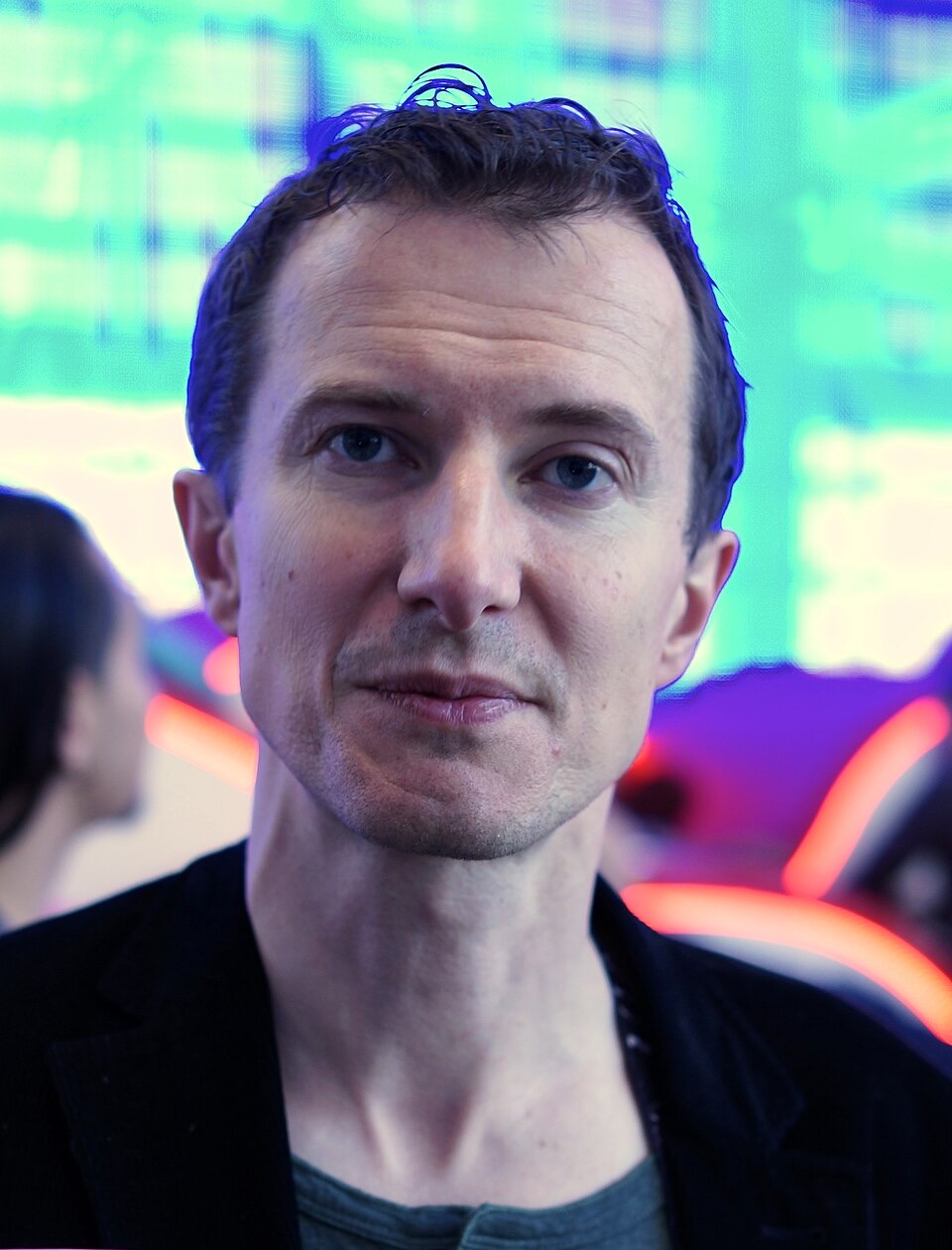
born Łukasz Nosek
Co-founder of PayPal; co-founder of Founders Fund and Gigafund; SpaceX director since 2008 · b. 1975 · Tarnów, Poland
Two calls made by hand, not formulas. how we score →
Summary
Born in Poland, Nosek studied computer engineering at Illinois, where he started a company with Max Levchin and Scott Banister.
He co-founded PayPal in 1998, then used the proceeds and a seat at Founders Fund to back SpaceX early. Gigafund, his own fund, concentrates on Musk-linked companies. Forbes values him at $5.5 billion.
People in this set who share a company with Luke Nosek.
- David Sacks 2/1 PayPal · SpaceX
- Elon Musk 2/2 PayPal · SpaceX
- Peter Thiel 2/2 PayPal · Founders Fund
- Antonio Gracias 2/2 SpaceX
- Chad Hurley 3/0 PayPal
- Gwynne Shotwell 2/4 SpaceX
- Jawed Karim 2/2 PayPal
- Keith Dunleavy 3/1 SpaceX
- Marc Andreessen 4/1 Netscape
- Max Levchin 5/4 PayPal
- Reid Hoffman 2/0 PayPal
- Steve Chen 3/2 PayPal
Where they worked
How it happened
Nosek was born in 1975 in Tarnów, Poland, according to Wikipedia, and Forbes lists him as born in Poland. The sources I could open say nothing about his parents, his household or when he came to the United States, so those parts of the record are left empty. He studied computer engineering at the University of Illinois at Urbana-Champaign and graduated in 1996.
At Illinois he met Max Levchin and Scott Banister through the campus computing society, and in the summer of 1995 the three started SponsorNet New Media while still students. After graduating he worked at Netscape as an evangelist from 1997 to 1998, which put him inside a Silicon Valley company just before the dot-com peak.
In 1998 he co-founded Fieldlink with Levchin, Peter Thiel, Yu Pan and Ken Howery. It became Confinity and merged with Elon Musk's X.com, and the combined company was PayPal. Nosek was vice president of marketing and strategy, ran the launch marketing, and created the Instant Transfer product, according to his University of Illinois alumni profile. eBay bought PayPal in 2002 for $1.5 billion. None of the sources I opened gives his own proceeds from the sale, so none is stated here.
Nosek co-founded Founders Fund with Thiel and Howery (Wikipedia says 2005, Forbes says 2006) and was a general partner until 2017. Forbes says he has been a SpaceX director since 2008, and Gigafund's site says he led the first Founders Fund investment in the company that year. That one position is what Forbes names as the source of his fortune. It was a concentrated early bet, made with a fund he had helped start.
In July 2017 TechCrunch reported that Nosek was leaving Founders Fund, with a partner saying only that he was leaving to launch a new endeavor. No reason was given. Axios, as cited by TechCrunch, said the new firm would initially focus on raising capital for SpaceX, and a Form D showed $100 million allocated; SpaceX reportedly said there was no guarantee of future allocations. Gigafund now lists SpaceX, Neuralink and The Boring Company among its holdings, and Forbes describes Nosek as its managing partner.
Forbes' May 2026 estimate, based on SpaceX's IPO prospectus, was $2.7 billion from a 0.22% SpaceX stake, leaving out a further 0.07% held through Nosek Capital, LLC. Forbes' profile now shows $5.5 billion, and says SpaceX went public in June 2026. It ranks him #763 and scores him self-made 8 out of 10. The profile says he owns about 0.2% of SpaceX personally. The figure rests on a stake whose value moves with one stock.
The coded evidence
Thirteen groups, every claim sourcedInferred only from birth in Poland and a Polish given name (Łukasz); he has not described his ethnicity in anything I opened.
↗ en.wikipedia.orgBorn in Poland; later in the United States. Age at arrival not established.
Forbes says born in Poland and lists US citizenship. The migration code first-gen is a placeholder; he may have arrived as a child.
↗ forbes.comEmployed at Netscape in 1997 and 1998 immediately before co-founding Fieldlink, so he had a salary going into the first venture. Whether he drew pay from Fieldlink in the first months is not established.
↗ grainger.illinois.edunot established
Not established. No source I opened describes his parents or household, so household=two-parent is a placeholder.
↗ en.wikipedia.orgTarnów, Poland (born 1975) to Illinois (University of Illinois at Urbana-Champaign, graduating 1996), then Silicon Valley (Netscape, then Fieldlink in 1998). Forbes now lists his residence as Austin, Texas. The date and circumstances of the move to the US are not established.
↗ forbes.comMax Levchin, whom he met at the University of Illinois; the two started SponsorNet in 1995 and co-founded Fieldlink in 1998 with Peter Thiel.
↗ en.wikipedia.orgFieldlink/Confinity (1998) with Max Levchin, Peter Thiel, Yu Pan and Ken Howery; Founders Fund (2005 or 2006) with Thiel and Howery; Gigafund (2017) with Stephen Oskoui.
The Gigafund co-founder is from Gigafund's site and TechCrunch (2017).
↗ en.wikipedia.org22
Computed. Netscape started in 1997; born in 1975. Birth month is not given.
↗ grainger.illinois.eduThe Illinois computing society put him next to Levchin, Banister and Russel Simmons, all of whom went into the PayPal founding group or its orbit.
Wikipedia cites a LinkedIn profile for the society detail; it is secondhand.
↗ en.wikipedia.orgB.S. in Computer Engineering, University of Illinois at Urbana-Champaign (1996).
↗ grainger.illinois.eduCo-founded SponsorNet New Media with Max Levchin and Scott Banister in summer 1995 while a student.
↗ grainger.illinois.eduNot established for Nosek personally. Fieldlink's seed money is reported to have come from Peter Thiel and friends and family; his own investment in it is not stated.
originCapital=angel is a placeholder for the company's seeding, not a documented personal investment.
↗ en.wikipedia.orgGigafund filed a Form D in 2017 showing $100 million allocated, per TechCrunch. Later fund sizes were not found in the sources opened; the firm's site does not disclose them.
↗ techcrunch.comA single early position: SpaceX shares bought through Founders Fund from 2008 and through Gigafund after 2017. Forbes counts about 0.22% held personally, plus a separate 0.07% held through Nosek Capital, LLC that it left out of its estimate. TechCrunch reports nearly 33 million shares in total.
What Nosek paid for his personal shares is not stated in any source opened.
↗ forbes.comAbout 0.2% of SpaceX personally, per the Forbes profile (Oct 2026); about 0.22% plus 0.07% through Nosek Capital, per the May 2026 Forbes article. A director, with no controlling stake.
↗ forbes.comnot established
Not established. No failed venture is documented in the sources opened; SponsorNet's outcome is not described.
↗ en.wikipedia.org27
Computed from the 2002 eBay sale of PayPal (Forbes) and a 1975 birth year; birth month is not given.
↗ forbes.comVenture capital, concentrated in SpaceX and other Musk-linked companies.
↗ forbes.comJournalistic estimate
Built by Forbes from SpaceX's IPO prospectus share counts and a market price.
↗ forbes.com2026
↗ forbes.comNot established. Nothing opened says whether he has sold any SpaceX or PayPal-era shares, and Forbes says he likely has more wealth from other ventures it did not count.
↗ forbes.com4
1998 founding to the 2002 eBay sale, per Forbes. If the SpaceX stake is counted as the main outcome, the wait was 18 years (2008 to the 2026 IPO).
↗ forbes.comUncapped
↗ forbes.comnot established
None found in the sources opened. This is not a clearance; no litigation or regulatory database was searched.
↗ en.wikipedia.orgearly SpaceX backer, PayPal co-founder, close to Peter Thiel and Elon Musk
Forbes calls him a longtime partner of Thiel; the other tags come from TechCrunch's description of him staying in contact with Musk as a director.
↗ forbes.comPress
↗ techcrunch.comStructural context
The cost-of-failure score comes from this person's own money and circumstances. But who they were in America carried its own weight, the same way their household or income did, and it shaped how hard the path was just as much. That part isn't in the cost-of-failure number. It's here instead.
Men founded the companies that took nearly all the venture funding and almost every top outcome, a tailwind that never shows up in one person's own circumstances.
↗ techcrunch.comImmigrants and their children are overrepresented among America's biggest companies, as founders and as senior leaders. They got there through the visa, credential, and network hurdles that make the path harder to even start down.
↗ forbes.comAmong the people recorded here — men: 225. Representation here is who reached these outcomes, not equal odds of reaching them.
Controlled comparisons
Each holds one thing constant and varies another, so the difference is the point. A list of similar names wouldn't tell you anything.
Related companies
Companies connected to Luke Nosek through the profiled people they worked with. Each card says who the link runs through.