Jared Kaplan
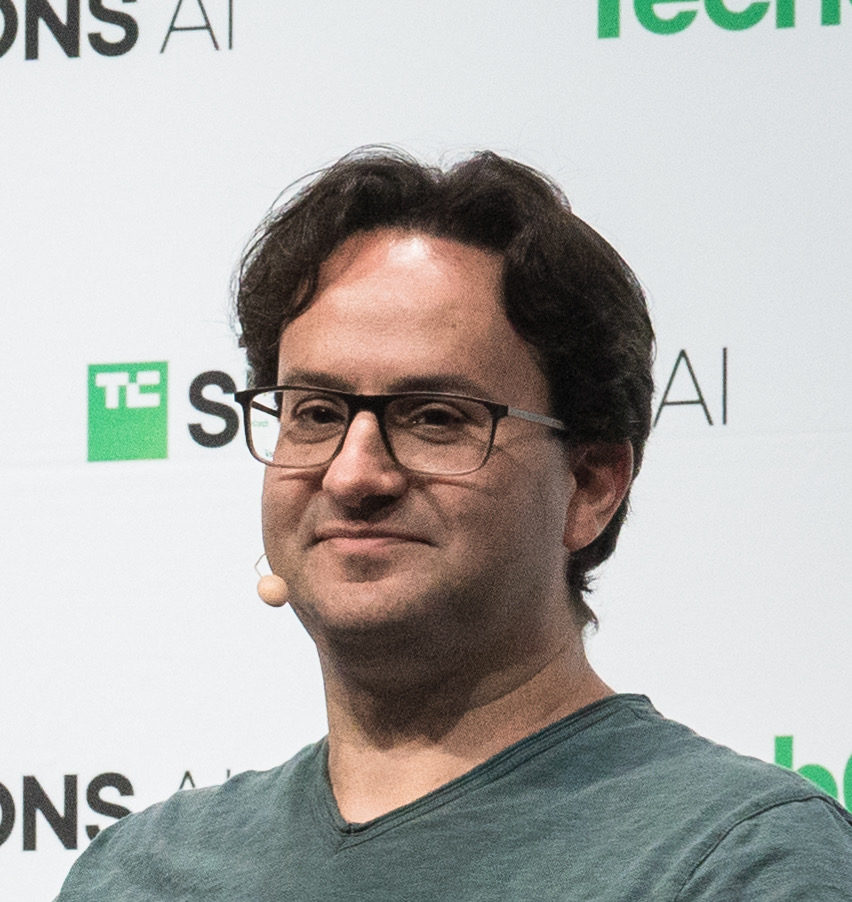
born Jared Daniel Kaplan
Co-founder and chief science officer, Anthropic; theoretical physicist and author of the neural scaling-laws paper · b. 1984 · United States (birthplace not established)
Two calls made by hand, not formulas. how we score →
Summary
Kaplan spent about fifteen years as a theoretical physicist: Stanford, a Hertz-funded Harvard PhD, then a Johns Hopkins professorship from 2012.
He moved into machine learning at OpenAI in 2019, co-wrote the scaling-laws paper in 2020, and co-founded Anthropic in 2021. Forbes puts him at $15.5 billion, mostly a private stake. His family and childhood are undocumented.
People in this set who share a company with Jared Kaplan.
- Daniela Amodei 3/2 OpenAI · Anthropic
- Dario Amodei 3/0 OpenAI · Anthropic
- Jack Clark 5/2 OpenAI · Anthropic
- Sam McCandlish 3/1 OpenAI · Anthropic
- Tom Brown 4/1 OpenAI · Anthropic
- will.i.am 8/8 OpenAI · Anthropic
- Elon Musk 2/2 OpenAI
- Greg Brockman 2/0 OpenAI
- Reed Hastings 2/1 Anthropic
- Reid Hoffman 2/0 OpenAI
- Sam Altman 2/2 OpenAI
Where they worked
How it happened
Kaplan graduated from the Illinois Mathematics and Science Academy in 2001, per the school, then earned a bachelor's in physics and mathematics at Stanford and a physics PhD at Harvard. Wikipedia gives his thesis as "Aspects of holography" (2009), advised by Nima Arkani-Hamed. The Hertz Foundation lists him as a 2005 Hertz Fellow. His parents, where he grew up, and what his upbringing cost or provided are not established in any source used, and the birth year here is inferred from Forbes giving his age as 42 in October 2026.
Per Wikipedia he did postdoctoral work at SLAC and Stanford and has been a physics professor at Johns Hopkins since 2012. The university's page would not load for this review, so the title rests on the Simons Foundation, which lists him as an associate professor and a principal investigator on its Nonperturbative Bootstrap collaboration, and on Forbes, which says he is on leave. He received a 2015 National Science Foundation CAREER award, per the Hertz Foundation. His pay and the terms of his leave are not established.
Wikipedia says he joined OpenAI in 2019 as a researcher. The arXiv listing for "Scaling Laws for Neural Language Models," submitted January 23, 2020, names him first among ten authors, with Dario Amodei last and Tom B. Brown fourth. The paper reports that model performance follows power laws in model size, data and compute. He is also the fifth of 31 authors on the GPT-3 paper, submitted in May 2020, and the Hertz Foundation says he helped build Codex.
Anthropic was founded in January 2021, and Wikipedia's infobox lists Kaplan among eight founders, with seven former OpenAI employees named in the text, including Dario Amodei and Daniela Amodei. He is its chief science officer, and Wikipedia says that in October 2024 the company named him Responsible Scaling Officer. What set him apart from other physics professors was being first author on the paper that gave the company's main bet its evidence, and a group of senior colleagues who left OpenAI together to start a lab. His own account of the decision is not established in the sources used.
Forbes's profile page on October 18, 2026 shows $15.5 billion and a real-time rank of 181, lists him as self-made, and says private investors valued Anthropic at $965 billion in May 2026. Wikipedia carries an older $3.7 billion Forbes figure, so the number has moved a great deal. It is an estimate of a private stake, and how the co-founders' shares divide is not established.
Per Wikipedia, authors sued Anthropic in Bartz v. Anthropic over books used to train its models. A court held in June 2025 that training on digital copies was fair use but ordered trial over keeping pirated copies, and Anthropic agreed to a $1.5 billion settlement, approved in July 2026. Music publishers sued in 2023 and again in August 2026, and the same article reports a 2026 dispute in which the Defense Department designated Anthropic a supply chain risk after the company refused to drop certain safeguards, a decision Anthropic said it would challenge. These concern the company. Kaplan is not described as personally named in the sources used.
The coded evidence
Thirteen groups, every claim sourcedCoded from pronouns in reporting. Race and ethnicity are not established in any source used, so coded.ethnicities is omitted.
↗ forbes.comForbes lists citizenship as United States. Whether his parents were born in the US is not established.
Coded migration none as a placeholder; this is approximate.
↗ forbes.comHeld a university professorship from 2012, per Wikipedia, and Forbes says he is now on leave from it. Pay and leave terms are not established.
The position is the reason hardness is coded on the soft side; the fallback itself is an inference.
↗ en.wikipedia.orgnot established
Not established in any source used. The household value in the coded block is a placeholder because the enum has no unknown option.
↗ forbes.comIllinois Mathematics and Science Academy, class of 2001.
The school's own alumni-award page. Hometown is not stated there.
↗ imsa.eduLives in Pacifica, California, per Forbes.
↗ forbes.comSeven former OpenAI employees, per Wikipedia's text. Its infobox lists eight founders: Dario Amodei, Daniela Amodei, Jared Kaplan, Jack Clark, Chris Olah, Ben Mann, Sam McCandlish and Tom Brown.
The count of seven in the text and eight names in the infobox differ.
↗ en.wikipedia.orgAnthropic was founded by former OpenAI staff, per Wikipedia.
↗ en.wikipedia.orgPhD in physics, Harvard, thesis "Aspects of holography" (2009); bachelor's in physics and mathematics, Stanford.
The degrees are also stated on the Hertz Foundation page and the school's alumni page.
↗ en.wikipedia.orgnot established
Not established. He was a 2005 Hertz Fellow, a graduate fellowship, so credentialFunding is coded scholarship; the fellowship's terms in his case were not opened.
↗ hertzfoundation.orgStanford, Harvard, SLAC and Stanford postdoc, then Johns Hopkins professor from 2012.
↗ en.wikipedia.orgAnthropic is a public benefit corporation. Per Wikipedia its Series H in May 2026 raised $65 billion at a $965 billion valuation. His own stake is not established.
Coded originCapital angel and raisedOutsideCapital true because outside investors funded the company; the identity of the earliest investors was not checked, so the angel label is approximate.
↗ en.wikipedia.orgForbes lists him as cofounder and chief science officer. His share of Anthropic and the split among the founders are not established.
↗ forbes.com37
Anthropic founded in 2021; birth year inferred from Forbes's age of 42 in October 2026, so 36 to 37.
↗ forbes.comArtificial intelligence
↗ forbes.com15500000000
Forbes's real-time figure on October 18, 2026, rank 181 in the world, self-made score 8. It is a point-in-time estimate resting on a stake in Anthropic, a private company whose value is itself an estimate. Wikipedia's older Forbes figure of $3.7 billion shows how fast it moves. How the co-founders' stakes divide is not established.
↗ forbes.comJournalistic estimate
↗ forbes.com2026
↗ forbes.comPresumably largely paper, since Anthropic is private. No sale of his shares is established in the sources used.
↗ forbes.comWealth, not income. Forbes attributes it to artificial intelligence and rates him self-made. His pay is not established.
↗ forbes.comFirst author of the scaling-laws paper (arXiv, January 2020), named to Time's 2025 list of the 100 most influential people in AI per the school's alumni page, and a 2026 IMSA alumni award recipient.
↗ imsa.eduUncapped
↗ forbes.comIn Bartz v. Anthropic, Wikipedia reports a June 2025 summary judgment that training on digital copies was fair use, with a trial ordered over the acquisition and keeping of pirated books. Anthropic agreed to pay $1.5 billion to settle in September 2025, and the settlement was approved in July 2026, per the same article.
The suit is against the company, not Kaplan personally. Wikipedia's summary was not checked against the docket.
↗ en.wikipedia.orgWikipedia lists further matters against the company: music publishers' October 2023 suit over song lyrics, an August 2026 suit by music companies alleging torrenting of compositions, and a 2026 dispute with the Defense Department over a supply chain risk designation, which the company said it would challenge and which a federal judge temporarily enjoined in March 2026. Outcomes are not established in the sources used.
Company litigation and a company policy dispute; Kaplan is not described as personally named.
↗ en.wikipedia.orgAfter
↗ en.wikipedia.orgIncidental
The settlement concerned how training data was obtained, which relates to the product, so this coding is a judgment call.
↗ en.wikipedia.orgStructural context
The cost-of-failure score comes from this person's own money and circumstances. But who they were in America carried its own weight, the same way their household or income did, and it shaped how hard the path was just as much. That part isn't in the cost-of-failure number. It's here instead.
Men founded the companies that took nearly all the venture funding and almost every top outcome, a tailwind that never shows up in one person's own circumstances.
↗ techcrunch.comAmong the people recorded here — men: 225. Representation here is who reached these outcomes, not equal odds of reaching them.
Controlled comparisons
Each holds one thing constant and varies another, so the difference is the point. A list of similar names wouldn't tell you anything.
Related companies
Companies connected to Jared Kaplan through the profiled people they worked with. Each card says who the link runs through.