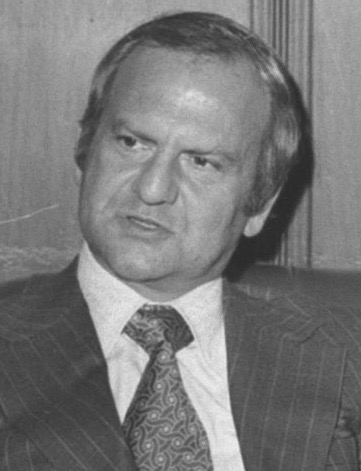
Pat Gelsinger
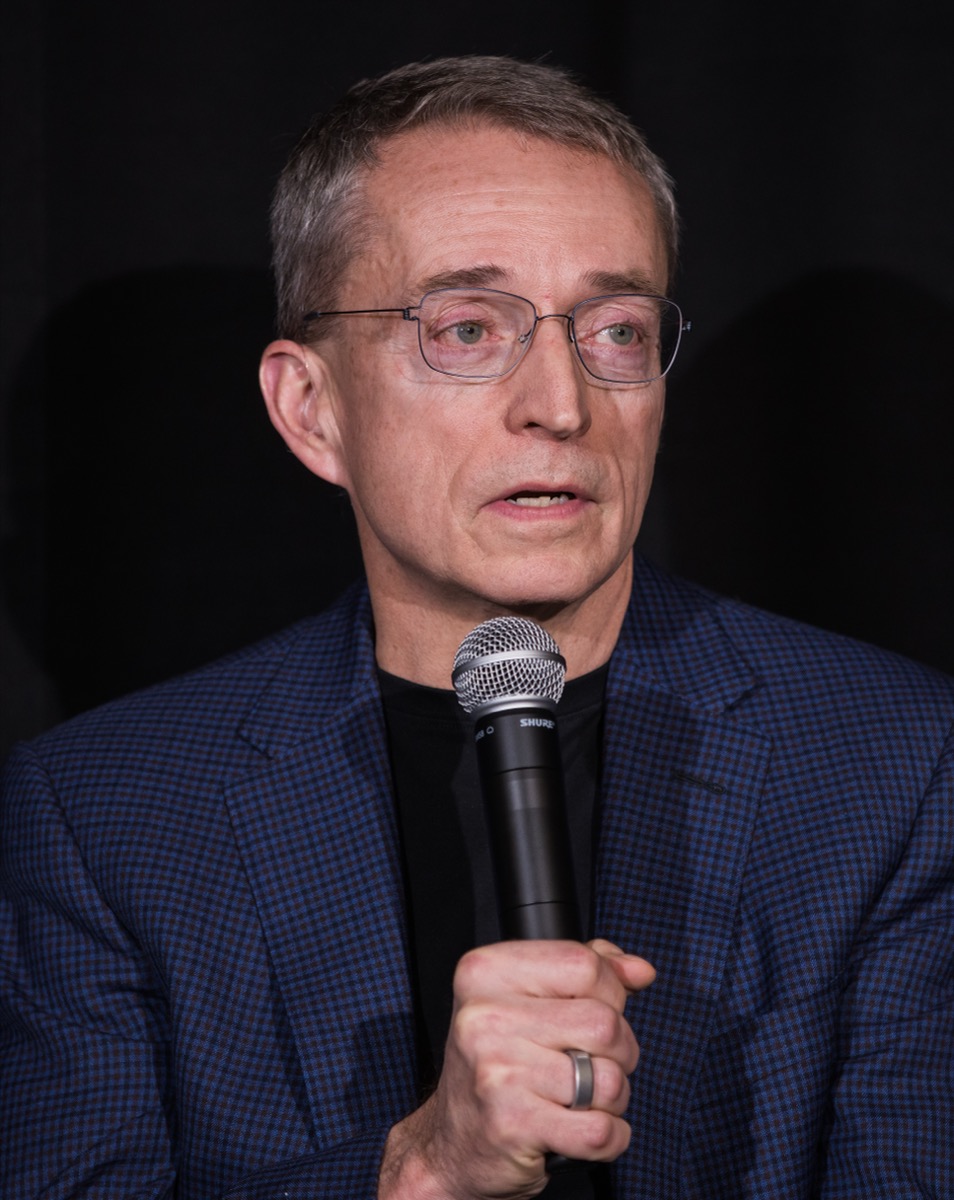
born Patrick Paul Gelsinger
Former CEO of Intel (2021 to 2024) and of VMware (2012 to 2021); lead architect of the Intel 80486 · b. 1961 · Robesonia, Pennsylvania
Two calls made by hand, not formulas. how we score →
Summary
Intel paid for his degrees from the day it hired him at 18, and its CEO personally talked him out of quitting to design the 486.
A farm kid with no network got a salary floor, an education and a sponsor in one package. The route ran through salaried jobs for four decades, so the pay was large and the ownership was not, and the ending was decided by a board.
People in this set who share a company with Pat Gelsinger.
Where they worked
How it happened
He grew up in a farming family in Berks County, Pennsylvania. His father was the ninth of ten children and never had a farm of his own, and both parents had an eighth-grade, one-room-schoolhouse education. At 16 he took a scholarship exam for Lincoln Tech a year early and won, skipped the rest of high school, and finished a two-year electronics program in about 18 months.
Intel came recruiting at Lincoln Tech, the first time it had, and hired four of the class. He has said the offer that beat the rest was tuition reimbursement: work 30 hours a week, get B's or better, and the company would pay for a bachelor's, a master's or a Ph.D. He moved to California at 18 as a quality-assurance technician and studied at Santa Clara University and then Stanford while working.
By 1985 he was a Stanford master's student who had resigned to start a Ph.D. Andy Grove, who by his account had been mentoring him for a few years, told him he could learn on a simulator or stay and fly the jet, and offered him the 486 design manager job. He was about 25 and the youngest of roughly 100 engineers on the team. The chip shipped in 1989, and he was named Intel's youngest vice president at 32.
He became Intel's chief technology officer in 2001, then left in 2009 for EMC as president and chief operating officer. In 2012 he became CEO of VMware, which EMC owned, and stayed until early 2021. His father's family had trouble following the move from silicon to software, by his own telling.
He returned as Intel's CEO in February 2021 and committed the company to new chip factories in Arizona, Ohio and Germany. In August 2024 Intel announced about 15,000 job cuts after a quarterly loss. He resigned as CEO and left the board on December 1, 2024, and press reports said directors were dissatisfied with the pace of the turnaround. Intel's proxy says it gave him severance as if he had been terminated without cause, and that he forfeited his unvested equity awards.
In March 2025 he became executive chair and head of technology at Gloo, a faith-focused technology platform where he had been an investor and a board chair for almost ten years.
The coded evidence
Thirteen groups, every claim sourcedChristian (a traditional church-going community in a Mennonite and Amish area)
He says he became a Christian in earnest after moving to California in 1980.
↗ archive.computerhistory.orgnot established
He shared a rented house with two fellow Lincoln Tech hires and says they found California expensive. No family fallback is described; not established.
↗ archive.computerhistory.orgAn Intel salary from October 1979, at 18. The risk was losing the job and the tuition benefit, not losing housing.
↗ archive.computerhistory.orgNo degree debt described. He recalls putting his first Santa Clara tuition bill on a credit card and worrying about the B average that triggered reimbursement.
↗ archive.computerhistory.orgThe hardship was imposed, not chosen. There was nothing to fall back on.
↗ archive.computerhistory.orgFarm family. His father was the ninth of ten children and never had his own farm; he grew up on family farms.
↗ archive.computerhistory.orgNeither parent was self-employed.
He says his father never had a farm of his own, but the family worked farms; exact employment status is not stated.
↗ archive.computerhistory.orgBoth parents were educated through eighth grade in one-room schoolhouses.
↗ archive.computerhistory.orgRobesonia, Berks County, Pennsylvania
↗ en.wikipedia.orgA vo-tech electronics program in high school, then Lincoln Tech (Allentown, Pennsylvania) on a scholarship won at 16.
↗ archive.computerhistory.orgMoved from Pennsylvania to Silicon Valley in October 1979, at 18.
↗ archive.computerhistory.orgRon Smith, an Intel Ph.D. who led the company's first recruiting trip to Lincoln Tech and invited him out to interview.
↗ archive.computerhistory.orgIntel, where he started as a quality-assurance technician in October 1979 and returned as CEO in 2021.
↗ archive.computerhistory.orgWhile a technician running reliability tests he hung around Intel's design team, who taught him chip design in their spare time, and he ran their UNIX systems.
↗ archive.computerhistory.orgAndy Grove, by his account his mentor for a few years, kept him from leaving for a Ph.D. by offering him the 486 design manager job when he was about 25.
↗ archive.computerhistory.org3
Intel, then EMC and VMware, before returning to Intel as CEO. Counts distinct employers up to 2021.
↗ en.wikipedia.orgMS in electrical engineering and computer science, Stanford (1985); BS in electrical engineering, Santa Clara University (1983, magna cum laude); associate degree, Lincoln Tech (1979).
↗ en.wikipedia.orgFull time at Intel through the bachelor's and master's, with a flexible schedule.
↗ archive.computerhistory.orgTwo-year technical program, then recruited straight into Intel and educated while employed.
↗ archive.computerhistory.orgIntel's tuition reimbursement: work 30 or more hours a week, keep B's or better, and the company pays for a bachelor's, master's or Ph.D. He says it was what separated Intel's offer from the others.
↗ archive.computerhistory.orgResigned from Intel in the mid-1980s to start a Stanford Ph.D. and stayed after Grove offered him the 486 design manager role. Left Intel in 2009 for EMC, and resigned as Intel CEO in December 2024.
The 2024 resignation is from Intel's 2025 proxy statement; the 1980s episode is from his oral history.
↗ archive.computerhistory.org51
Became VMware CEO in August 2012, his first chief executive job. Born March 1961.
↗ en.wikipedia.orgIntel was in a hyper-growth phase in 1979 with an industry-wide shortage of technicians, which is why it recruited at a vocational school.
↗ archive.computerhistory.orgSilicon Valley
↗ en.wikipedia.orgSemiconductors, enterprise software and technology leadership
↗ en.wikipedia.orgnot established
No credible estimate. Forbes has no profile page for him. Intel's 2025 proxy shows 645,874 shares, under 1% of the company, as of his departure, and says he forfeited unvested equity awards. VMware pay and holdings were not checked. Not established.
↗ sec.gov178590400
Total 2021 compensation in Intel's summary table, mostly grant-date value of new-hire stock awards ($140.4M) and options ($29.1M). It is not cash paid, and he later forfeited unvested awards. Intel's 2025 proxy gives $27.4M for 2024, $16.9M for 2023 and $11.6M for 2022.
↗ sec.govProxy statement
↗ sec.govVery high reported pay, almost all in stock and options at grant-date value, and no founder stake. What he actually kept is not established.
↗ sec.govLed the 486 design, ran Intel, VMware and EMC's operations, and sat on the President's Council of Advisors on Science and Technology. IEEE Fellow since 2008.
↗ en.wikipedia.orgCapped
↗ sec.govSmart, Aggressive, Arrogant
The Intel recruiter's 1979 interview note, as Gelsinger himself recalls it ("Smart, aggressive, arrogant. He'll fit right in").
↗ archive.computerhistory.orgInsiders
↗ archive.computerhistory.orgMixed
An asset in the climb (Grove's sponsorship). At Intel in 2024, Wikipedia reports he was ousted amid directors' dissatisfaction with the pace of his turnaround, and that the share price had fallen about 60% since 2021. Those are reported assessments, not findings.
↗ en.wikipedia.orgTook the executive chair at Gloo in March 2025, a company where he had been an investor and board chair.
↗ prnewswire.comStructural context
The cost-of-failure score comes from this person's own money and circumstances. But who they were in America carried its own weight, the same way their household or income did, and it shaped how hard the path was just as much. That part isn't in the cost-of-failure number. It's here instead.
Men held about 90% of Fortune 500 CEO seats in 2023, and a wider majority of the rungs below. The ladder is widest for them the whole way up.
↗ forbes.comAmong the people recorded here — men: 225. Representation here is who reached these outcomes, not equal odds of reaching them.
Controlled comparisons
Each holds one thing constant and varies another, so the difference is the point. A list of similar names wouldn't tell you anything.
Related companies
Companies connected to Pat Gelsinger through the profiled people they worked with. Each card says who the link runs through.