Nas
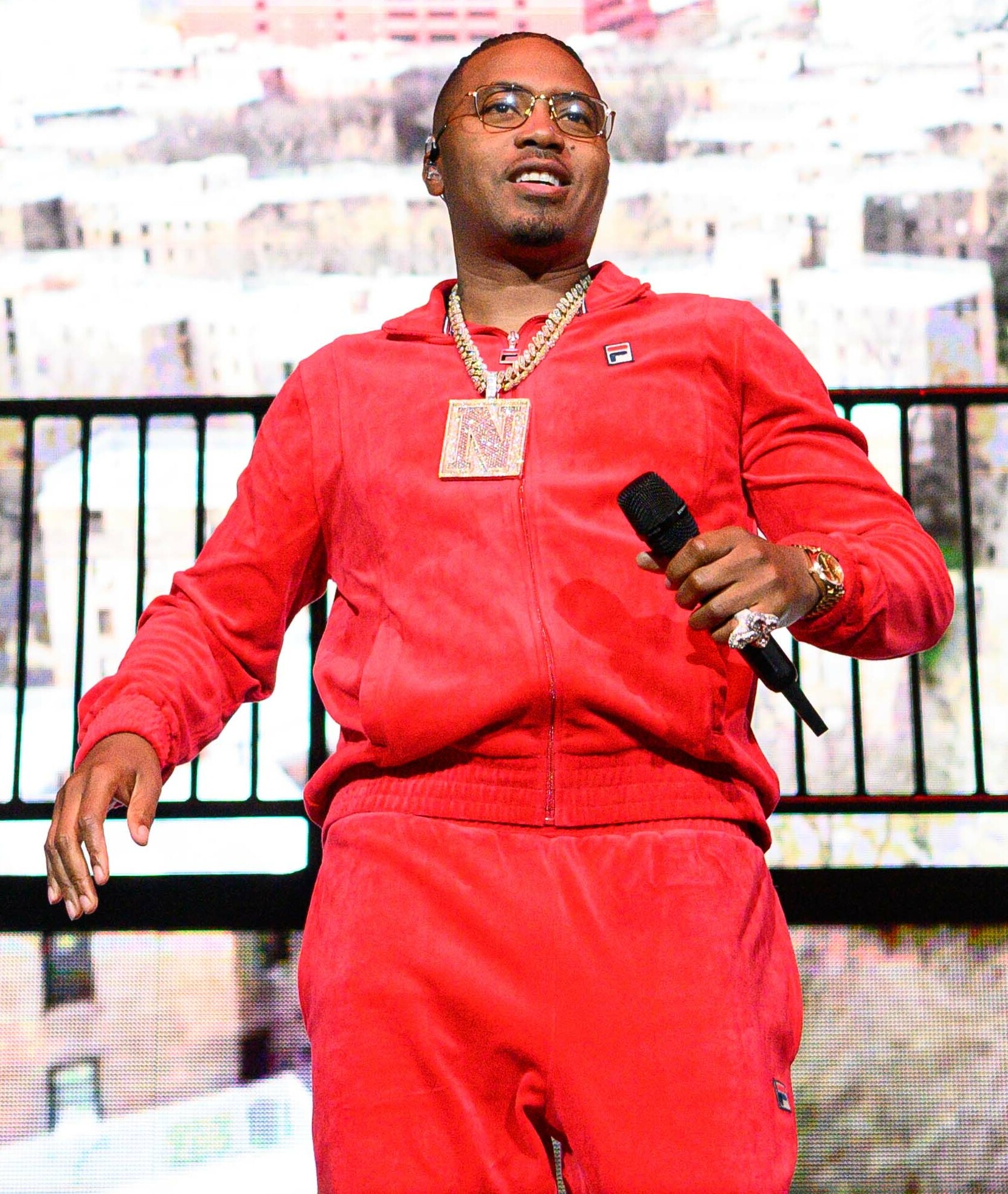
born Nasir bin Olu Dara Jones
Rapper, "Illmatic"; co-founder, QueensBridge Venture Partners and Mass Appeal Records · b. 1973 · Brooklyn, New York
Two calls made by hand, not formulas. how we score →
Summary
He dropped out after eighth grade in a Queensbridge housing project and became one of the most acclaimed rappers alive without becoming the highest-paid one.
The bigger money came two decades later, after a dinner introduction to a venture capitalist turned him into an early check-writer for Ring, Coinbase, Dropbox and Lyft — fame converted into a seat at a table records never paid him to sit at.
How it happened
Nasir Jones was born in Brooklyn and moved as a young child to Queensbridge Houses in Long Island City, then and now the largest public housing development in North America. His father, Olu Dara, was a working jazz and blues musician, often on the road; his mother, Fannie Ann Jones, held a steady job with the U.S. Postal Service and was the one raising him day to day. He dropped out of school after eighth grade and taught himself from there, reading widely and taking in the teachings of the Five Percent Nation, which shows up throughout his early lyrics.
A neighbor, Willie "Ill Will" Graham, played him hip-hop records and DJ'd while a teenage Nas rapped over them. In 1991 a guest verse on Main Source's "Live at the Barbeque" got him noticed. He still had no contract a year later when rapper MC Serch discovered that and took a demo to Columbia A&R Faith Newman, who signed him on the spot. In May 1992, before the album was finished, his brother was shot and his close friend was killed on the same night — Graham did not survive. Nas has called it a wake-up call.
Released in April 1994, "Illmatic" got a rare five-mic review from The Source and is now regularly named among the best hip-hop albums ever made. It was not, at the time, a commercial blockbuster — 59,000 copies its first week, and it took until 1996 to go gold. The acclaim built a career; it did not build a fortune. Later albums sold better, but two decades of touring, royalties, and per-project fees never approached what came next.
Around 2012, Mass Appeal investor Steve Stoute arranged a dinner where Nas met Andreessen Horowitz co-founder Ben Horowitz, who turned out to be a genuine hip-hop fan and encouraged him to start writing checks. In 2014 Nas and his manager Anthony Saleh formalized it as QueensBridge Venture Partners, named for the projects he grew up in, with a handful of other partners. It wrote seed and early-stage checks, typically in the low six figures, funded out of Nas's own touring and royalty income rather than money raised from outside investors.
Ring's sale to Amazon in 2018 returned Nas roughly $40 million on a stake bought years earlier. PillPack sold to Amazon the same year. Coinbase's 2021 direct listing turned an early $100,000–$500,000 position into an estimated eight-figure return. Dropbox, Lyft, Robinhood, and Pluto TV all exited favorably. By the mid-2010s the fund had backed over a hundred companies; industry trackers later counted several unicorns and dozens of exits in the portfolio. He also rebuilt Mass Appeal from a magazine he'd invested in into a record label and media company he co-owns, releasing his own "King's Disease" trilogy through it and winning his first Grammy in 2021 after thirteen nominations.
Public net-worth estimates for Nas vary widely and none of them rest on a filing — anywhere from the mid-tens of millions to roughly $200 million depending on the source and the year, which is itself a reminder that celebrity net worth is mostly guesswork. What's better documented is the shape of it: in 2012 the IRS filed to garnish his music-publishing royalties over roughly $6 million in unpaid federal taxes, at almost the same time his investing was starting to compound. The income from rapping and the wealth from investing turned out to be two different things entirely.
The coded evidence
Thirteen groups, every claim sourcednot established
No denomination of upbringing is established. As a teenager he took up the teachings of the Five Percent Nation (Nation of Gods and Earths), a self-directed influence rather than a household religion — coded under self-education (d6) instead.
↗ en.wikipedia.orgEnglish
↗ en.wikipedia.orgHis mother held a steady U.S. Postal Service job throughout his childhood, which gave the household continuous income even though the family lived in public housing the whole time — a floor, not a cushion. His father was a touring musician often absent from the home and not a reliable income source for the household.
↗ en.wikipedia.orgQueensbridge Houses recorded more murders than any other New York City public housing complex in 1986, during the crack epidemic, while Nas was a teenager there. In May 1992, months before "Illmatic" was finished, his brother was shot and survived; his close friend and early mentor, Willie "Ill Will" Graham, was shot the same night and died.
↗ en.wikipedia.orgThe hardship was imposed, not chosen. There was nothing to fall back on.
Imposed by circumstance; no standing family home to return to.
↗ en.wikipedia.orgFather Olu Dara (born Charles Jones III) was a working jazz and blues cornetist and singer, active from the 1960s, who toured and performed with musicians including David Murray and Cassandra Wilson. Mother Fannie Ann Jones (1941–2002) worked for the U.S. Postal Service.
↗ en.wikipedia.orgA parent worked for themselves, the strongest known predictor of founding.
His father worked as a touring, gig-to-gig musician rather than a salaried employee.
↗ en.wikipedia.org1
Younger brother Jabari Fret, who performs as "Jungle" and is a member of Bravehearts.
↗ en.wikipedia.orgHis father's standing as a respected jazz and blues musician gave the household real cultural capital and an artistic reference point, but no meaningful money. Nas has described teaching himself to read and write from a young age partly because of the household's creative atmosphere.
↗ en.wikipedia.orgnot established
Sources consistently describe him as raised primarily by his mother while his father toured, but no divorce, separation date, or formal custody arrangement is independently documented.
↗ encyclopedia.comQueensbridge Houses, Long Island City, Queens — 96 buildings, roughly 3,100 units and 7,000 residents, the largest public housing development in North America, opened in 1939.
↗ en.wikipedia.orgQueensbridge was the base of hip-hop producer Marley Marl and the Juice Crew through the 1980s, and Nas came up alongside fellow Queensbridge group Mobb Deep in the same scene — a working hip-hop cluster within his own housing complex, not a citywide search for access.
↗ en.wikipedia.orgBorn in Brooklyn; moved to Queensbridge Houses in Queens as a young child.
↗ en.wikipedia.orgRapper MC Serch learned Nas still had no record deal despite local buzz, took a demo to Columbia Records A&R Faith Newman, and served as executive producer on "Illmatic." Newman has said she had been looking for him for a year and a half before Serch brought the tape in.
↗ en.wikipedia.org17
First notable public appearance, a guest verse on Main Source's "Live at the Barbeque" (1991); Columbia deal followed in mid-1992.
↗ en.wikipedia.orgnot established
No meaningful public platform existed before "Illmatic"; the guest verse on "Live at the Barbeque" built underground buzz but not a following of his own.
↗ en.wikipedia.orgNeighbor Willie "Ill Will" Graham played him hip-hop records and DJ'd while he rapped as a teenager, his first real exposure to the craft before any industry contact existed.
↗ en.wikipedia.orgAndreessen Horowitz co-founder Ben Horowitz, a self-described hip-hop fan, met Nas at a dinner arranged by Mass Appeal investor Steve Stoute around 2012 and encouraged him into startup investing — an introduction to elite venture-capital circles that money alone doesn't buy.
↗ hustlefund.vcNo high school diploma. Dropped out after eighth grade and educated himself afterward, including through the teachings of the Five Percent Nation.
↗ en.wikipedia.orgA recording advance from Columbia Records on signing in 1992 — the standard structure for a major-label artist, paid against future royalties rather than raised as investment capital.
↗ en.wikipedia.orgIt paid its own way from the start. Revenue came before any outside money.
↗ en.wikipedia.orgEarly QueensBridge Venture Partners checks came out of Nas's earnings as a touring and recording artist rather than family money, savings liquidation, or an outside raise.
↗ forbes.comQueensBridge Venture Partners, co-founded in 2014 with manager Anthony Saleh after Andreessen Horowitz co-founder Ben Horowitz encouraged him into investing around 2012. The fund wrote seed and early-stage checks of roughly $100,000–$500,000, funded from Nas's own touring and royalty income rather than outside limited partners, into more than a hundred companies by the mid-2010s.
↗ hustlefund.vcProceeds from early exits (Ring, PillPack, Pluto TV) appear to have been redeployed into further startup checks and into rebuilding Mass Appeal into a label and media company, rather than being consumed.
↗ hustlefund.vcnot established
Whether he retained ownership of his Columbia-era masters (including "Illmatic") isn't established in public reporting; major-label deals of that era typically kept masters with the label. Recent releases go through Mass Appeal, which he co-owns.
↗ en.wikipedia.org1
Counts Mass Appeal (media/records, ownership stake) as the one clear fame-into-equity conversion outside music itself. Smaller ventures — a sneaker store, a clothing line, a restaurant partnership, an audio-tech stake — are documented but their equity terms are not, so they aren't counted here. This is a different pattern from artists who trade fame for equity across many consumer brands: QueensBridge Venture Partners is closer to a conventional angel-investing practice than a brand-licensing one.
↗ en.wikipedia.orgHis brother was shot and his close friend killed in May 1992, months before "Illmatic" was finished and roughly two years before its April 1994 release — a personal rupture during the album's making rather than a separate failed attempt.
↗ encyclopedia.comQueensBridge Venture Partners started writing checks during the 2010s startup boom, with access to top-tier deal flow (Coinbase, Robinhood, Ring) that came specifically through his personal relationship with an Andreessen Horowitz co-founder, not through cold outreach or a typical LP network.
↗ hustlefund.vc40
QueensBridge Venture Partners formalized in 2014, the actual wealth-building engine.
↗ hustlefund.vcMusic; venture capital investing
↗ en.wikipedia.org150000000
No filing or disclosed valuation exists for a private individual with diversified, largely illiquid startup equity. Public aggregator estimates range roughly $65M–$200M depending on source and year; this value is a rough midpoint of the credible range, not a precise figure. A handful of SEO content-farm pages claim figures in the hundreds of millions to billions with no sourcing whatsoever; those are excluded as not credible.
↗ celebritynetworth.comAggregator
↗ celebritynetworth.comRing, PillPack, and Pluto TV were realized cash exits. Coinbase and Robinhood positions converted to public, sellable stock at their 2021 listings. A large share of the QueensBridge Venture Partners portfolio remains private, illiquid startup equity with no realized value yet.
↗ hustlefund.vcThree decades of music income (touring, royalties, per-project fees) built his public reputation but, by his own tax troubles, did not reliably build wealth. The appreciating asset base is the startup equity portfolio, not the music catalog.
↗ xxlmag.comUncapped
↗ hustlefund.vcIn 2012 the IRS filed to collect roughly $6 million in unpaid federal income taxes by garnishing his music-publishing royalties through BMI and ASCAP, following a separately reported $339,000 owed for the 2010 tax year.
↗ xxlmag.comIncidental
A personal tax-compliance failure, not conduct that produced any part of his success.
↗ xxlmag.comCivil wrong
↗ xxlmag.comPersonal liability
Wages garnished directly through his own royalty-collection societies rather than absorbed by a company.
↗ xxlmag.comLyrical, Press averse, shrewd investor
↗ forbes.comPress
↗ forbes.comBefore
His reputation as a top-tier lyricist was set by "Illmatic" in 1994, nearly two decades before he was known as an investor at all.
↗ en.wikipedia.orgAsset
His standing as a respected artist is what got a venture-capital insider to personally vouch for him.
↗ hustlefund.vcStructural context
The cost-of-failure score comes from this person's own money and circumstances. But who they were in America carried its own weight, the same way their household or income did, and it shaped how hard the path was just as much. That part isn't in the cost-of-failure number. It's here instead.
Men held about 90% of Fortune 500 CEO seats in 2023, and a wider majority of the rungs below. The ladder is widest for them the whole way up.
↗ forbes.comJust eight Fortune 500 CEOs were Black in 2023, about 1.6%, against roughly 13% of the labor force. The ladder narrows sharply by race near the top.
↗ finance.yahoo.comAmong the people recorded here — men: 115 · Black subjects: 58. Representation here is who reached these outcomes, not equal odds of reaching them.
Controlled comparisons
Each holds one thing constant and varies another, so the difference is the point. A list of similar names wouldn't tell you anything.