Denzel Washington
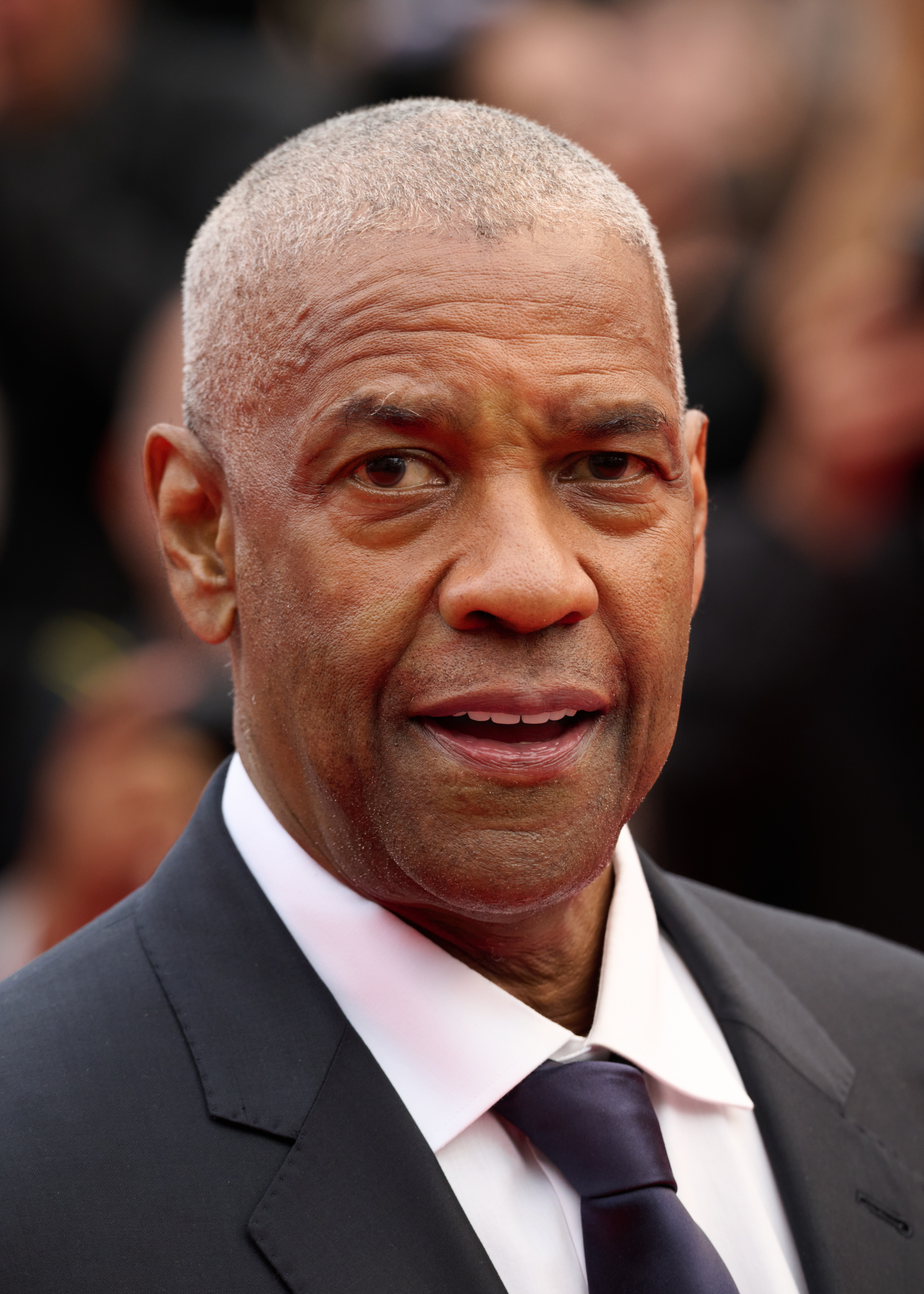
Actor; two-time Academy Award winner (Glory, Training Day) · b. 1954 · Mount Vernon, New York
Two calls made by hand, not formulas. how we score →
Summary
His father worked two jobs and preached on Sundays; his mother ran a beauty parlor and, when the marriage ended, spent what she had sending him to military school to keep him out of trouble.
Six years on network television gave him steady work. An Oscar for Glory moved him from working actor to leading man, in an industry that was building very few Black actors into that role at all.
How it happened
His father was a Pentecostal minister who also worked for the New York City water department and at a department store to make ends meet; his mother owned and ran a beauty parlor. They divorced when he was fourteen, and he has said the years right after were headed somewhere bad. His mother's answer was to enroll him at Oakland Military Academy, a private school she paid for out of the beauty-parlor income. He later called it the decision that changed his life, because he didn't think he would have survived the direction he was going.
A patchy start at Fordham University turned into a Drama and Journalism degree in 1977, after a colleague at a summer camp job suggested he try acting. A year of graduate study at the American Conservatory Theater in San Francisco and an early role in Joseph Papp's Shakespeare in the Park led to steady television work. From 1982 to 1988 he played Dr. Philip Chandler on "St. Elsewhere," one of only a few Black actors to stay with the show for its full run. It wasn't stardom, but it was six years of paid, visible work.
He won the Academy Award for Best Supporting Actor for "Glory" in 1990. In the years right after, his roles shifted hard toward leading parts — a police chief, a journalist, a naval officer — the kind of part Hollywood had rarely handed a Black actor to carry alone. That shift, not the TV job before it, is what actually moved him from working actor to a leading man the industry would build a film around.
He won a second Oscar, this time for Best Actor, playing a corrupt narcotics detective in "Training Day" in 2001. Asked at one point whether there was a system holding back Black leading men, he waved off the framing: "I don't think there is a system. It's a bunch of people scrambling trying to get rich... if Joe Black suddenly makes us 100 million, find me 10 more Joe Blacks." For most of his career he was one of very few people getting cast as that first Joe Black.
He has never owned a studio or a content library the way some of his peers in this dataset do. The money came from a fee on each film, reportedly $20 million or more in his busiest years, plus stage work and an occasional producing credit. He remains an active, ordained Pentecostal minister and gives heavily to Fordham, the Boys & Girls Clubs, and veterans' housing charities.
The coded evidence
Thirteen groups, every claim sourcedDescendant
His father's family traces to Buckingham County, Virginia and his mother's to Georgia and Harlem; no recent immigration in the record.
↗ en.wikipedia.orgHis father was an ordained Pentecostal minister. He remains an active, self-professed devout Christian as an adult and was ordained himself in December 2024; this is biography, not a headwind, and is coded here factually rather than as an obstacle.
↗ en.wikipedia.orgBoth parents worked through his childhood — his father held two jobs on top of the ministry, his mother ran her own beauty parlor — which gave the household real if modest stability until the divorce when he was fourteen. No specific fallback (a second home, a relative's property) is independently documented.
↗ en.wikipedia.orgnot established
No homelessness, eviction, or comparable instability is documented at any point in his career. He has spoken about post-divorce behavioral risk as a young teenager, addressed by his mother's decision to enroll him in military school, but that isn't housing or income instability.
↗ biography.comnot established
No period of chosen or imposed poverty is documented in his adult career; not applicable in the way it is for subjects who self-funded a venture on savings.
↗ en.wikipedia.orgFather, Denzel Washington Sr., was an ordained Pentecostal minister who also worked for the New York City water department and at an S. Klein department store. Mother, Lennis "Lynne" Washington, owned and operated a beauty parlor.
↗ en.wikipedia.orgA parent worked for themselves, the strongest known predictor of founding.
His mother's beauty parlor.
↗ en.wikipedia.orgHis mother paid for Oakland Military Academy, a private school, out of her beauty-parlor income after the divorce, specifically to redirect him away from a bad peer group. Whether Fordham tuition itself was family-paid, aided, or self-funded through jobs is not independently established.
Coded coded.credentialFunding as family-funded on the strength of the military-academy decision; the Fordham funding source specifically remains unconfirmed.
↗ en.wikipedia.orgOakland Military Academy, a private school in New Windsor, New York, from age 14; then Mainland High School, a public school in Daytona Beach, Florida, for his final year (1970-1971); then Fordham University, a private Jesuit university, BA 1977.
↗ en.wikipedia.orgRelocated within New York as a child, then to Daytona Beach, Florida for his final year of high school, then back to New York for Fordham. All domestic moves; no international migration in the family record.
↗ en.wikipedia.orgWorking as creative arts director at Camp Sloane YMCA in Connecticut during a break from Fordham, a colleague suggested he try acting. He returned to Fordham and enrolled in the theater program.
↗ biography.com"St. Elsewhere" (NBC, 1982-1988), where he played Dr. Philip Chandler for the full six-season run, one of only a few Black actors to stay with the series that long. It gave him steady pay and national visibility before any major film role.
↗ en.wikipedia.orgCredibility, Network
↗ en.wikipedia.org22
First screen credit was the 1977 TV film "Wilma," a docudrama about sprinter Wilma Rudolph, where he also met his future wife, Pauletta Pearson.
↗ en.wikipedia.orgnot established
Not a single-employer or single-studio career; he has worked project-to-project across theater, network TV, and film for five decades, which doesn't reduce cleanly to a count.
↗ en.wikipedia.orgBA in Drama and Journalism, Fordham University, 1977. One year of non-degree graduate study at the American Conservatory Theater in San Francisco followed.
↗ en.wikipedia.orgTook a semester away from Fordham after an initial academic struggle, working as creative arts director at Camp Sloane YMCA before returning to finish the degree.
↗ biography.comDirect four-year degree at a private university, no transfer or military route.
↗ en.wikipedia.orgFilm earnings went mostly to real estate and personal consumption — a custom-built Beverly Hills estate and, later, a Century City condo — rather than into an owned production company or studio at scale. He does run a production shingle, Mundy Lane Entertainment, but it isn't the source of his wealth the way ownership is for some peers in this dataset.
Aggregator source; treat the real-estate detail as directionally reliable, not exact.
↗ celebritynetworth.comPerformed poorly as an early Fordham student and took time away from school before an acting-focused return; not a career-stage failure so much as an early academic stumble.
↗ biography.comBroke into film during a stretch when very few Black actors were being built into leading men; most roles available to Black actors ran supporting or genre. In his next several roles after "Glory," he was cast repeatedly as middle-class professionals — a police chief, a journalist, a naval officer — a pattern one cultural historian has read as a deliberate statement about Black professional life reaching the mainstream. He has downplayed the idea of a deliberate industry "system," saying instead: "It's a bunch of people scrambling trying to get rich... if Joe Black suddenly makes us 100 million, find me 10 more Joe Blacks" — while for most of his rise, he was that first Joe Black.
Quote also reported at https://lifebeyondsportmedia.com/Denzel-Washington
↗ jimcullen.substack.comFilm, television, and theater acting
↗ en.wikipedia.org300000000
Aggregator estimate with no disclosed methodology; he is a private individual with no filings. Band only, not a precise figure.
↗ celebritynetworth.comAggregator
↗ celebritynetworth.com80000000
Same aggregator's estimate of a "busy year" ($60-80M), built from individual reported film fees (e.g. a reported $40M for "American Gangster," 2007; a reported $60M combined for "The Little Things," 2021). No single disclosed source; treat as directional.
↗ celebritynetworth.comAggregator
↗ celebritynetworth.comIncome, not equity. Earnings are per-film fees and stage pay rather than a stake in a studio, library, or platform he controls.
↗ celebritynetworth.comCapped
Fee-per-project, occasionally with a disclosed bonus (e.g. the reported HBO Max bonus on "The Little Things"), not an appreciating owned asset base.
↗ celebritynetworth.comone of the greatest actors of his generation, Versatile, Faith driven
The New York Times called him "the greatest actor of the 21st century" in 2020.
↗ en.wikipedia.orgPress
↗ en.wikipedia.orgAsset
↗ en.wikipedia.orgStructural context
The cost-of-failure score comes from this person's own money and circumstances. But who they were in America carried its own weight, the same way their household or income did, and it shaped how hard the path was just as much. That part isn't in the cost-of-failure number. It's here instead.
Men hold most of the ownership and gatekeeping across the creative and media industries, the default that recognition and deals flow toward.
↗ assets.uscannenberg.orgIn the creative and media industries, recognition comes far more easily to underrepresented creators than the ownership it should turn into. Among 2023's top-grossing film directors, for one measure, eight were Black.
↗ assets.uscannenberg.orgAmong the people recorded here — men: 115 · Black subjects: 58. Representation here is who reached these outcomes, not equal odds of reaching them.
Controlled comparisons
Each holds one thing constant and varies another, so the difference is the point. A list of similar names wouldn't tell you anything.