Chris Rock
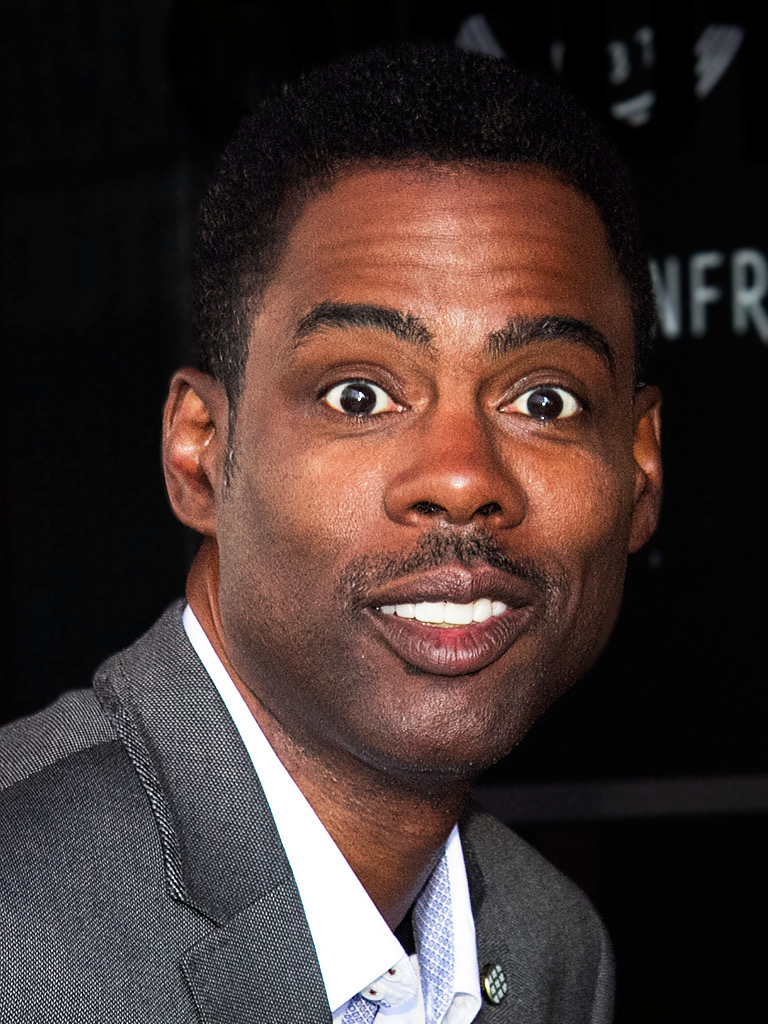
Stand-up comedian; creator, "Everybody Hates Chris" · b. 1965 · Andrews, South Carolina
Two calls made by hand, not formulas. how we score →
Summary
His father drove a delivery truck and dropped newspapers before dawn; his mother taught and did social work.
There was no money, and a busing program sent him to white Brooklyn schools that beat him up for years instead of protecting him. He built an act out of it, got pushed off Saturday Night Live at 28, and reached the top of his field mostly on a fee, not a stake in what he made.
How it happened
Born in Andrews, South Carolina, in 1965, he moved with his family to Brooklyn as a small child, settling in Bedford-Stuyvesant around age six. His father Julius drove a delivery truck for the New York Daily News and also delivered newspapers; his mother Rosalie taught and did social work with developmentally disabled adults. Starting in second grade, a city busing program sent him out of his own neighborhood to majority-white schools in Gerritsen Beach and Marine Park. He has written that the years of being bused there brought "a worse education in a worse neighborhood, and a whole bunch of ass-whippings" — sustained bullying and beatings from white classmates that lasted through junior high. He dropped out of James Madison High School around 1982, later earned a GED, and did a year at Kingsborough Community College without finishing.
He started doing stand-up at nineteen, in 1984, at Catch a Rising Star in Manhattan, working fast-food jobs on the side, including as a busboy at Red Lobster. Eddie Murphy took notice of him on the club circuit, became something close to a mentor, and gave him his first film role in "Beverly Hills Cop II" in 1987. In 1990 he joined "Saturday Night Live" as part of the cast alongside Chris Farley, Adam Sandler, Rob Schneider, and David Spade — later nicknamed the "Bad Boys of SNL." He was used sparingly there and was effectively let go after the 1992–93 season. His father died in 1988, following ulcer surgery, while he was still an unknown comic scraping by on club dates.
He rebuilt his act from the ground up rather than chasing another ensemble show, and in June 1996 released the HBO special "Bring the Pain." It won two Emmys and got him called "the funniest man in America" by Time. That was the moment the industry stopped treating him as a former cast member who hadn't quite landed and started treating him as the show.
"The Chris Rock Show" ran on HBO from 1997 to 2000 and won an Emmy for writing. In 2005 he and Ali LeRoi created "Everybody Hates Chris" for UPN, a sitcom built directly out of his own busing years in Brooklyn. He narrated it and held an executive producer credit through his company, CR Enterprises, but Paramount Television owned the show and controlled the syndication rights through CBS Television Distribution. He got paid well and got his name on it. He did not own it.
By 2016 he was the highest-earning working comedian, and that October Netflix signed him for two specials, reportedly $20 million each. His 2016 divorce from Malaak Compton-Rock, finalized that August, is reported to have cost him roughly $40 million in the settlement. In September 2020 he disclosed that neuropsychological testing, prompted by a friend who suspected Asperger's, had instead found a nonverbal learning disorder — a lifelong difficulty reading nonverbal social cues that had shaped his relationships far more than his career, by his own account. He said he was in therapy roughly seven hours a week to work through it.
At the 2022 Oscars, presenting an award, he made a joke about Jada Pinkett Smith's shaved head; Will Smith walked onstage and slapped him, then returned to his seat and shouted at him to keep his wife's name out of his mouth. Rock did not press charges and addressed it a year later in "Selective Outrage," Netflix's first live comedy special, which drew three Emmy nominations. He remains a working stand-up in his sixties, still touring, still writing.
The coded evidence
Thirteen groups, every claim sourcedDescendant
DNA testing traced his ancestry to the Udeme people of northern Cameroon; a great-great-grandfather, Julius Caesar Tingman, was enslaved for 21 years, served in the Union Army's U.S. Colored Troops, and was twice elected to the South Carolina House of Representatives during Reconstruction. No evidence that standing carried forward into his parents' generation.
↗ en.wikipedia.orgnot established
He has said religion "did not stick with him" growing up and has joked about the distance between Black Christianity and his own practice, but no specific denomination raised in is established in the record.
↗ en.wikipedia.orgA stable, working two-parent household in Bedford-Stuyvesant — his father driving a delivery truck and delivering newspapers, his mother teaching and doing social work — but with no documented savings or family assets beyond the household itself.
↗ en.wikipedia.orgFast-food and service jobs, including as a busboy at Red Lobster, through his late teens and into his early twenties while working unpaid or low-paid stand-up sets.
↗ en.wikipedia.orgnot established
No homelessness or comparable instability during his club years is documented.
↗ en.wikipedia.orgThe hardship was imposed, not chosen. There was nothing to fall back on.
A working-class household with no standing wealth to fall back on, not chosen austerity against a family cushion.
↗ en.wikipedia.orgFather Julius Rock drove a delivery truck for the New York Daily News and also worked as a newspaper deliveryman; he died in 1988 following ulcer surgery. Mother Rosalie worked as a teacher and social worker for adults with developmental disabilities.
↗ en.wikipedia.orgNeither parent was self-employed.
↗ en.wikipedia.org6
Six full siblings (André, Tony, Brian, Kenny, Andi, Jordan) plus an older half-brother, Charles "Shabazz" Ledell Rock, from his father's earlier relationship, who died in 2006.
↗ en.wikipedia.org1
Oldest of Rosalie and Julius Rock's children together; his half-brother Charles was older but from a different mother.
↗ en.wikipedia.orgA great-great-grandfather, Julius Caesar Tingman, was formerly enslaved, served in the Union Army, and was twice elected to the South Carolina legislature during Reconstruction — a distinguished lineage by the standards of the era, but nearly a century removed from his parents' working-class household with no established continuity of resources or standing.
↗ en.wikipedia.orgnot established
He attended public schools throughout; no parental sacrifice specifically for tuition is documented.
↗ en.wikipedia.orgnot established
He began stand-up at nineteen, already out of his parents' house, so no minor-era parental chaperoning or sanction (of the kind some peers received) is at issue in the record.
↗ en.wikipedia.org3
P.S. 277 in Gerritsen Beach, then Marine Park Junior High School, then James Madison High School, each reached by busing out of his own neighborhood.
↗ en.wikipedia.orgHis father died in 1988, following ulcer surgery, when Rock was 23 — four years into his stand-up career and eight years before his breakthrough special.
↗ en.wikipedia.orgnot established
↗ en.wikipedia.orgDisclosed in a September 2020 interview with The Hollywood Reporter that neuropsychological testing — nine hours of it, prompted by a friend who suspected he might have Asperger's syndrome — instead produced a diagnosis of nonverbal learning disorder, a condition that makes reading nonverbal social cues difficult. He was around 55 at the time. He has said the same wiring that makes writing jokes easier for him made one-on-one relationships harder, and that he was in therapy roughly seven hours a week with two therapists working through it.
Self-disclosed, on the record. Diagnosed decades after his career was established; the underlying condition was presumably lifelong but was not a visible obstacle during his rise, so it is coded as only a modest headwind contributor rather than a defining one.
↗ revolt.tvBedford-Stuyvesant, Brooklyn, a majority-Black, working-class neighborhood he has himself described as "one of the most famous ghettos in the world."
↗ en.wikipedia.orgPublic schools throughout: P.S. 277 in Gerritsen Beach, Marine Park Junior High School, and James Madison High School, all reached by a city busing program rather than by neighborhood assignment.
↗ en.wikipedia.orgBorn in Andrews, South Carolina, in 1965; the family moved to Crown Heights, Brooklyn shortly afterward and then to Bedford-Stuyvesant around age six, a domestic move rather than an immigration event.
↗ en.wikipedia.orgPart of a 1970s New York City busing program that sent Black students out of Bedford-Stuyvesant into majority-white schools in Gerritsen Beach and Marine Park, starting in second grade in 1972 — an imposed integration rather than a selective opportunity.
↗ en.wikipedia.orgEndured what he has described as sustained bullying and beatings from white classmates for years at the schools he was bused to. In his memoir "Rock This!" he wrote that busing got him "a worse education in a worse neighborhood, and a whole bunch of ass-whippings."
↗ en.wikipedia.orgThe busing years became direct material for his comedy and, most explicitly, the basis for "Everybody Hates Chris," the sitcom he built around a fictionalized version of that period of his life.
↗ en.wikipedia.orgEddie Murphy noticed him on the New York club circuit, took an interest in his career, and gave him his first film role in "Beverly Hills Cop II" (1987).
↗ en.wikipedia.orgCold audiences at Catch a Rising Star and other New York clubs, starting in 1984.
↗ en.wikipedia.org"Saturday Night Live" (1990–93) put him on national television as one of the so-called "Bad Boys of SNL," alongside Chris Farley, Adam Sandler, Rob Schneider, and David Spade, even though the show used him sparingly and he was effectively let go after three seasons.
↗ en.wikipedia.orgCredibility, Network
SNL gave him name recognition and industry contacts; no evidence it supplied capital or material creative direction toward his eventual act.
↗ en.wikipedia.orgA decade of stand-up, an SNL run, a small cult following from "New Jack City" (1991) and other early film roles, and one prior album ("Born Suspect," 1991) by the time "Bring the Pain" aired in 1996 — a real if modest base rather than a cold start.
↗ en.wikipedia.orgBeing sidelined and then let go from SNL after the 1992–93 season pushed him toward rebuilding as a stand-up in his own right rather than staying an ensemble player; the special that resulted, "Bring the Pain," outperformed anything he had done on the show.
↗ en.wikipedia.orgNo degree. Dropped out of James Madison High School around 1982, later earned a GED, and completed one year at Kingsborough Community College studying Communications without finishing.
↗ en.wikipedia.orgUnpaid and low-paid open-mic and club sets from 1984 on; no capital of any kind was raised or inherited to start.
↗ en.wikipedia.orgIt paid its own way from the start. Revenue came before any outside money.
↗ en.wikipedia.orgHis 2016 divorce from Malaak Compton-Rock, finalized that August, is reported to have cost him roughly $40 million in the settlement — a significant reduction of accumulated wealth rather than a reinvestment into ownership of anything.
Divorce settlement figures for private individuals are rarely confirmed by court filing; treat as an estimate.
↗ celebritynetworth.comCreated, narrated, and executive-produced "Everybody Hates Chris" through his company CR Enterprises, but Paramount Television produced it and CBS Television Distribution held the syndication rights — he was paid and credited, not an owner. His Netflix specials, including the reported $20 million-per-special 2016 deal, were likewise structured as flat fees for the performances rather than an ownership stake in the resulting product.
↗ en.wikipedia.org"Everybody Hates Chris" grew directly out of his own childhood — the busing years, his parents, his siblings — rather than an acquired format or outside pitch.
↗ en.wikipedia.org1
Overwhelmingly fee-for-work concentrated in comedy, film, and television. His one documented equity stake outside that core work is a 2019 investment in the cannabis brand Lowell Herb Co.
↗ en.wikipedia.orgnot established
Some projects underperformed (e.g. "Pootie Tang," 2001), but no single failed venture forced a restart of his career the way it did for some peers; his output has been continuous since 1984.
↗ en.wikipedia.orgNetworks and studios bore the financial risk on his television and film work throughout; he never risked personal capital on a venture of his own.
↗ en.wikipedia.orgHBO's push into original stand-up specials in the mid-1990s, and a wave of former SNL cast members (Sandler, Farley, Spade among them) building solo careers after leaving the show around the same period.
↗ en.wikipedia.orgBuilt. His act, his specials, and "Everybody Hates Chris" all grew from his own material and biography rather than an acquired asset or existing franchise.
↗ en.wikipedia.orgBased his family life in Alpine, New Jersey rather than Los Angeles, commuting into the industry rather than relocating to its center.
↗ en.wikipedia.orgStand-up comedy, film, and television
↗ en.wikipedia.org60000000
Aggregator estimate with no disclosed methodology, updated March 2026. Other aggregators place him as high as $120–150 million; the site's own figure accounts for an estimated $40 million lost in his 2016 divorce settlement. Treated as the more conservative, more recently updated figure rather than the higher estimates, consistent with the rule against inflating a band on a weak source.
↗ celebritynetworth.comAggregator
↗ celebritynetworth.comJournalistic estimate
↗ forbes.comMostly income rather than wealth — per-special and per-project fees, touring revenue, and a network TV salary, rather than equity in a studio, catalog, or company he controls.
↗ en.wikipedia.orgFour Primetime Emmy wins and 15 nominations, three Grammy Awards for Best Comedy Album, a Special Jury Prize at Sundance for "Good Hair" (2009), and rankings at No. 5 on both Comedy Central's and Rolling Stone's lists of the greatest stand-up comedians of all time.
↗ en.wikipedia.orgCapped
Compensation has come almost entirely as negotiated fees rather than equity that compounds on its own.
↗ en.wikipedia.orgFearless, incisive on race, Provocative
↗ en.wikipedia.orgPublic
↗ en.wikipedia.orgBefore
His reputation for sharp, race-conscious material was established by "Bring the Pain" (1996), decades before the 2022 Oscars incident.
↗ en.wikipedia.orgMixed
↗ en.wikipedia.orgAt the 2022 Academy Awards, he made a joke about Jada Pinkett Smith's shaved head, a symptom of a medical condition; Will Smith walked onstage and slapped him. Commentary afterward split — much of it framed Rock as the wronged party who kept his composure, while some criticized the joke itself as an unnecessary target given her condition. He addressed the incident directly in his 2023 special "Selective Outrage."
↗ en.wikipedia.orgHis commercial standing was not damaged by the incident; "Selective Outrage" drew three Emmy nominations and he has continued touring and working at the same level since.
↗ en.wikipedia.orgStructural context
The cost-of-failure score comes from this person's own money and circumstances. But who they were in America carried its own weight, the same way their household or income did, and it shaped how hard the path was just as much. That part isn't in the cost-of-failure number. It's here instead.
Men hold most of the ownership and gatekeeping across the creative and media industries, the default that recognition and deals flow toward.
↗ assets.uscannenberg.orgIn the creative and media industries, recognition comes far more easily to underrepresented creators than the ownership it should turn into. Among 2023's top-grossing film directors, for one measure, eight were Black.
↗ assets.uscannenberg.orgAmong the people recorded here — men: 115 · Black subjects: 58. Representation here is who reached these outcomes, not equal odds of reaching them.
Controlled comparisons
Each holds one thing constant and varies another, so the difference is the point. A list of similar names wouldn't tell you anything.