Mike Fernandez
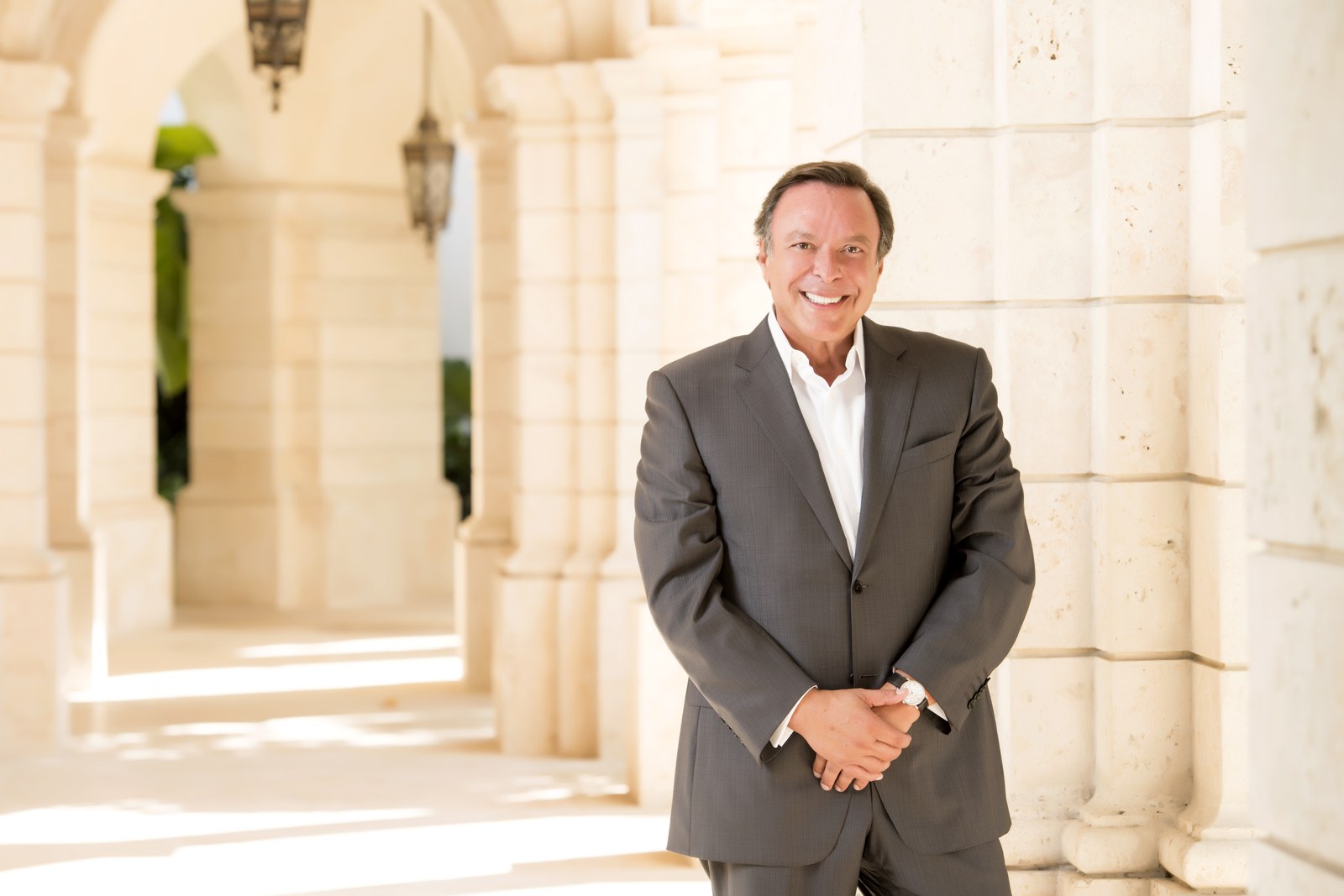
born Miguel B. Fernandez
Founder and chairman, MBF Healthcare Partners; serial founder of health-insurance and managed-care companies including Group Tech System, Physicians Healthcare Plans, CarePlus Health Plans, and Simply Healthcare Plans · b. 1952 · Manzanillo, Cuba → Mexico City, Mexico → New York City
Two calls made by hand, not formulas. how we score →
Summary
Expelled from Cuba by the military on Christmas Day 1964, he arrived in New York at twelve with nothing, worked night and weekend jobs as a teenager, and served as an Army paratrooper before selling insurance.
He self-funded his first company from that income, then repeated the build-and-sell pattern for decades until the exits became a billion-dollar platform.
How it happened
Fernandez was born in Manzanillo, Cuba, the elder of two children of Mario Antonio and Lieba Fernandez. On Christmas Day 1964, when he was twelve, Cuban military personnel escorted the family out of their own home and ordered them to leave the country. They landed in Mexico City with nothing, staying temporarily in a convent and then with Mexican families who took them in, before US visas came through and the family moved on to New York City.
In New York, a scholarship got him into Xavier High School, a Jesuit prep school in Manhattan, but it didn't cover living costs. He cleaned animal cages at the New York State Psychiatric Institute on weeknights and sold souvenirs at the American Museum of Natural History on weekends. He went on to the University of New Mexico but didn't finish a degree there; he was drafted into the Army in 1972 and served roughly three years as a paratrooper.
After the Army he worked briefly as a door-to-door salesman, then moved into selling life and health insurance in Miami around 1975, including work tied to the then-expanding Air Florida employee-benefits carrier. He used what he built from commissions, not outside investors, to found Group Tech System in 1981, a database for pricing health-insurance quotes that grew into Comprehensive Benefit Administrators and was eventually sold to Ramsay HMO.
He ran the same pattern for two decades: Physicians Healthcare Plans, founded in Tampa in 1993, sold to AmeriGroup in 2002; CarePlus Health, started the same year, sold to Humana in 2005. Each sale financed the next venture rather than going into savings or expansion of a single company, and by his own count he founded or held a majority stake in more than twenty healthcare businesses over the full span of his career.
The same year he sold CarePlus to Humana, Fernandez used the proceeds to found MBF Healthcare Partners in Coral Gables, a private-equity firm built to do what he'd been doing alone, now as a standing platform across many companies at once rather than one exit at a time. Navarro Pharmacies, Simply Healthcare Plans (sold to Anthem in 2015), and a string of other healthcare businesses ran through the portfolio. By 2013, Florida Trend reported his personal net worth had crossed the billion-dollar mark; the shift from serial founder to permanent compounding vehicle is what took the number from one good exit to a sustained fortune.
He published a memoir, "Humbled by the Journey," in 2014, and has given more than $100 million to charitable causes over two decades, much of it through immigrant-advocacy and healthcare-access organizations he co-founded. He was for years a major Republican donor — a lead backer of Mitt Romney in 2012 and Jeb Bush's largest donor in 2016 — before registering independent and opposing Donald Trump in three straight elections, including a 2025 ad campaign aimed at Cuban-American Republicans who backed Trump's immigration policies.
The coded evidence
Thirteen groups, every claim sourcednot established
Not explicitly stated in sources reviewed; commonly categorized in US usage as White Hispanic, but no source makes that classification directly.
↗ en.wikipedia.org1.5 generation: born in Manzanillo, Cuba, and arrived in the United States at twelve after his family was expelled by the Cuban military in 1964. He was raised and educated through the US school system from early adolescence, which is the 1.5-generation pattern rather than an adult immigrant's arc.
↗ billionairereporter.comnot established
Not established in sources reviewed, though his later education was at a Jesuit (Catholic) high school.
↗ en.wikipedia.orgSpanish
Inferred from Cuban family background prior to the move to New York; not a direct statement of household language.
↗ en.wikipedia.orgNone. The family's home in Manzanillo was taken by the Cuban military when they were expelled on Christmas Day 1964; they arrived in Mexico City with nothing, were housed temporarily by a convent and by unrelated families, and had no property or standing to return to.
↗ en.wikipedia.orgnot established
No documented family income floor on arrival; as a teenager he worked nights and weekends himself, which points the other way, but no source quantifies a household income floor.
↗ conexionflorida.comnot established
Not applicable/established for the teenage and early-career period.
↗ en.wikipedia.orgThe acute instability in this record sits in childhood and adolescence — the 1964 expulsion and the move through Mexico City to New York — not during the 1981 founding of his first company. No housing or income instability is documented for him personally around that founding.
↗ en.wikipedia.orgThe hardship was imposed, not chosen. There was nothing to fall back on.
The expulsion, exile, and subsequent poverty were imposed, not chosen.
↗ en.wikipedia.orgnot established
His parents' occupations in Cuba are not established in the sources reviewed. The family lost their home and was forced to leave the country in 1964; no documented occupation, business, or property record survives for either parent before that date.
↗ en.wikipedia.orgAttended Xavier High School in Manhattan on a scholarship; worked weeknight and weekend jobs himself as a teenager, apparently to help support the household rather than specifically to fund his own tuition.
↗ en.wikipedia.orgAt least three forced relocations before adulthood: Manzanillo, Cuba to Mexico City in 1964, then Mexico City to New York City the same year.
↗ en.wikipedia.org2
Schooling interrupted by the move from Cuba through Mexico to a New York high school.
↗ en.wikipedia.orgFernandez has spoken publicly about his family being escorted out of their own home by the Cuban military on Christmas Day 1964 and ordered to leave the country, then living briefly on the charity of a convent and unrelated families in Mexico City before reaching New York with nothing. This is the subject's own account of displacement, not a third-party allegation.
↗ en.wikipedia.orgUS Army, drafted in 1972; served roughly three years as a paratrooper during the Vietnam War era.
↗ billionairereporter.comManzanillo, Cuba, then Mexico City, then New York City
↗ en.wikipedia.orgXavier High School, a Jesuit preparatory school in Manhattan, on scholarship
↗ en.wikipedia.orgExpelled from Manzanillo, Cuba by the Cuban military on Christmas Day 1964; the family first relocated to Mexico City, then received US visas and moved to New York City, all within roughly the same period.
↗ en.wikipedia.orgnot established
The family's standing before the 1964 expulsion is not established beyond the loss of their home; what is documented is the resulting poverty in New York, not a precise before-and-after class comparison.
↗ en.wikipedia.orgNo. The family was housed temporarily by a convent and by unrelated Mexican families in Mexico City, not by relatives.
↗ en.wikipedia.orgBuilding an insurance-sales and founder career as a Cuban refugee and English-language learner in mid-1970s to 1980s America is a documented, if not granularly itemized, headwind; no specific instance of bias against him personally is detailed in sources reviewed.
↗ en.wikipedia.orgMiami's Cuban exile community gave him a base of cultural familiarity when he began selling insurance there in the mid-1970s, though no specific introduction or deal flowing from it is documented.
↗ floridatrend.comLife and health insurance sales in Miami starting around 1975, including work tied to the then-expanding Air Florida employee-benefits carrier.
↗ floridatrend.comSkill
Supplied trade skill and sales income; no documented capital, credibility, or network supplied by an employer.
↗ floridatrend.com23
Derived from "began insurance career around 1975" against an approximate 1952 birth year.
↗ floridatrend.com6
Approximate span from starting in insurance sales (~1975) to founding Group Tech System (1981).
↗ en.wikipedia.orgAttended the University of New Mexico; did not complete a degree
↗ conexionflorida.comXavier High School (scholarship) → University of New Mexico (incomplete) → drafted into the US Army in 1972 → insurance sales from around 1975 → founded his first company, Group Tech System, in 1981. No elite credential or targeted professional pipeline beyond the high-school scholarship.
↗ billionairereporter.comScholarship to Xavier High School, a Jesuit prep school in Manhattan, while working part-time jobs as a teenage refugee.
↗ en.wikipedia.orgCommission income from selling life and health insurance in Miami from around 1975, self-funding the 1981 founding of Group Tech System.
↗ floridatrend.comIt paid its own way from the start. Revenue came before any outside money.
Health-insurance and managed-care businesses generate premium revenue from inception rather than running pre-revenue.
↗ en.wikipedia.orgGroup Tech System (1981), his first company, was built from his own insurance-sales income; no outside investor is documented at founding.
↗ floridatrend.comA serial pattern of self-funded exits: proceeds from selling Group Tech System's successor (to Ramsay HMO), Physicians Healthcare Plans (to AmeriGroup, 2002), and CarePlus Health (to Humana, 2005) each financed the next venture, culminating in MBF Healthcare Partners, a private-equity vehicle founded in 2005 that can also deploy outside investor capital on individual deals — unlike the earlier single-company exits, which were not outside-capital raises.
↗ floridatrend.comProceeds from selling CarePlus Health to Humana in 2005 were deployed the same year to found MBF Healthcare Partners.
↗ en.wikipedia.orgnot established
No documented draining of retirement savings or consumer credit to fund a venture, unlike some other forced-bootstrap founders in the dataset.
↗ en.wikipedia.orgnot established
No failed venture prior to Group Tech System (1981) is documented in sources reviewed.
↗ en.wikipedia.org53
Approximate age at the 2005 founding of MBF Healthcare Partners, against an approximate 1952 birth year.
↗ en.wikipedia.orgA decades-long wave of consolidation in US managed care, with large national carriers (Ramsay HMO, AmeriGroup, Humana, Anthem) acquiring regional Florida health plans, gave each of his companies a ready buyer.
↗ floridatrend.comCoral Gables, Florida
↗ floridatrend.comHealth insurance, managed care, and healthcare private equity
↗ en.wikipedia.org1000000000
Florida Trend reported his personal net worth had crossed the billion-dollar mark as of this April 2013 article. More recent secondary estimates range from roughly $500 million to $1.5 billion-plus depending on the source and year; no current Forbes profile for him was found (forbes.com/profile/mike-fernandez returned a 404 as of this review), so this figure should be read as a dated, approximate floor rather than a precise current figure.
↗ floridatrend.comJournalistic estimate
↗ floridatrend.comMore than $100 million given to charitable causes over roughly two decades per Wikipedia (a separate account from conexionflorida.com puts the figure above $125 million); co-founder of the American Business Immigration Coalition; a major Republican donor through the 2010s (lead backer of Mitt Romney in 2012, Jeb Bush's largest donor in 2016) who later registered independent and funded opposition campaigns against Trump-aligned Cuban-American politicians in Florida in 2025.
↗ en.wikipedia.orgUncapped
↗ floridatrend.comhealthcare magnate, major political donor, Philanthropist
↗ en.wikipedia.orgPress
↗ en.wikipedia.orgAfter
His public profile as a healthcare investor and donor consolidated after his companies' exits, not before them.
↗ floridatrend.comMixed
An asset in business and philanthropic circles; a reported source of friction with Trump-aligned Republicans and some Cuban-American political figures in Florida after he publicly funded 2025 ad campaigns opposing their support for Trump's immigration policies. This profile states the reported fact of the political dispute without endorsing either side's characterization of it.
↗ en.wikipedia.orgRegarded as a respected healthcare investor and major philanthropist by the business and nonprofit communities; a controversial figure to some Trump-aligned Republicans and Cuban-American elected officials in Florida after his 2025 opposition campaigns.
↗ en.wikipedia.orgStructural context
The cost-of-failure score comes from this person's own money and circumstances. But who they were in America carried its own weight, the same way their household or income did, and it shaped how hard the path was just as much. That part isn't in the cost-of-failure number. It's here instead.
Men founded the companies that took nearly all the venture funding and almost every top outcome, a tailwind that never shows up in one person's own circumstances.
↗ techcrunch.comImmigrants and their children are overrepresented among America's biggest companies, as founders and as senior leaders. They got there through the visa, credential, and network hurdles that make the path harder to even start down.
↗ forbes.comAmong the people recorded here — men: 169. Representation here is who reached these outcomes, not equal odds of reaching them.
Controlled comparisons
Each holds one thing constant and varies another, so the difference is the point. A list of similar names wouldn't tell you anything.