Oprah Winfrey
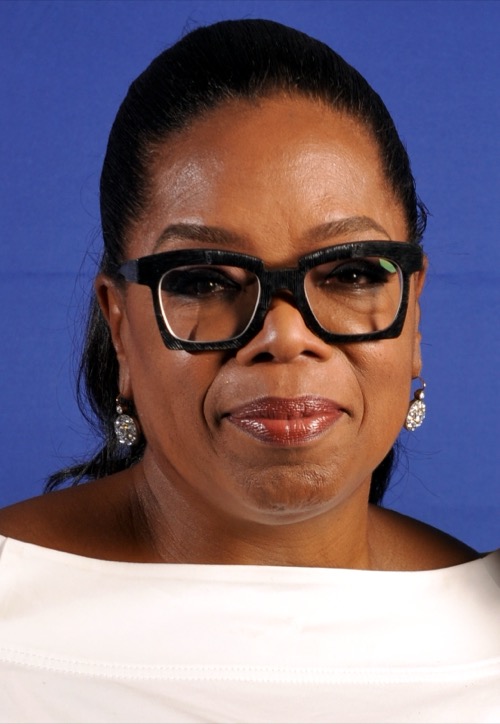
Founder and Chairman, Harpo Productions · b. 1954 · Kosciusko, Mississippi
Two calls made by hand, not formulas. how we score →
Summary
A demotion out of the evening news anchor chair pushed her into a local talk show almost by accident, and that format made her famous.
Her lawyer then negotiated what almost no on-air host gets: ownership of the show itself. She put the first big windfall into a studio instead of spending it, and the fame turned into equity she kept.
How it happened
Born in rural Mississippi to an unmarried teenage mother, she spent her early years with her grandmother, moved to her mother in Milwaukee at six, then to her father in Nashville at fourteen. Three households before she finished high school, in a family with no money and nothing underneath any of it.
Her father Vernon, an Army veteran who ran a barbershop and later sat on the Nashville city council, set rules she'd never had: curfews, weekly book reports, no dinner until she'd learned five new vocabulary words. She has said that without the move to his house she'd have gone a different way entirely. From there came an oratory-contest scholarship to Tennessee State and a part-time radio job at seventeen.
At twenty-two she was pulled off the evening news in Baltimore, moved to a lesser morning slot, and then reassigned to co-host a local talk show called People Are Talking. It wasn't the job she wanted. It became the format she built a career on.
In Chicago her local show went from last place to first, and King World wanted to syndicate it nationally. Her lawyer, Jeff Jacobs, pushed further and negotiated her into forming her own production company, Harpo. By 1988 she owned the show outright instead of being paid to host it.
She reinvested the money ownership produced into an actual studio, buying a former Chicago armory in 1988 and building Harpo Studios on it. The library, the brand, and the production company kept compounding long after the show itself ended in 2011, and by 2003 she had already become the first Black woman billionaire.
The coded evidence
Thirteen groups, every claim sourcedDescendant
↗ blackpast.orgRaised attending Kosciusko Baptist Church with her grandmother; gave her first speech there at three and a half.
↗ achievement.orgA salaried broadcaster from seventeen onward (part-time radio, then a full anchor job at nineteen), so the career-building years came with a paycheck rather than savings she had to stretch.
↗ encyclopedia.comThree household changes before age fourteen — grandmother, then mother, then father — across three states, with no family wealth behind any of them.
↗ encyclopedia.comThe hardship was imposed, not chosen. There was nothing to fall back on.
Childhood poverty was not chosen; it was the starting condition.
↗ encyclopedia.comMother Vernita Lee was an unmarried teenage housemaid. Father Vernon Winfrey served in the Army during the Korean War, then worked as a barber, grocery-store owner, and later a Nashville city councilman.
↗ today.comA parent worked for themselves, the strongest known predictor of founding.
Her father owned his barbershop and a small grocery store.
↗ today.comHer grandmother Hattie Mae taught her to read before age three and took her to church, where she was reciting speeches and Bible verses as a small child — the root of the public-speaking skill that later won her a scholarship.
↗ achievement.orgHer father and stepmother Zelma imposed curfews, required weekly book reports, and made her learn five new vocabulary words a day. She has said, "If I hadn't been sent to my father, I would have gone in another direction."
↗ today.comRaised by her maternal grandmother in Mississippi from birth to age six; sent to her mother in Milwaukee at six; sent to her father in Nashville at fourteen after the pregnancy, where she stayed through high school.
↗ encyclopedia.comAt least three moves before age fourteen, each tied to a change of guardian rather than a family choice about housing.
↗ encyclopedia.comHas said on the record that she was sexually abused by family members and family friends from age nine through thirteen; that she became pregnant at fourteen; and that the baby, born prematurely, died in the hospital weeks later. She has said she considered suicide during that period. She has spoken about all of it herself, at length, over decades.
Her own on-record disclosures, attributed to her. The people she named privately are not named here; the graphic quotes remain sequestered in the sensitive fields.
↗ transcripts.cnn.comRural Kosciusko, Mississippi, then inner-city Milwaukee, then Nashville.
↗ encyclopedia.comMississippi to Milwaukee at six (her mother had already migrated north for domestic work), then Milwaukee to Nashville at fourteen — each move initiated by a custody decision, not a family choice about opportunity.
↗ encyclopedia.comAfter winning the Miss Black Tennessee pageant at seventeen, a local radio employee offered her a part-time newscasting job at WVOL in Nashville while she was still in high school.
↗ encyclopedia.comWLS-TV Chicago's struggling morning show AM Chicago, which she took over in January 1984 and rebuilt into the highest-rated local talk program before it went national as The Oprah Winfrey Show in 1986.
↗ history.comBy the time King World approached her about national syndication, her Chicago local show, AM Chicago, had already overtaken Donahue for the top local ratings, and she had a loyal, proven audience to sell.
↗ nbcchicago.comDemoted from evening news co-anchor at Baltimore's WJZ-TV in April 1977 to a lesser morning "cut-ins" slot after less than a year, following a difficult pairing with co-anchor Jerry Turner. WJZ then moved her to co-host a local talk show, People Are Talking, which premiered in August 1978 and turned out to be the format that made her.
↗ baltimoremagazine.comHired entertainment lawyer Jeffrey Jacobs as her agent and manager in the mid-1980s. Jacobs negotiated her out of a straight hosting fee and into ownership, structuring Harpo Productions with Winfrey as chairman and himself as president with an equity stake (5%, later rising to 10%) in exchange for engineering the deal.
↗ forbes.comAdvanced through a competition circuit as a teenager — the Miss Fire Prevention title, an Elks Club oratory contest, and the Miss Black Tennessee pageant — each of which supplied recognition, a scholarship, or a job offer.
↗ encyclopedia.comBA in speech communication and performing arts, Tennessee State University, on a full oratory-contest scholarship.
Sources disagree on completion: this encyclopedia entry lists a 1976 graduation, while a Tennessee State commencement account has her leaving a credit short in the mid-1970s for the WJZ-TV job and completing the degree roughly a decade later at her father's insistence. Both agree the scholarship and the coursework are real; the exact completion date is not firmly established.
↗ encyclopedia.comNone. The $1,000 scholarship, won for a speech titled "The Negro, the Constitution, and the United States" delivered before 10,000 Elks in Philadelphia, covered the degree.
↗ encyclopedia.comHired as a reporter and anchor at WTVF-TV, Nashville's CBS affiliate, at nineteen while still enrolled at Tennessee State.
↗ encyclopedia.comTennessee State University, an HBCU; she returned as a major donor and the 2023 undergraduate commencement speaker, but the network that actually launched her career was the Nashville broadcast industry, not the university itself.
↗ tntribune.comIt paid its own way from the start. Revenue came before any outside money.
Harpo was not capitalized with outside or personal investment. It was formed to take ownership of a show that was already generating substantial revenue for its network.
↗ nbcchicago.comNo outside investors at any point. Harpo was financed from the show's own revenue and her salary, with ownership retained fully by Winfrey (and a minority stake by Jacobs) rather than diluted through a raise.
↗ forbes.comReinvested the proceeds of ownership into infrastructure rather than spending them: in 1988 Harpo paid $4.75 million for an 88,000-square-foot former Chicago armory building and converted it into Harpo Studios.
↗ dnainfo.comFormed Harpo Productions in 1986. In October 1988, Harpo assumed full ownership and all production responsibility for The Oprah Winfrey Show from Capital Cities/ABC, making her the first woman in history to own and produce her own talk show.
↗ dnainfo.com3
Took equity or co-ownership rather than a fee across at least three distinct businesses beyond the talk show itself: the OWN cable network (co-owned with Discovery from 2011), O, The Oprah Magazine (with Hearst, from 2000), and a roughly 10% stake in Weight Watchers taken in exchange for board membership and endorsement in 2015.
↗ cnbc.comnot established
No independently founded venture failed before Harpo. The Baltimore setback was a demotion within continuous salaried employment, not a funded attempt that collapsed — see rejectionRedirect instead.
↗ encyclopedia.comnot established
Not applicable in the usual sense — she remained a salaried WJZ-TV employee through the demotion, so there was no personal capital at risk to absorb.
↗ baltimoremagazine.comThe mid-1980s first-run syndication boom, where distributors like King World (built on Wheel of Fortune and Jeopardy!) had just proven that a hit show could earn far more sold station-by-station nationally than it could inside one network affiliate.
↗ variety.comChicago. She had moved there in January 1984 to host AM Chicago, the show that became the vehicle for the ownership deal.
↗ nbcchicago.comTook over an existing, last-place local show and rebuilt it into the highest-rated program in the market, then converted the resulting leverage into ownership rather than starting something new from scratch.
↗ nbcchicago.comMedia
↗ achievement.org3400000000
Forbes real-time estimate; fluctuates with markets and private-asset valuation. Band only.
↗ forbes.comJournalistic estimate
↗ forbes.com2026
↗ forbes.comJournalistic estimate
↗ forbes.comWealth in owned, appreciating assets — the Harpo library and royalty stream, a stake in Warner Bros. Discovery through the OWN deal, and the Weight Watchers equity — rather than a salary alone.
↗ dnainfo.comFirst Black woman to become a billionaire (Forbes, 2003); Academy Award nomination for The Color Purple (1986); the Presidential Medal of Freedom (2013).
↗ npr.orgUncapped
↗ forbes.comSued in federal court in Amarillo, Texas by cattlemen under the state's food-disparagement law after a 1996 episode on mad cow disease. A jury ruled unanimously in her favor on February 26, 1998; the verdict was upheld on appeal in 2000. No judgment was ever entered against her.
↗ law.justia.comAfter
↗ law.justia.comOpened the Oprah Winfrey Leadership Academy for Girls near Johannesburg in 2007. The following year a former dorm matron was charged with sexually abusing six students; she was acquitted after trial, with Winfrey publicly stating she was "profoundly disappointed" by the verdict and pledging to overhaul the school's oversight practices.
↗ cbsnews.comEmpathetic, Authentic, Self made
↗ achievement.orgPublic
↗ achievement.orgBefore
Her reputation for empathetic, confessional interviewing was already built locally in Baltimore and Chicago before the ownership deal — it's the reason King World wanted her.
↗ nbcchicago.comAsset
Her personal brand drove the show's ratings, the book club's sales, the magazine, and OWN.
↗ forbes.comThe reputation accrued from behaviour rather than being manufactured.
Described consistently, including by Oprah herself, as a natural extension of her own personal history rather than a constructed persona.
↗ achievement.orgStructural context
The cost-of-failure score comes from this person's own money and circumstances. But who they were in America carried its own weight, the same way their household or income did, and it shaped how hard the path was just as much. That part isn't in the cost-of-failure number. It's here instead.
Across film, music, and digital, ownership and control stay in far fewer women's hands than men's. For one measure, women directed only about 12% of 2023's top-grossing films.
↗ assets.uscannenberg.orgIn the creative and media industries, recognition comes far more easily to underrepresented creators than the ownership it should turn into. Among 2023's top-grossing film directors, for one measure, eight were Black.
↗ assets.uscannenberg.orgAmong the people recorded here — women: 68 · Black subjects: 58. Representation here is who reached these outcomes, not equal odds of reaching them.
Controlled comparisons
Each holds one thing constant and varies another, so the difference is the point. A list of similar names wouldn't tell you anything.