Spike Lee
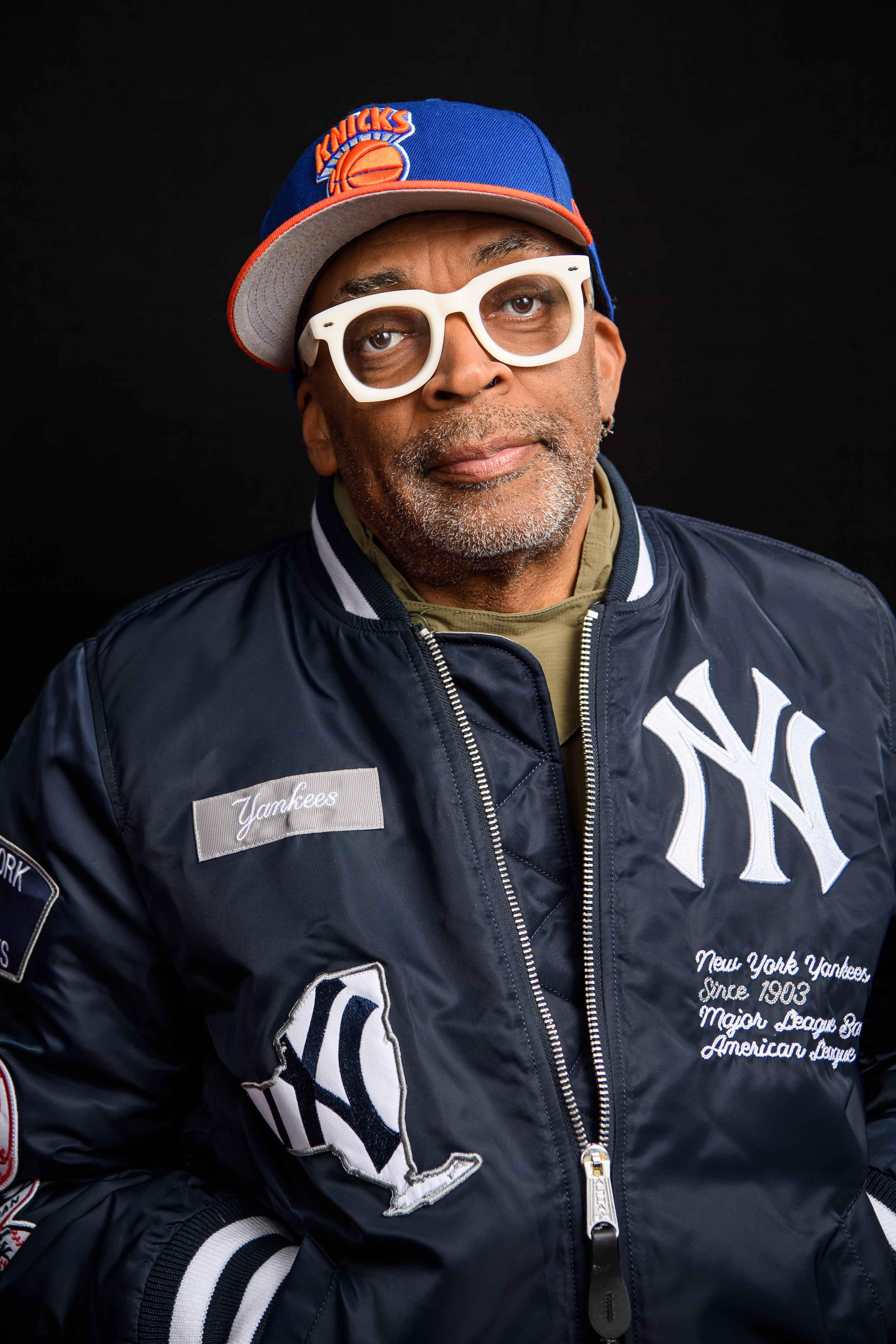
born Shelton Jackson Lee
Filmmaker; founder, 40 Acres and a Mule Filmworks · b. 1957 · Atlanta, Georgia → Brooklyn, New York
Two calls made by hand, not formulas. how we score →
Summary
His grandmother's savings paid for Morehouse and NYU film school, then helped fund the $175,000 debut he shot after an earlier project of his collapsed for lack of money.
He kept raising his own capital and fighting for the cut after that, putting his own director's fee back into "Malcolm X" when a bond company tried to shorten it, and never gave up the company he started in film school.
How it happened
Born in Atlanta to a jazz bassist and an art and Black-literature teacher, then raised in Fort Greene, Brooklyn, once the family moved north. Both grandparents, his father, and his mother had all gone to Morehouse or Spelman before him, and his grandmother spent decades of saved Social Security checks on her grandchildren's schooling. It was a house with standing and steady work, not money to spare.
In 1984 he spent months in pre-production on a film called "The Messenger," about a bike messenger who becomes head of his household. He assembled a cast including Laurence Fishburne, and the money never came. He told the crew there was nothing to pay them with and shut it down, out roughly $40,000.
He redirected an $18,000 New York State Council on the Arts grant that had been earmarked for "The Messenger," added a $10,000 Jerome Foundation grant, a small city arts grant, deferred pay for the cast and crew, and money from his grandmother, and shot "She's Gotta Have It" in twelve days for about $175,000. It grossed more than $7 million and made him a name without anyone else owning a piece of it.
"Do the Right Thing" went out through Universal in 1989 on a $6.2 million budget. Three years later, on "Malcolm X," Warner Bros.' bond company tried to cap the runtime and cut off funding; he put $2 million of his own director's fee back into the film and got the rest from Black celebrities, including Oprah Winfrey, Michael Jordan, Bill Cosby, Magic Johnson, and Prince, who gave the money as gifts rather than investments. The film ran 202 minutes, the length he wanted.
40 Acres and a Mule, the company he started as a Morehouse senior in 1979, is still producing his work more than four decades later, now under a Netflix development deal. He won the Academy Award for Best Adapted Screenplay for "BlacKkKlansman" in 2019 and the National Medal of Arts in 2023. Reported net worth sits around $50–60 million, built mostly from directing and producing fees and a company he never sold a piece of.
The coded evidence
Thirteen groups, every claim sourcedDescendant
↗ ajc.comnot established
He has described faith in "a higher being" as an adult; a specific denomination raised in is not established in reachable sources.
↗ en.wikipedia.orgDescribed in reachable profiles as growing up in "a relatively well-off" Brooklyn family; the household is consistently reported as homeowning in Fort Greene rather than renting, though a purchase price or date could not be independently confirmed from a vetted source.
↗ biography.comnot established
No poverty narrative attaches to him at any point; the lean "She's Gotta Have It" budget reflects a grant-and-favor-financed shoot, not personal deprivation, so this field doesn't cleanly apply.
↗ en.wikipedia.orgFather Bill Lee (William James Edwards Lee III) was a working jazz bassist and composer who played on more than 250 albums, including with Bob Dylan and Aretha Franklin. Mother Jacquelyn Carroll Shelton Lee taught art and Black literature.
↗ en.wikipedia.orgA parent worked for themselves, the strongest known predictor of founding.
Freelance session and composing work rather than a salaried post.
↗ en.wikipedia.orgFather: B.A., Morehouse College, 1951. Mother: B.A., Spelman College, 1954.
↗ ajc.comGrandmother Zimmie Retha Shelton (Spelman College, 1929) taught art for fifty years and saved her Social Security and retirement income to fund her grandchildren's schooling; grandfather Richard Shelton attended Morehouse College, class of 1926.
↗ ajc.comAn unusually deep single-family HBCU lineage: grandfather (Morehouse, 1926), father (Morehouse, 1951), mother (Spelman, 1954), grandmother (Spelman, 1929), and Spike Lee himself (Morehouse, 1979). Standing inside Atlanta's Black academic community across four generations, with no corresponding family fortune.
↗ ajc.comHis grandmother earmarked decades of saved Social Security and retirement income specifically for her grandchildren's education; she paid his Morehouse and NYU tuition and later put money into "She's Gotta Have It."
The specific "50 years of Social Security" framing he has used in interviews doesn't square with her age (she'd have been about 69 when he entered Morehouse); the underlying fact of sustained, dedicated family funding for his education is well corroborated regardless.
↗ finurah.comHis mother, Jacquelyn Shelton Lee, died in 1976, when he was 19 and at Morehouse College. His father remarried within a year, which he has said caused a lasting rift between them.
↗ en.wikipedia.orgFort Greene, Brooklyn, described in retrospectives as a stable, "relatively well-off" Black neighborhood at the time; Lee has spoken often, including publicly criticizing its later gentrification, about growing up there.
↗ biography.comJohn Dewey High School, a public high school in Gravesend, Brooklyn.
↗ en.wikipedia.orgAt Morehouse College's class of 1979, his cohort included Samuel L. Jackson (who Lee met backstage in a theater production and later cast repeatedly, starting with "School Daze" and "Do the Right Thing") and Martin Luther King III.
↗ encyclopedia.comThe Atlanta University Center HBCU network (Morehouse, Spelman, Clark Atlanta) his family had moved through for four generations, which supplied both his undergraduate degree and lifelong professional relationships.
↗ ajc.comBuilt his own opening through the student-film and festival circuit rather than an industry introduction: a Student Academy Award for his NYU thesis film "Joe's Bed-Stuy Barbershop: We Cut Heads" (1983), then a rough-cut screening of "She's Gotta Have It" where he appealed directly to the room to help finance finishing the film.
↗ en.wikipedia.orgNYU Tisch School of the Arts graduate film program; classmates included Ang Lee (who worked as an assistant director on one of his student films) and cinematographer Ernest Dickerson, his longtime collaborator.
↗ en.wikipedia.orgM.F.A. in Film and Television, NYU Tisch School of the Arts (1982); B.A. in Mass Communication, Morehouse College (1979).
↗ en.wikipedia.orgNot established as a specific figure, but his grandmother's dedicated education savings are consistently credited with covering his Morehouse and NYU tuition, which points away from significant debt.
↗ ajc.comDirect — HBCU undergraduate degree straight into a selective graduate film program.
↗ en.wikipedia.orgMorehouse College, an HBCU his father and grandfather had also attended. His class-of-1979 cohort included Samuel L. Jackson, who became a recurring collaborator, and Martin Luther King III.
↗ encyclopedia.comHis grandmother's savings funded his Morehouse and NYU tuition, then contributed seed money toward "She's Gotta Have It"; exact amounts for either aren't established.
↗ finurah.comGrandmother Zimmie Shelton contributed money toward "She's Gotta Have It" in addition to funding his education; the amount is not specified in reachable sources.
↗ ajc.comThe cast and crew of "She's Gotta Have It" worked for deferred pay during the twelve-day 1985 shoot rather than upfront wages.
↗ en.wikipedia.orgOwned "She's Gotta Have It" and his other early films outright through 40 Acres and a Mule. On the studio-financed "Malcolm X," when Warner Bros.' completion-bond company tried to force a shorter cut and cut off further funding, he put $2 million of his own $3 million director's fee back into the production and raised the rest from Black celebrity donors — including Oprah Winfrey, Michael Jordan, Bill Cosby, Magic Johnson, Janet Jackson, and Prince, who gave the money as gifts rather than investments — specifically so the film could run at his intended 202 minutes rather than the imposed limit.
↗ en.wikipedia.org40 Acres and a Mule Filmworks, founded in 1979 while he was still at Morehouse, has produced or co-produced more than 35 films and remains headquartered in Fort Greene; it later expanded into a music division, retail, and an advertising agency (Spike DDB), and signed a multi-year development deal with Netflix in 2021.
↗ en.wikipedia.orgAbout $28,500 of the $175,000 "She's Gotta Have It" budget came from arts grants: $18,000 from the New York State Council on the Arts (redirected from his abandoned "Messenger" project), $10,000 from the Jerome Foundation, and $500 from the Brooklyn Arts and Cultural Association. A separate $20,000 American Film Institute grant for earlier work was revoked.
↗ en.wikipedia.org"She's Gotta Have It" grew out of his own observation and writing about dating and relationships rather than an acquired property or commission.
↗ en.wikipedia.orgA split profile: full ownership of his independent early work through 40 Acres and a Mule, but on major-studio pictures like "Malcolm X" the financing studio holds the copyright even where he fought for, and won, final creative control of the cut.
↗ en.wikipedia.org1
"The Messenger," a 1984 feature about a bike messenger, was cast (including Laurence Fishburne) and in pre-production when funding collapsed; he shut it down rather than proceed without pay for his crew. Reporting elsewhere puts the loss at roughly $40,000.
↗ insidehook.comSelf, plus the crew and actors who had turned down other work to join "The Messenger" and were left without pay when it collapsed.
↗ insidehook.comRedirected the NYSCA grant earmarked for "The Messenger" toward "She's Gotta Have It" within about a year rather than an extended gap.
↗ en.wikipedia.orgThe mid-1980s American independent film movement, which "She's Gotta Have It" is widely credited with helping launch, followed by a wave of Black-directed studio films it opened the door for.
↗ en.wikipedia.orgBuilt — an original micro-budget feature written, directed, produced, and edited by him, rather than an acquired script or remake.
↗ en.wikipedia.orgFilm and television
↗ en.wikipedia.org60000000
Aggregator estimate with no disclosed methodology; other current estimates range from about $50M to $70M. Band only.
↗ celebritynetworth.comAggregator
↗ celebritynetworth.comA mix of directing/producing fees, acting and teaching income, an endorsement relationship with Nike, and an owned production company and real estate rather than equity in a single large asset.
↗ sociallifemagazine.comAcademy Award for Best Adapted Screenplay, "BlacKkKlansman" (2019); Academy Honorary Award (2015); National Medal of Arts (2023); Directors Guild of America Lifetime Achievement Award (2022); tenured professor and longtime chair of NYU Tisch's graduate film program.
↗ en.wikipedia.orgIn 2012 he retweeted an address he believed was George Zimmerman's during the Trayvon Martin case; it was in fact the home of an elderly, unrelated couple who received death threats as a result. He reached a settlement with the couple, and a subsequent 2013 negligence suit seeking $1.2 million was dismissed by a Florida judge on the grounds that the earlier settlement had already resolved the matter.
↗ en.wikipedia.orgAfter
↗ en.wikipedia.orgUnrelated
A personal social-media error long after his filmmaking career was established; it produced no career advantage.
↗ en.wikipedia.orgPersonal liability
He personally settled with the affected couple rather than the matter being absorbed by a studio or company.
↗ en.wikipedia.orgOutspoken, Confrontational, Uncompromising, Provocative
↗ en.wikipedia.orgPublic
↗ en.wikipedia.orgBefore
↗ en.wikipedia.orgMixed
A reputation for fighting studios over budget and cut has been read as integrity by supporters and as difficult by some of the industry he depends on for financing — Warner Bros. reportedly kept him off "Space Jam" afterward.
↗ en.wikipedia.org"Mo' Better Blues" (1990) drew criticism from the Anti-Defamation League over its portrayal of two Jewish characters, which he denied was antisemitic; "Do the Right Thing" (1989) itself drew contemporary criticism from some critics who worried, wrongly, that it would incite urban riots. Reputation has split repeatedly along these lines — hailed inside the industry and among cinephiles while individual films draw sustained outside criticism.
↗ en.wikipedia.orgStructural context
The cost-of-failure score comes from this person's own money and circumstances. But who they were in America carried its own weight, the same way their household or income did, and it shaped how hard the path was just as much. That part isn't in the cost-of-failure number. It's here instead.
Men hold most of the ownership and gatekeeping across the creative and media industries, the default that recognition and deals flow toward.
↗ assets.uscannenberg.orgIn the creative and media industries, recognition comes far more easily to underrepresented creators than the ownership it should turn into. Among 2023's top-grossing film directors, for one measure, eight were Black.
↗ assets.uscannenberg.orgAmong the people recorded here — men: 115 · Black subjects: 58. Representation here is who reached these outcomes, not equal odds of reaching them.
Controlled comparisons
Each holds one thing constant and varies another, so the difference is the point. A list of similar names wouldn't tell you anything.