Tim O'Reilly
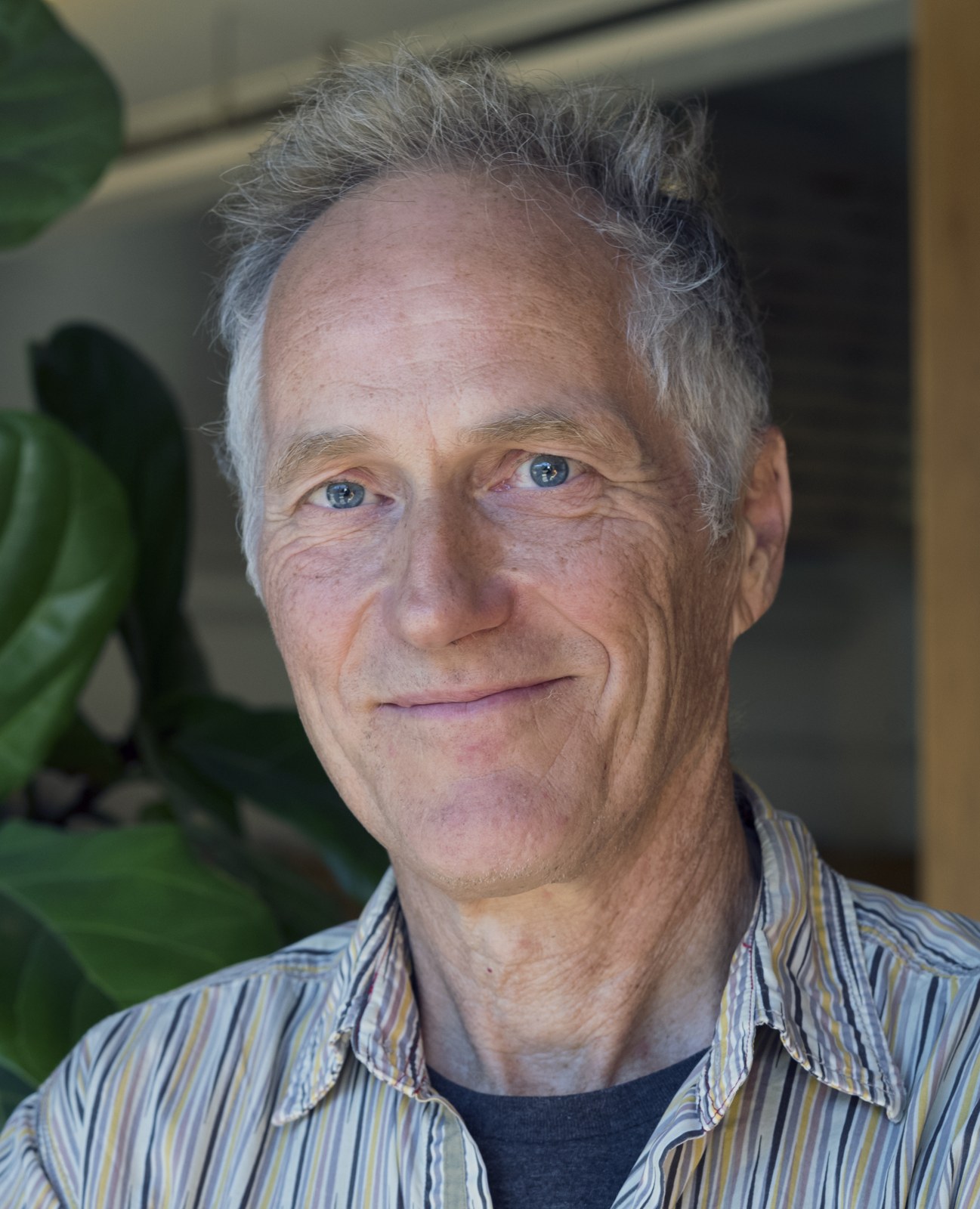
born Timothy O'Reilly
Founder and chairman of O'Reilly Media; convened the 1998 meeting that popularized the term open source and helped popularize Web 2.0 · b. 1954 · Cork, Ireland → San Francisco, California
Two calls made by hand, not formulas. how we score →
Summary
A neurologist's son born in Cork and raised in San Francisco, he studied classics at Harvard, then turned freelance technical writing into O'Reilly Media, grown entirely on consulting and book revenue with no outside investors.
The business made him modestly wealthy; naming open source in 1998 and popularizing Web 2.0 made him far more influential than rich.
Where they worked
How it happened
O'Reilly was born in Cork, Ireland, in 1954, the third of seven children. His father, a neurologist who researched Wilson's disease, moved the family to San Francisco within three months of his birth for the work. It was a professional household, not a wealthy one — his father's strict Catholicism, not the family income, was its defining rule.
He studied classics at Harvard, graduating cum laude in 1975 with a thesis on mysticism and logic in Plato. Nothing about his training pointed toward technology; he arrived at writing by circumstance, not design.
At 24, deciding he was ready to start a family and needed steadier income, he got three unrelated offers of paid writing work in a single day, including a programmer friend who asked for help with a manual. He took the manual work, and the freelance practice that became O'Reilly & Associates in 1978 grew entirely on client revenue. He never raised outside capital.
In April 1998 he convened a meeting of free-software leaders that helped replace "free software" with "open source" as the term the industry settled on — a naming choice, not a product, but one that shaped how a generation talked about the code running the internet.
He didn't coin "Web 2.0" — writer Darcy DiNucci used the phrase first, in 1999 — but the 2004 conference he ran with Dale Dougherty made it the industry's name for itself. A year later, a cease-and-desist letter over the trademark, sent by the conference's co-organizer to an Irish nonprofit, was retracted within two days after public backlash.
O'Reilly Media became a privately held publisher, conference producer, and online-learning company generating hundreds of millions in annual revenue, with O'Reilly retaining ownership even after handing day-to-day control to CFO Laura Baldwin in 2011. He also launched Make: magazine, Maker Faire, and an early-stage fund, O'Reilly AlphaTech Ventures. His personal fortune, unlike his name recognition, stayed modest — no reliable figure places it in the hundreds of millions, let alone beyond.
The coded evidence
Thirteen groups, every claim sourcedcoded.ethnicities is set to the clean "Irish" facet bucket at low confidence, reusing the same bucket used elsewhere in the dataset — the finer mixed Irish/English detail lives here, not in the facet tag.
↗ irishtimes.com1.5 generation; emigrated from Ireland to the US at roughly 3 months old
↗ irishtimes.comRoman Catholic (paternal); father described as staunchly Catholic
Mother's own religious background is not established. The father's Catholicism was strict enough to cause a seven-year estrangement when O'Reilly married a non-Catholic woman in 1975.
↗ irishtimes.comA stable professional family home in San Francisco through childhood and college; no record of housing insecurity at any point, including during the freelance years before the company existed.
↗ tim.blogNo salaried employer or family subsidy during the founding years — income came directly from freelance technical-writing and consulting clients, which is why the venture needed revenue from day one rather than a cushion.
↗ tim.blognot established
None documented. No homelessness, food insecurity, or job loss during the build.
↗ tim.blognot established
No period of visible poverty is documented to code either way; the freelance-to-founding transition reads as a professional career choice rather than chosen or imposed austerity.
↗ tim.blogFather a neurologist and medical researcher (studied Wilson's disease and radio-medicine, pioneering early genetic-medicine techniques); mother managed the household.
↗ tim.blognot established
Not established whether his father held an academic/hospital research post or ran a private practice.
↗ tim.blogFather held a medical degree and conducted clinical research; mother's education is not documented.
↗ tim.blognot established
No named multigenerational family standing established beyond the parents.
↗ en.wikipedia.orgFather's health failed after a heart attack in 1980, which also ended a seven-year estrangement between them; exact date of death not established in the sources consulted.
↗ irishtimes.comSan Francisco, California; no ZIP-level mobility-percentile join performed.
↗ tim.blogCork, Ireland (birth, 1954) → San Francisco, California, within about three months of birth, for his father's medical work; a single, permanent childhood migration rather than repeated moves.
↗ irishtimes.comNone evident — the family arrived as, and remained, a professional household; no documented downgrade in occupational or social standing from the move.
↗ irishtimes.comA programmer friend who, on the same day as two other unrelated writing requests, asked O'Reilly to help write a technical manual — the job that became his freelance writing practice and then the company.
↗ tim.blognot established
No prior employer supplied capital, credibility, or network — he moved directly from freelance writing gigs into his own consulting practice.
↗ tim.blog0
The freelance writing work and the founding of the company were effectively the same event.
↗ tim.blogBA in Classics, Harvard College, 1975 (cum laude)
↗ en.wikipedia.orgDirect admission to an elite private university; no community-college or military route.
↗ en.wikipedia.orgAn elite, unconnected-to-his-eventual-field credential: a Harvard classics degree, later useful for general credibility even though it supplied no direct network into technical publishing.
↗ en.wikipedia.orgEarly freelance writing fees: a quote to translate a UN speech, a paid piece on science-fiction author Frank Herbert, and paid work writing a technical manual — the last of which became the core of the business.
↗ tim.blogIt paid its own way from the start. Revenue came before any outside money.
↗ tim.blogGrew entirely on consulting, book, and later conference and online-learning revenue; never took outside venture capital. Remains 100% privately held, with O'Reilly retaining ownership after transferring day-to-day operating control to CFO Laura Baldwin in 2011.
↗ en.wikipedia.orgPersonal freelance experience — writing technical manuals for Unix and the X Window System for clients, which showed him an underserved market for good developer documentation.
↗ en.wikipedia.orgFull private ownership and control throughout; the 2011 transfer to Laura Baldwin changed day-to-day operating authority, not ownership — O'Reilly has remained chairman/CEO of record.
↗ en.wikipedia.org0
No collapsed prior venture documented; the freelance practice evolved directly into the company without an earlier failed attempt. The business did lay off roughly 70 employees (about a quarter of staff) after the 2000 dot-com crash and rebuilt around ebooks and events, a survived setback rather than a failed attempt.
↗ en.wikipedia.orgSelf, from freelance and consulting income.
↗ tim.blog24
Age at the founding of the freelance writing practice that became O'Reilly & Associates in 1978.
↗ tim.blogLate-1970s/1980s Unix and workstation computing created a real but underserved demand for clear technical documentation, before commercial tech-book publishing or developer conferences existed as an industry.
↗ en.wikipedia.orgCambridge, Massachusetts area, where the consulting firm was based from 1978; the company relocated to Sebastopol, California, in 1989.
↗ en.wikipedia.org48
From the 1978 founding to 2026, with a 2000 dot-com-crash setback and a 2011 operational handover to Laura Baldwin, but no reset of ownership.
↗ en.wikipedia.orgTechnology publishing, developer conferences, and online professional learning
↗ en.wikipedia.orgnot established
No reliable, filing-based figure exists for a privately held company founder. Aggregator sites quote wildly inconsistent figures (from roughly $100K to $26M), several apparently conflating him with an unrelated namesake (the co-founder of O'Reilly Auto Parts). A 2010 magazine profile described O'Reilly Media itself as roughly a $100 million company by revenue at that time, which is a company figure, not his personal net worth, and is not used to set the band here. coded.magnitude (band 3, $10–100M) reflects a conservative read of a long-running, debt-free, fully owned private company of real but modest scale — not a precise estimate.
↗ celebsmoney.comAggregator
↗ celebsmoney.comCredited with popularizing the term "open source" after convening a 1998 meeting of free-software leaders, and with popularizing "Web 2.0" via the 2004 conference he ran with Dale Dougherty (he did not coin either term). Founded Make: magazine and Maker Faire, launched the O'Reilly AlphaTech Ventures seed fund, and has advocated widely for "Government as a Platform" (Gov 2.0) and algorithmic-accountability research. Widely described as one of the technology industry's most influential connectors and framers of new-movement language.
↗ en.wikipedia.orgUncapped
A fully owned private company rather than a salaried or credentialed ceiling, though growth has been steady rather than venture-scale.
↗ en.wikipedia.orgnot established
No regulatory, criminal, or civil action against O'Reilly personally is documented in the sources consulted.
↗ en.wikipedia.orgIn November 2004, CMP Media — co-organizer with O'Reilly Media of the Web 2.0 Conference — filed a US service-mark application for "WEB 2.0," registered in June 2006. On May 24, 2006, CMP Media sent a cease-and-desist letter to IT@Cork, an Irish nonprofit, over its use of the phrase in an event name; the demand was retracted two days later after public criticism. A related EU trademark application was rejected in 2007.
Reported as a CMP Media action taken in connection with the jointly run conference; no source consulted attributes the cease-and-desist decision to O'Reilly personally.
↗ en.wikipedia.orgAfter
The trademark dispute followed, rather than produced, the term's popularization.
↗ en.wikipedia.orgIncidental
↗ en.wikipedia.orgLegal gray
↗ en.wikipedia.orgNone
The demand was withdrawn within two days; no fine, settlement, or ruling followed.
↗ en.wikipedia.orgVisionary, Connector, prolific framer of new industry language, generous with ideas
Drawn from the recurring public description of his role across decades of profiles and his own books (e.g., "WTF?: What's the Future and Why It's Up to Us"), rather than a single named-insider assessment.
↗ en.wikipedia.orgPublic
↗ en.wikipedia.orgBefore
His reputation as a technology-industry thinker predates both the open-source and Web 2.0 episodes and grew through them.
↗ en.wikipedia.orgAsset
↗ en.wikipedia.orgThe reputation was deliberately built, through books, press, and PR.
Built deliberately over decades through books, essays, conferences, and media appearances, rather than accrued passively from behavior alone — though it rests on substantive publishing and organizing work, not image management alone.
↗ en.wikipedia.orgStructural context
The cost-of-failure score comes from this person's own money and circumstances. But who they were in America carried its own weight, the same way their household or income did, and it shaped how hard the path was just as much. That part isn't in the cost-of-failure number. It's here instead.
Men founded the companies that took nearly all the venture funding and almost every top outcome, a tailwind that never shows up in one person's own circumstances.
↗ techcrunch.comImmigrants and their children are overrepresented among America's biggest companies, as founders and as senior leaders. They got there through the visa, credential, and network hurdles that make the path harder to even start down.
↗ forbes.comAmong the people recorded here — men: 225. Representation here is who reached these outcomes, not equal odds of reaching them.
Controlled comparisons
Each holds one thing constant and varies another, so the difference is the point. A list of similar names wouldn't tell you anything.