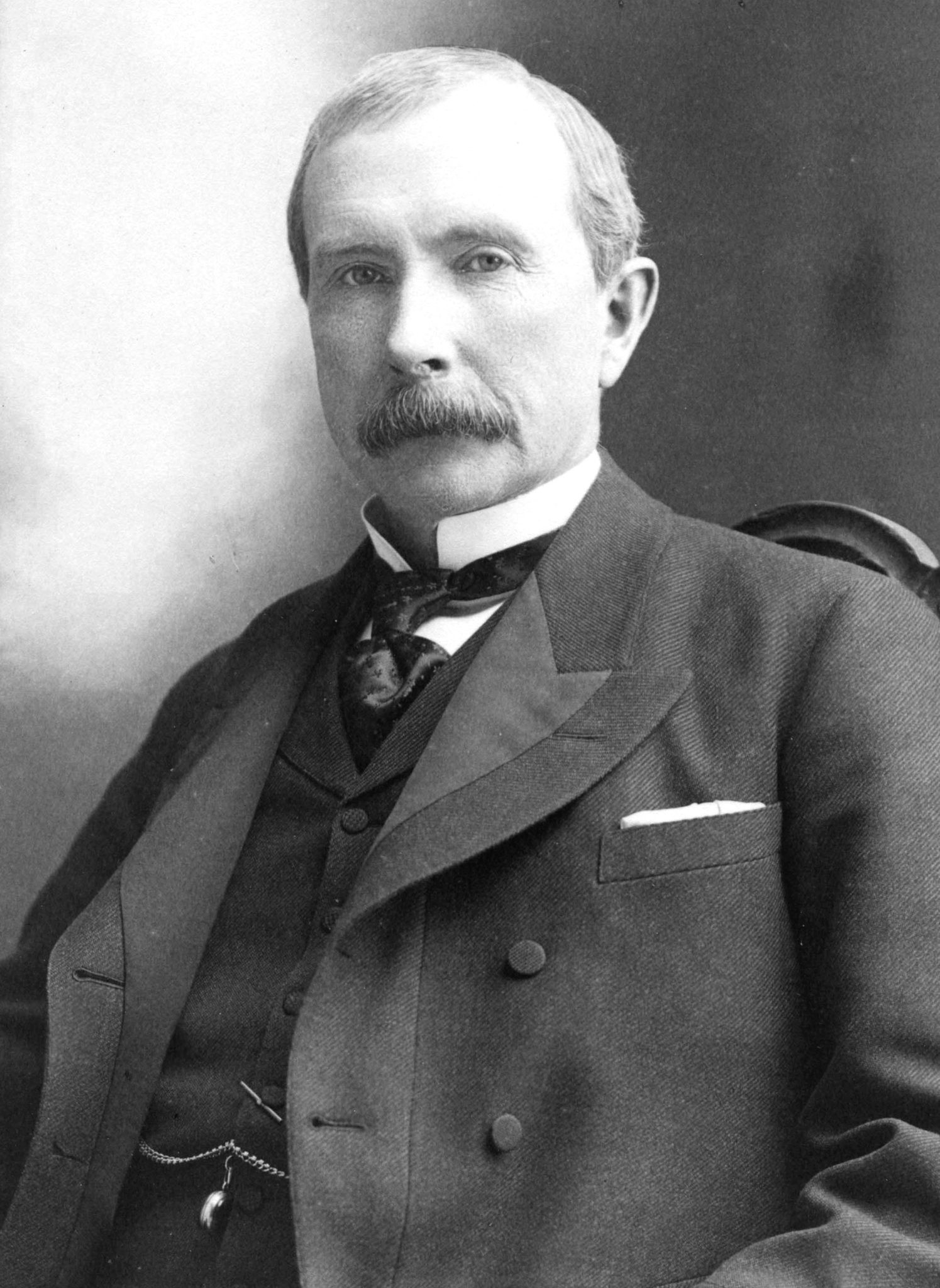
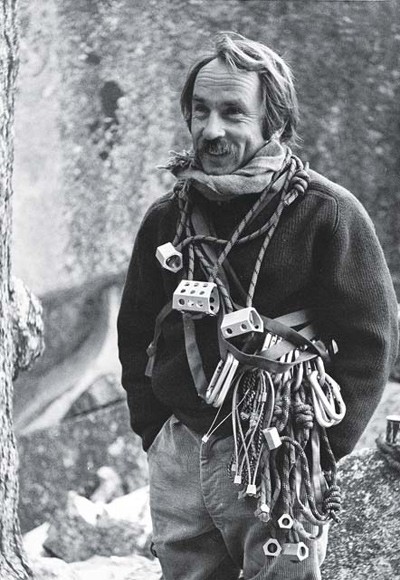
Yvon Chouinard
Founder, Chouinard Equipment and Patagonia, Inc. · b. 1938 · Lewiston, Maine
Two calls made by hand, not formulas. how we score →
Summary
Son of a French-Canadian immigrant handyman, he arrived in Burbank speaking no English and taught himself blacksmithing to forge climbing pitons he sold out of his car.
Chouinard Equipment grew into the largest US climbing-hardware supplier before a stray line of rugby shirts became Patagonia. In September 2022 he gave nearly the whole company away.
How it happened
Yvon Chouinard was born November 9, 1938, in Lewiston, Maine, the son of a French-Canadian immigrant father who worked as a handyman, mechanic, and plumber. Around 1947 the family moved west to Burbank, California, selling off what little they had, including furniture his father had built. Chouinard arrived speaking only French, was the smallest kid in his class, and was bullied over his name and his accent. He drifted toward falconry as a teenager, and rappelling down cliffs to reach hawks' nests led him into rock climbing.
In 1957 he bought a secondhand coal-fired forge and taught himself blacksmithing, unhappy with the soft, single-use European pitons climbers relied on. He forged a reusable chrome-molybdenum version and sold them for $1.50 apiece out of the trunk of his car to fellow climbers in the Yosemite scene. His father helped him build a workshop out of an old backyard chicken coop, and at eighteen he borrowed $825.35 from his parents for a drop-forging die. Beyond that, he supported himself on odd seasonal jobs and redeemed bottles for gas money, slept outdoors more than 200 nights a year, and ate whatever was cheapest. By 1970, grown with engineer and climbing partner Tom Frost, Chouinard Equipment had become the largest climbing-hardware supplier in the US.
A 1970 climbing trip to Scotland left him with a rugby shirt that climbing friends kept asking about. Selling shirts like it turned into a clothing line, which he and his wife Malinda spun out under the name Patagonia in 1973 — chosen for its romantic, remote associations. The apparel side, unlike the pitons, could scale far past a niche climbing market, and it became the business that made the fortune. The hardware side kept going until 1989, when liability lawsuits over climbing anchors pushed Chouinard Equipment into Chapter 11; its assets were bought by its own employees and re-formed as Black Diamond Equipment.
Chouinard used the growing apparel business to fund an increasingly formal environmentalism: an on-site childcare center and cafeteria in the 1980s, a 1985 commitment of 1% of sales to environmental causes, an all-organic-cotton line by 1996 after an internal audit of cotton's footprint, and 1% for the Planet, an organization he founded in 2002 to get other companies to make the same pledge. The 2011 "Don't Buy This Jacket" ad and his 2005 book "Let My People Go Surfing" turned that posture into part of the brand itself.
In September 2022, Chouinard and his family transferred effective ownership of Patagonia, then valued at roughly $3 billion. Ninety-eight percent of the stock, the non-voting shares carrying nearly all the economic value, went to the Holdfast Collective, a nonprofit dedicated to fighting climate change; the remaining 2%, the voting stock, went to the family-directed Patagonia Purpose Trust, which keeps control without the economic upside. Roughly $100 million a year in profit not reinvested in the business is directed to environmental causes. Chouinard, whose net worth Forbes had put at $1.2 billion five months earlier, gave up his billionaire status in the process and was dropped from its rankings.
The coded evidence
Thirteen groups, every claim sourcedFrench-Canadian (Québécois) descent; his father was a French-Canadian immigrant to Maine.
Coded to the coded.ethnicities facet tag "French Canadian" — a clean national-origin tag, not a finer ancestry claim.
↗ en.wikipedia.orgSecond-generation American; born in Maine to a French-Canadian immigrant father.
↗ justgogrind.comFrench. Accounts describe him arriving in California unable to speak English.
↗ justgogrind.comThe family moved together and kept a functioning household in Burbank; his father built him a home forge out of an old backyard chicken coop rather than the family being without shelter. This is a real, if modest, fallback — not the housing instability of a family with no home at all.
↗ justgogrind.comNo salary or family income floor; he supported himself through irregular, low-wage seasonal work and piton sales while living extremely frugally.
↗ justgogrind.comnot established
He married Malinda Pennoyer in 1971, after the piton business was established; her specific labor contribution to the business in its early years is not established in the sources consulted.
↗ en.wikipedia.orgnot established
Unmarried and without children during the 1957-1965 founding years of Chouinard Equipment; his two children, Fletcher and Claire, came later.
↗ en.wikipedia.orgBorrowed $825.35 from his parents at eighteen to buy a drop-forging die — real debt, but to family, and modest in scale rather than structurally overhanging.
↗ justgogrind.comBy his own account he slept outdoors more than 200 nights a year, foraged and ate whatever was cheapest — including, he has said, dented cans of cat food — while building the piton business.
See voluntaryScarcity below — this was chosen, not imposed, deprivation.
↗ justgogrind.comThe hardship was chosen. There was a home to go back to if it failed.
A family home in Burbank existed to return to throughout; the austerity of the surfing-and-climbing "dirtbag" years was a chosen lifestyle in pursuit of climbing time, not a lack of any alternative. This is why the hardness score sits at 6 rather than the hardest end of the scale.
↗ justgogrind.comFather was a French-Canadian immigrant handyman, mechanic, and plumber. Mother's occupation is not established in the sources consulted.
↗ en.wikipedia.orgA parent worked for themselves, the strongest known predictor of founding.
"Handyman, mechanic, and plumber" reads as informal, self-directed trade work rather than a single employer, though this is inferred rather than stated outright.
↗ en.wikipedia.orgnot established
↗ en.wikipedia.orgnot established
No documented family standing, name recognition, or inherited capital.
↗ en.wikipedia.orgHis father built him a home forge out of an old backyard chicken coop and helped him get started — a real, if modest, form of family sanction for an unconventional path, distinct from the financial cushion that lets some families simply absorb a child's failure.
↗ justgogrind.comOne major family relocation, from Maine to Burbank, California, around 1947, described in secondary accounts as an economically motivated, Depression-migration-style move; the family sold off possessions to make the trip.
↗ justgogrind.comnot established
One documented cross-country move mid-childhood; an exact count of schools attended is not established.
↗ en.wikipedia.orgnot established
Childhood as a bullied, non-English-speaking newcomer is documented, but this is coded under headwinds and D4 friction rather than the schema's specific trauma categories (abuse, assault, violence, neglect, bereavement, displacement), none of which is established here at that severity.
↗ justgogrind.comLewiston, Maine (birth), then Burbank, California from around 1947.
↗ en.wikipedia.orgPublic schools in Burbank, California; described as showing little interest in academics beyond shop class.
↗ justgogrind.comnot established
His father's trades (handyman, mechanic, plumber) had no connection to climbing, outdoor recreation, or apparel manufacturing.
↗ en.wikipedia.orgEntered the late-1950s Yosemite climbing scene alongside Royal Robbins and Tom Frost, who became standard-bearing peers; Frost became his Chouinard Equipment business partner in 1965. A concentrated cohort of future major figures in the sport, though a self-selected subculture rather than an inherited neighborhood advantage.
↗ en.wikipedia.orgnot established
His father's trade work gave no documented entry into climbing or apparel.
↗ en.wikipedia.orgOne major move, Maine to Burbank, California, in his childhood, initiated by his parents for economic reasons. His father had earlier emigrated from French Canada to Maine.
↗ justgogrind.comnot established
The family's occupational standing in Quebec before his father's move to Maine is not established.
↗ en.wikipedia.orgnot established
↗ en.wikipedia.orgnot established
↗ en.wikipedia.orgArrived in Burbank unable to speak English and was bullied over his French name and accent, which secondary accounts describe him responding to by turning toward outdoor pursuits (falconry, then climbing) rather than school social life.
↗ justgogrind.comnot established
No French-Canadian or Catholic community network is documented as supplying capital, customers, or introductions.
↗ en.wikipedia.orgnot established
↗ en.wikipedia.orgnot established
No clear throughline is documented from the childhood outsider experience to a specific business thesis; the piton and clothing businesses grew from his own gear needs and climbing-trip finds rather than from the discrimination he experienced.
↗ en.wikipedia.orgFellow climbers in the Yosemite and Sierra scene who bought his hand-forged pitons — a cold sale in the sense of no prior commercial relationship, but within a small subculture he was already a part of.
↗ justgogrind.comnot established
No prior employer supplied capital, credibility, or network; self-started.
↗ en.wikipedia.orgnot established
↗ en.wikipedia.orgBought a secondhand forge and taught himself blacksmithing rather than being granted access to the trade through training or a mentor.
↗ justgogrind.comTom Frost, an engineer and fellow climber, became his design and business partner in Chouinard Equipment from 1965, with Doreen Frost as bookkeeper.
↗ justgogrind.comnot established
↗ en.wikipedia.orgSold hand-forged pitons directly to fellow climbers out of the trunk of his car rather than through existing hardware importers or distributors of the European gear climbers otherwise relied on.
↗ justgogrind.comnot established
↗ en.wikipedia.orgnot established
↗ en.wikipedia.orgnot established
Described as self-taught; no formal mentor or apprenticeship is documented.
↗ en.wikipedia.orgnot established
↗ en.wikipedia.orgnot established
↗ en.wikipedia.orgnot established
↗ en.wikipedia.orgnot established
↗ en.wikipedia.orgnot established
↗ en.wikipedia.orgnot established
↗ en.wikipedia.orgnot established
No significant prior employer is documented before self-employment.
↗ en.wikipedia.orgnot established
↗ en.wikipedia.orgnot established
See constructedAccess — a purchased secondhand forge, not scarce or advanced technology.
↗ en.wikipedia.orgnot established
↗ en.wikipedia.orgNo college degree documented; described as showing little interest in academics beyond shop class in high school.
↗ justgogrind.comnot established
↗ en.wikipedia.orgnot established
No professional license is documented; blacksmithing was self-taught.
↗ en.wikipedia.orgnot established
Direct entry into a self-taught trade from high school, with no community-college, military, or formal apprenticeship pathway documented.
↗ en.wikipedia.orgnot established
↗ en.wikipedia.orgnot established
↗ en.wikipedia.orgSold self-forged reusable steel pitons for $1.50 apiece out of the trunk of his car to fellow climbers, starting in 1957.
↗ justgogrind.comBorrowed $825.35 from his parents at eighteen to buy a drop-forging die from Alcoa; his father also helped him build a home forge out of an old backyard chicken coop — a small, real family assist, not a capital-scale transfer.
↗ justgogrind.comnot established
↗ en.wikipedia.orgIt paid its own way from the start. Revenue came before any outside money.
Piton sales funded the business from the outset; no outside capital was raised.
↗ justgogrind.comnot established
↗ en.wikipedia.orgChouinard Equipment and, later, Patagonia grew on reinvested sales revenue rather than outside financing for decades.
↗ en.wikipedia.orgnot established
No institutional funding round is documented; the company stayed privately and family-owned throughout, with no IPO.
↗ en.wikipedia.orgnot established
↗ en.wikipedia.orgPrivately held and self-financed from operating cash flow from the 1957 founding through the September 2022 ownership transfer — no IPO, no outside equity investors, at any point.
↗ forbes.comnot established
An operating apparel and hardware company, not a fund or holding-company vehicle.
↗ en.wikipedia.orgnot established
No capital accumulated before adulthood; the family loan for the forging die came at eighteen.
↗ en.wikipedia.orgReinvested cash flow into growing the businesses rather than personal consumption; the largest windfall of his life, the roughly $3 billion ownership stake in Patagonia, was given away in September 2022 rather than realized or spent.
↗ forbes.comOwned Chouinard Equipment's Ventura manufacturing operation outright by 1970, when it had become the largest climbing-hardware supplier in the US.
↗ justgogrind.comThe piton business grew from his own climbing needs and dissatisfaction with imported European gear that was soft and single-use. The clothing line began from rugby shirts he personally liked and brought back from a 1970 climbing trip to Scotland.
↗ en.wikipedia.orgUntil 2022 he and his family held full private ownership and control. The September 2022 restructuring deliberately split the two: voting control passed to the family-directed Patagonia Purpose Trust (2% of stock) while nearly all economic value (98%, non-voting) passed to the Holdfast Collective nonprofit — control and economic ownership separated by design, not as a financing artifact.
↗ forbes.comnot established
No evidence he liquidated savings or a retirement account; the hardship was going without much of a floor from the start rather than destroying one that existed.
↗ en.wikipedia.orgnot established
↗ en.wikipedia.orgnot established
↗ en.wikipedia.orgnot established
Not applicable — did not license personal fame across unrelated industries for equity.
↗ en.wikipedia.orgChouinard himself, through his own low-wage labor and personal frugality, absorbed the cost of the early piton business. The 1989 Chapter 11 reorganization of Chouinard Equipment, after climbing-anchor liability lawsuits, was absorbed by the company and its employees, who bought its assets and re-formed it as Black Diamond Equipment.
↗ en.wikipedia.orgnot established
↗ en.wikipedia.orgnot established
↗ en.wikipedia.orgnot established
Not applicable in the sense of repeated relaunches; Chouinard Equipment grew for over a decade before the 1989 reorganization.
↗ en.wikipedia.orgSeasonal, low-wage work and extreme personal frugality (foraging, redeeming bottles for gas money) sustained him during the early piton years rather than family income.
↗ justgogrind.comIn September 2022 he and his family gave away effective economic ownership of Patagonia, then valued at roughly $3 billion, rather than selling the company or taking it public — walking away from the money itself, after decades of success, to direct future profits (roughly $100 million a year) to environmental causes.
↗ forbes.comRising consumer interest in outdoor recreation and environmentalism through the 1970s and 1980s gave the apparel side of the business room to grow well past what a niche climbing-hardware market could support.
↗ en.wikipedia.orgVentura, California, where Chouinard Equipment had relocated in 1966.
↗ justgogrind.comnot established
↗ en.wikipedia.orgnot established
↗ en.wikipedia.orgBuilt organically — from a hand-forged piton business to a clothing line to Patagonia — rather than through acquisition.
↗ en.wikipedia.org69
1957 founding of Chouinard Equipment to 2026; growth continued uninterrupted through the 2022 ownership transfer, which redirected profits rather than ending the enterprise.
↗ en.wikipedia.orgBased the business in Ventura, California, rather than a metropolitan fashion or retail hub.
↗ justgogrind.comnot established
A famously frugal, non-materialistic personal lifestyle is described anecdotally, but a documented consumption record relative to peak wealth is not established.
↗ en.wikipedia.orgOutdoor apparel and gear; climbing-equipment manufacturing
↗ en.wikipedia.org1200000000
Forbes estimate as of April 5, 2022, five months before he gave away effective ownership of Patagonia. Forbes subsequently removed him from its billionaires list, noting he "gave up his billionaire status" in the September 2022 transfer; no comparable post-transfer net-worth figure is published, since nearly all of that wealth was deliberately given away rather than retained.
↗ forbes.comJournalistic estimate
↗ forbes.com2022
↗ forbes.comnot established
No separate peak-annual-income figure is established; wealth was driven by equity ownership, not salary.
↗ en.wikipedia.orgnot established
↗ en.wikipedia.orgNearly all of his roughly $3 billion ownership stake was paper value in a private company. In September 2022 he transferred it away entirely rather than realizing it through a sale or IPO — 98% (non-voting) to the Holdfast Collective and 2% (voting) to the Patagonia Purpose Trust — so the wealth was neither cashed out nor passed to heirs.
↗ forbes.comWealth was entirely in appreciating private equity in the company he built and ran, not in a salary.
↗ en.wikipedia.orgFounded 1% for the Planet in 2002; received the Sierra Club's John Muir Award in 2018; named one of Time's 100 most influential people in 2023 following the Patagonia giveaway; widely credited, with Tom Frost, for popularizing "clean climbing" protective-gear ethics in the 1970s.
↗ en.wikipedia.orgUncapped
↗ en.wikipedia.orgProduct-liability lawsuits over climbing-anchor equipment failures led Chouinard Equipment Ltd. to file for Chapter 11 bankruptcy in 1989; the company's hard assets were bought by its own employees and re-formed as Black Diamond Equipment. This is documented business and product-liability history, not a finding against Chouinard personally, and no personal liability is documented.
↗ en.wikipedia.orgnot established
↗ en.wikipedia.orgPatagonia is widely described as an employee-friendly workplace, with on-site childcare from 1984, a cafeteria offering healthy food, and a flexible work culture summed up in the title of his book "Let My People Go Surfing" — a founder who, by most accounts, extended comfortable conditions to employees rather than reproducing a harsher environment.
↗ en.wikipedia.orgFrugal, reluctant businessman, self-described "dirtbag", Environmentalist, Anti consumerist
↗ en.wikipedia.orgPress
↗ en.wikipedia.org4
Wikipedia's own citation set and independent coverage of the 2022 giveaway (Forbes, NPR, and trade/business press) describe him in similar terms.
↗ en.wikipedia.orgBefore
The reputation as an unconventional, environmentally minded businessman formed over decades of Patagonia's activism (the 1985 1%-of-sales pledge, 1% for the Planet in 2002, "Don't Buy This Jacket" in 2011) well before the 2022 giveaway, which then reinforced it.
↗ en.wikipedia.orgAsset
Functioned as a brand asset — Patagonia's environmental reputation is central to its commercial appeal and customer loyalty.
↗ en.wikipedia.orgThe reputation was deliberately built, through books, press, and PR.
Deliberate, decades-long environmental positioning — his book, 1% for the Planet, the organic-cotton commitment, the "Don't Buy This Jacket" ad — rather than a reputation simply accrued from behavior.
↗ en.wikipedia.orgnot established
↗ en.wikipedia.orgnot established
Not applicable; no documented reputational collapse requiring recovery.
↗ en.wikipedia.orgStructural context
The cost-of-failure score comes from this person's own money and circumstances. But who they were in America carried its own weight, the same way their household or income did, and it shaped how hard the path was just as much. That part isn't in the cost-of-failure number. It's here instead.
Men founded the companies that took nearly all the venture funding and almost every top outcome, a tailwind that never shows up in one person's own circumstances.
↗ techcrunch.comWhite founders are heavily overrepresented among funded companies and top-tier wealth relative to their share of the population, an edge that has nothing to do with a person's own money.
↗ techcrunch.comImmigrants and their children are overrepresented among America's biggest companies, as founders and as senior leaders. They got there through the visa, credential, and network hurdles that make the path harder to even start down.
↗ forbes.comAmong the people recorded here — men: 169 · White subjects: 114. Representation here is who reached these outcomes, not equal odds of reaching them.
Controlled comparisons
Each holds one thing constant and varies another, so the difference is the point. A list of similar names wouldn't tell you anything.