Vera Wang
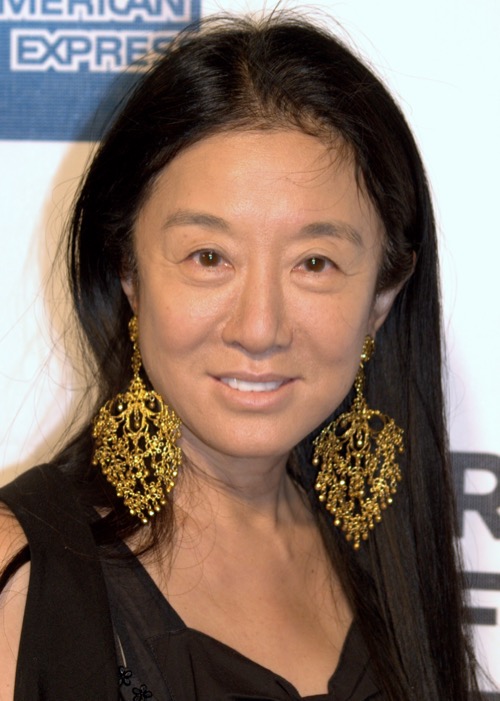
Fashion designer; founder, Vera Wang Bridal House Ltd. · b. 1949 · New York City, New York
Two calls made by hand, not formulas. how we score →
Summary
A competitive figure skater who missed the 1968 Olympic team, she spent seventeen years at Vogue and two more at Ralph Lauren before her father, who had refused for two decades to fund any of her fashion ideas, put four million dollars behind a bridal boutique when she turned forty.
She built a global brand and sold it in 2024, having owned every share of it in between.
How it happened
Born in 1949 to Cheng Ching Wang, an MIT-trained businessman who ran a medicine-trading company and chaired a string of petroleum and trading firms, and Florence Wu, a United Nations translator from a family with warlord-era standing in Manchuria. The Wangs kept a Manhattan apartment and a second home in Pound Ridge, an affluent Westchester suburb, and sent their daughter to Chapin, one of the city's most exclusive girls' schools.
She had trained as a competitive figure skater since age eight and competed in pairs at the 1968 U.S. Figure Skating Championships. She did not make the Olympic team. "I was devastated when I did not qualify," she said later. She finished her art history degree at Sarah Lawrence, and a Vogue fashion director she'd met working a college summer job at the Yves Saint Laurent boutique got her an interview at the magazine instead.
She rose to senior editor at Vogue by 23 and stayed seventeen years. When editor-in-chief Grace Mirabella was fired, Wang says she already knew the top job wasn't going to be hers; it went to Anna Wintour, a friend who had once dated her brother. She took a European editor post in Paris instead, didn't like it, and in 1987 left for a design- director role at Ralph Lauren, drawn by a salary "four times what I'd ever had" — money she needed, she said, because at 38 she was "still living off my parents."
For two decades her father had refused to fund a single one of her fashion ambitions — design school after college, a proposed line of tops called Ship to Shore — and told her to go to law school instead. In 1989, married and unable to find a wedding gown she liked, she designed her own. The following year, just past 40, her father proposed and financed a bridal boutique, reportedly with $4 million. She opened Vera Wang Bridal House at the Carlyle Hotel in March 1990.
She built ready-to-wear, fragrance, jewelry, and homeware lines on top of the bridal business and licensed diffusion lines to Kohl's and David's Bridal, taking the company past $700 million in annual sales while remaining its sole owner. In December 2024, 34 years after opening the Carlyle salon, she sold the brand's intellectual property to WHP Global on undisclosed terms, staying on as founder and chief creative officer and taking a stake in the acquirer.
The coded evidence
Thirteen groups, every claim sourcedSecond generation. Both parents immigrated from China in the mid-1940s; she was born in New York City in 1949.
↗ en.wikipedia.orgHer parents kept a Manhattan apartment and a second home in Pound Ridge, an affluent Westchester County suburb. By her own account she was "still living off my parents" at 38, two years before her father financed her business.
↗ nymag.com0
She married in 1989 and adopted two daughters after the business was already underway; she had no dependents at the time of founding.
↗ nymag.comnot established
No period of hardship, chosen or imposed, is documented at any point; family wealth was a continuous backstop from childhood through the business launch.
↗ nymag.comFather Cheng Ching Wang, a graduate of Yenching University and MIT, ran a medicine-trading company and held chairman or president titles at several petroleum and trading firms, including Oceanic Petroleum Corporation in Singapore and U.S. Summit Company. Mother Florence Wu worked as a translator for the United Nations.
↗ web.archive.orgA parent worked for themselves, the strongest known predictor of founding.
↗ web.archive.orgHer mother's family carried warlord-era political standing in Manchuria. Wikipedia's infobox names great-grandfather Wu Peifu, a major Zhili Clique warlord, while its body text instead names grandfather Wu Junsheng of the rival Fengtian Clique; the two accounts disagree on which relative and which generation.
Internal inconsistency in the source, flagged rather than resolved. Either way, this was inherited status, not wealth that reached her directly.
↗ en.wikipedia.orgHer father refused to fund design school after her 1971 graduation, telling her to attend law or business school instead, and refused for years afterward to back any of her fashion-business ideas, including a proposed tops-only clothing line she called "Ship to Shore." He did not change his mind until she was 40, married, and between jobs.
↗ nymag.comManhattan's Upper East Side, with a second family home in Pound Ridge, an affluent Westchester County suburb.
↗ web.archive.orgFriends Seminary, then Chapin School, an exclusive Manhattan girls' school (graduated 1967), with ballet training at the School of American Ballet alongside her academic schooling.
↗ en.wikipedia.orgNo childhood relocation. As an adult she studied at the University of Paris and later spent roughly a year in Paris as Vogue's European editor in the mid-to-late 1980s.
↗ nymag.comFrances Stein, then Vogue's fashion director, met her while she worked a college summer job at the Yves Saint Laurent boutique on Madison Avenue — where she was already a familiar face from shopping trips with her mother — and suggested she interview at the magazine.
↗ nymag.comA competitive figure skater from age eight, trained under Peter Dunfield and Sonya Klopfer, she competed in pairs with James Stuart at the 1968 U.S. Figure Skating Championships. She did not qualify for the Olympic team. "I was devastated when I did not qualify for the Olympic team," she said later. She moved into fashion afterward.
↗ en.wikipedia.orgSpent seventeen years inside Vogue's inner circle and remained close to Anna Wintour, who had once dated Wang's brother. When editor-in- chief Grace Mirabella was fired, Wang says she already knew the job would go to Wintour rather than her, and moved to a European editor post in Paris instead.
↗ nymag.com2
Vogue (1971-1987), then Ralph Lauren (1987-1989), before founding her own company.
↗ referenceforbusiness.comBA in art history, Sarah Lawrence College (1971), with a year at the University of Paris. No design or business credential: her father declined to pay for design school and pushed her toward law school instead.
↗ nymag.comnot established
Her father paid for undergraduate tuition; no debt is documented at any stage of her education.
↗ nymag.comA reported $4 million investment from her father funded the March 1990 founding of Vera Wang Bridal House Ltd., a two-story space on Madison Avenue in New York City.
The $4M figure is repeated across multiple secondary profiles but is not confirmed by a filing or a Wang-sourced statement of the exact amount.
↗ referenceforbusiness.comThe business itself was her father's idea. After two decades of refusing to fund her fashion ambitions, he proposed and financed the bridal boutique once she turned 40, telling her the timing was right precisely because she didn't want to do it: "You won't be so emotional."
↗ nymag.comIt needed capital up front, before it earned anything.
Financed at the outset by a lump-sum family investment, not by early sales.
↗ referenceforbusiness.comGrew for over three decades on reinvested revenue and brand-licensing deals — Kohl's "Simply Vera" from 2006, David's Bridal "White by Vera Wang" from 2011, Men's Wearhouse tuxedos from 2012 — rather than outside equity, reporting more than $700 million in annual sales by the time she sold the brand's IP to WHP Global in December 2024, on undisclosed terms.
↗ vogue.comHer father's idea, prompted by her own frustration designing a wedding gown for her 1989 marriage after finding nothing she liked to buy.
↗ nymag.comSole owner of the Vera Wang brand for 34 years, from the 1990 founding until December 2024, when she sold the company's intellectual property to WHP Global while remaining Founder and Chief Creative Officer and taking a shareholder stake in the acquirer.
↗ vogue.com0
No failed venture preceded the bridal business; the closest thing was two decades of her father declining to fund earlier ideas, including design school and a proposed tops-only line called "Ship to Shore."
↗ nymag.comNo cost of the kind builders without family capital carry: the $4M launch investment came from her father outright, on top of years of a Ralph Lauren salary and a household with no dependents.
↗ referenceforbusiness.com40
The Carlyle Hotel bridal salon opened in March 1990, just past her 40th birthday.
↗ en.wikipedia.orgEntered a bridal market with no recognized designer name attached to it — brides either bought one-off couture from established houses or shopped anonymous, mass-produced stock — leaving an open lane for a single branded name to define modern bridal fashion.
↗ nymag.comNew York City; The Carlyle Hotel on Madison Avenue, then a standalone store nearby.
↗ referenceforbusiness.comBridal, ready-to-wear fashion, and lifestyle licensing
↗ en.wikipedia.org500000000
Forbes' America's Self-Made Women estimate as of August 2021. A June 2026 aggregator piece (Celebrity Net Worth) instead puts her at $350M; neither is a filing. Company-reported annual sales passed $700M by the 2024 WHP Global sale, which is revenue, not her personal net worth.
↗ forbes.comJournalistic estimate
↗ forbes.com2021
↗ forbes.comOwnership wealth in a company she held outright for 34 years, plus licensing royalties, not a salary.
↗ vogue.comWidely credited with creating the modern "bridal designer" category. Designed Olympic figure-skating costumes for Nancy Kerrigan, Michelle Kwan, Evan Lysacek, and Nathan Chen, and was inducted into the U.S. Figure Skating Hall of Fame in 2009 for that work. Received the National Medal of Arts in 2021 and the CFDA Lifetime Achievement Award in 2013.
↗ en.wikipedia.orgUncapped
Licensing revenue and the eventual brand-IP sale scale without a stated cap, though most of the run was a single wholly owned private company rather than a compounding portfolio.
↗ vogue.comRelentless, Perfectionist, Image conscious
↗ nymag.comPublic
↗ en.wikipedia.orgBefore
Her reputation as an exacting design-obsessive was already set inside Vogue and Ralph Lauren before the bridal business launched.
↗ nymag.comAsset
↗ en.wikipedia.orgStructural context
The cost-of-failure score comes from this person's own money and circumstances. But who they were in America carried its own weight, the same way their household or income did, and it shaped how hard the path was just as much. That part isn't in the cost-of-failure number. It's here instead.
Across film, music, and digital, ownership and control stay in far fewer women's hands than men's. For one measure, women directed only about 12% of 2023's top-grossing films.
↗ assets.uscannenberg.orgImmigrants and their children are overrepresented among America's biggest companies, as founders and as senior leaders. They got there through the visa, credential, and network hurdles that make the path harder to even start down.
↗ forbes.comAmong the people recorded here — women: 68 · Asian subjects: 11. Representation here is who reached these outcomes, not equal odds of reaching them.
Controlled comparisons
Each holds one thing constant and varies another, so the difference is the point. A list of similar names wouldn't tell you anything.