Emily Weiss
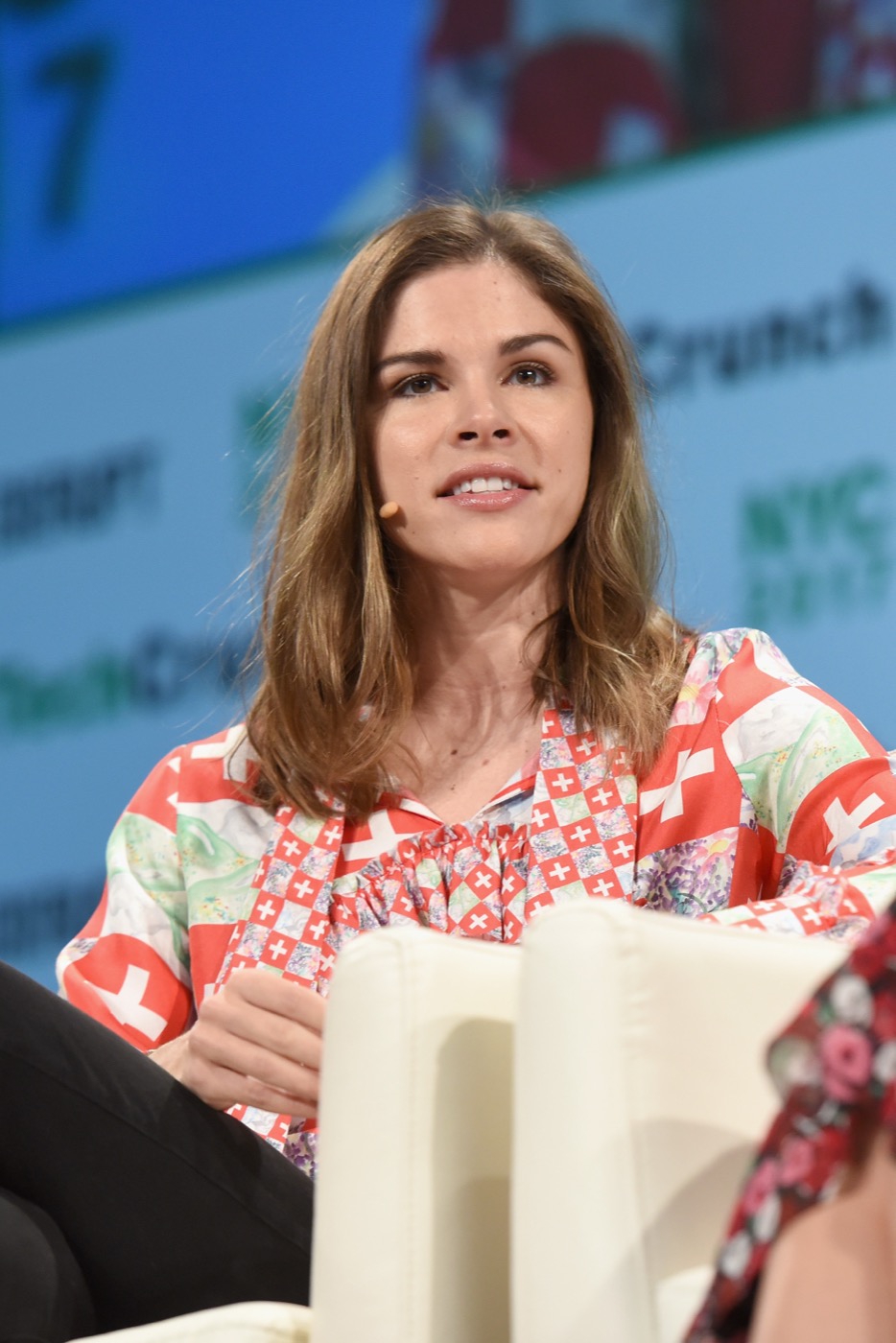
Founder of Glossier and creator of the beauty blog Into The Gloss · b. 1985 · Wilton, Connecticut
Two calls made by hand, not formulas. how we score →
Summary
She came out of a Connecticut suburb and NYU into fashion-magazine jobs, and started a beauty blog on the side.
Four years later its audience gave her a pitch to investors: a $2M seed round led by Forerunner Ventures, one of the few firms to say yes. Glossier reached a reported $1.2B valuation in 2019. She is now executive chairwoman, not CEO.
People in this set who share a company with Emily Weiss.
Where they worked
How it happened
Weiss was born in 1985 and raised in Wilton, Connecticut. Per Wikipedia her father worked for Pitney Bowes and her mother was a homemaker. In high school she interned at Ralph Lauren for two summers, and in college she interned at Teen Vogue. She graduated from New York University in 2007 with a degree in studio art.
After graduating she worked as a fashion assistant at W magazine and then as an on-set styling assistant at Vogue. Wikipedia names Elissa Santisi as the stylist she assisted. Those jobs gave her a salary and a way into the people she would later interview.
In September 2010 she launched Into The Gloss, a blog built around interviews with women and photographs of their bathroom shelves. Wikipedia says she worked on it from 4 to 8 a.m. while keeping her Vogue job. It had over 200,000 unique monthly visitors by early 2012. After it reached 10 million monthly page views and picked up corporate partnerships, she left Vogue to run it full time.
In 2014 she went to venture investors about a product line. Wikipedia says she pitched 12 firms and 11 passed. Kirsten Green of Forerunner Ventures backed her, and the $2M seed round followed. The first four products went on sale on Into The Gloss and Glossier.com in October 2014.
Glossier raised $52M in a Series C in February 2018 and $100M in a Series D in March 2019, which Wikipedia puts at a $1.2B valuation. In August 2020, Wikipedia says, reports including a Fortune investigation accused the company of failing to support Black workers, even though it had donated $1M to racial-justice causes. These were reports about the company; the page does not set out Glossier's response.
Weiss stepped down as CEO in May 2022 and became executive chairwoman, with Kyle Leahy taking over as CEO. Leahy's exit was announced in June 2025, and Colin Walsh became CEO that fall. Weiss's own role is listed as executive chairwoman on Wikipedia, and no later change turned up in the sources opened. Search summaries describe a 2025 effort to raise about $100M at a valuation below $1B, down from a peak reported at $1.8B in 2021. Those figures were not checked on the pages themselves.
The coded evidence
Thirteen groups, every claim sourcedHeld a salaried job at Vogue while running Into The Gloss in early morning hours, until the blog had enough traffic and partnerships to leave.
Salary amount not stated.
↗ en.wikipedia.orgFather worked for Pitney Bowes; mother was a homemaker.
Wikipedia only; father's role at the company not stated.
↗ en.wikipedia.orgNeither parent was self-employed.
Inferred from a corporate-employee father and a homemaker mother.
↗ en.wikipedia.orgRaised in suburban Connecticut, then attended college in New York City, where the fashion and media industries she worked in are based.
↗ en.wikipedia.orgKirsten Green of Forerunner Ventures, who backed the seed round after most of the 12 firms Weiss pitched passed.
↗ en.wikipedia.orgInto The Gloss, her own beauty blog, launched in 2010; Glossier was introduced to its readers in October 2014.
↗ en.wikipedia.orgOver 200,000 monthly unique visitors by early 2012 and 10 million monthly page views at the point she left Vogue to run the blog full time.
Wikipedia only; traffic figures are as reported there.
↗ en.wikipedia.orgInto The Gloss and Glossier.com; the first products were sold directly to the blog's readers.
↗ en.wikipedia.orgTeen Vogue internship in college and two summers at Ralph Lauren in high school.
Whether the internships were paid is not stated.
↗ en.wikipedia.orgBachelor's degree in studio art, New York University, 2007.
↗ en.wikipedia.org$2M seed round led by Forerunner Ventures in 2014.
Blog revenue before the seed round (the page mentions corporate partnerships) was not quantified.
↗ en.wikipedia.org$2M seed (2014); $52M Series C (February 2018); $100M Series D (March 2019) at a $1.2B valuation.
A Series A and B were not detailed in the sources opened. Wikipedia's Glossier article gives about $150M raised across 2018 and 2019.
↗ en.wikipedia.orgnot established
Her ownership share and board control are not established in the sources opened.
↗ en.wikipedia.orgPitched 12 venture firms; 11 declined.
↗ en.wikipedia.orgLaunched online-only in the mid-2010s, using a blog audience and social media instead of retail distribution.
General framing from Wikipedia's description of the online-first launch.
↗ en.wikipedia.orgBeauty and cosmetics
↗ en.wikipedia.orgnot established
Forbes' profile page lists no net worth (last updated January 2022). Magnitude 4 is a judgement from Glossier's reported $1.2B valuation in 2019 and a founder stake that was not disclosed; she may be above or below the $100M to $1B band.
↗ forbes.comWealth is tied to a private company whose valuation has been reported to have fallen since 2021. No stake size or share sales were established.
The valuation decline comes from search summaries of trade press, not pages opened.
↗ en.wikipedia.orgForbes 30 Under 30 (2015) and Time 100 Next (2019), per Wikipedia.
↗ en.wikipedia.org5
Blog launch September 2010 to the 2014 Glossier launch and seed round is four years; to the 2019 $1.2B valuation round is nine. Five is the point at which the company was a funded business with products on sale.
↗ en.wikipedia.orgUncapped
↗ en.wikipedia.orgIn August 2020, reports including a Fortune investigation said Glossier had failed to support Black workers, even though it had donated $1M to racial-justice causes. Wikipedia lists layoffs at the company in 2020 and 2022 and in February 2026, after she left the CEO role.
Reported accusations about the company as of 2020, as summarised by Wikipedia; the Fortune article itself was not opened (blocked domain). No findings by a court or agency were seen.
↗ en.wikipedia.orgFounder who turned a beauty blog's readers into customers, Community-driven brand builder
Paraphrase of how Wikipedia and a quoted Fortune line describe her ("quietly turned Glossier into one of the most disruptive brands in beauty"). Not a systematic sample.
↗ en.wikipedia.orgPress
↗ en.wikipedia.orgMixed
Brand reputation helped the early growth; the 2020 workplace criticism of the company, as reported, cut against it.
↗ en.wikipedia.orgStructural context
The cost-of-failure score comes from this person's own money and circumstances. But who they were in America carried its own weight, the same way their household or income did, and it shaped how hard the path was just as much. That part isn't in the cost-of-failure number. It's here instead.
Startups founded only by women have drawn about 2% of US venture capital, a share that has barely moved in a decade. Raising money as a woman was harder than any one record shows.
↗ techcrunch.comAmong the people recorded here — women: 74. Representation here is who reached these outcomes, not equal odds of reaching them.
Controlled comparisons
Each holds one thing constant and varies another, so the difference is the point. A list of similar names wouldn't tell you anything.

Related companies
Companies connected to Emily Weiss through the profiled people they worked with. Each card says who the link runs through.