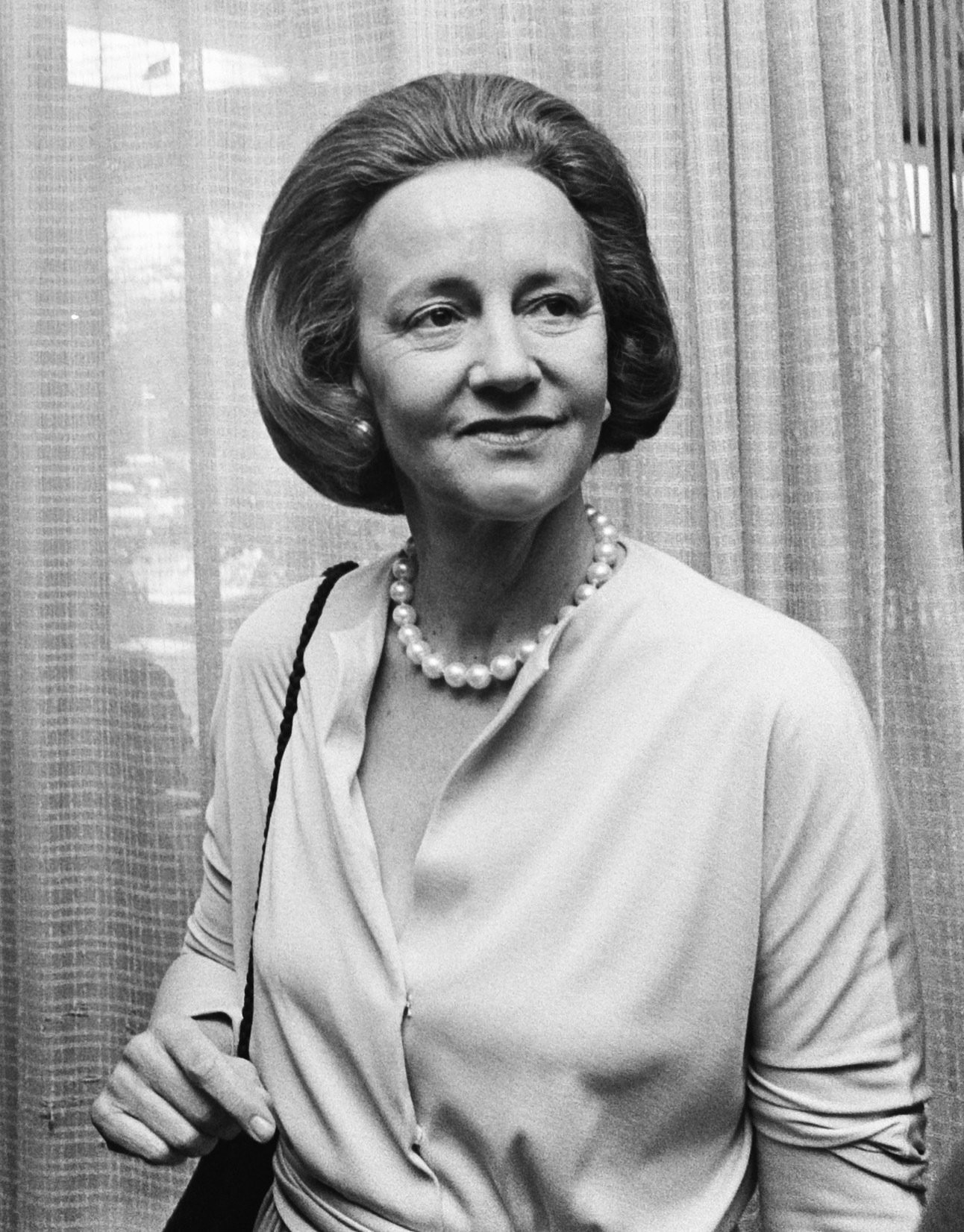
Ginni Rometty
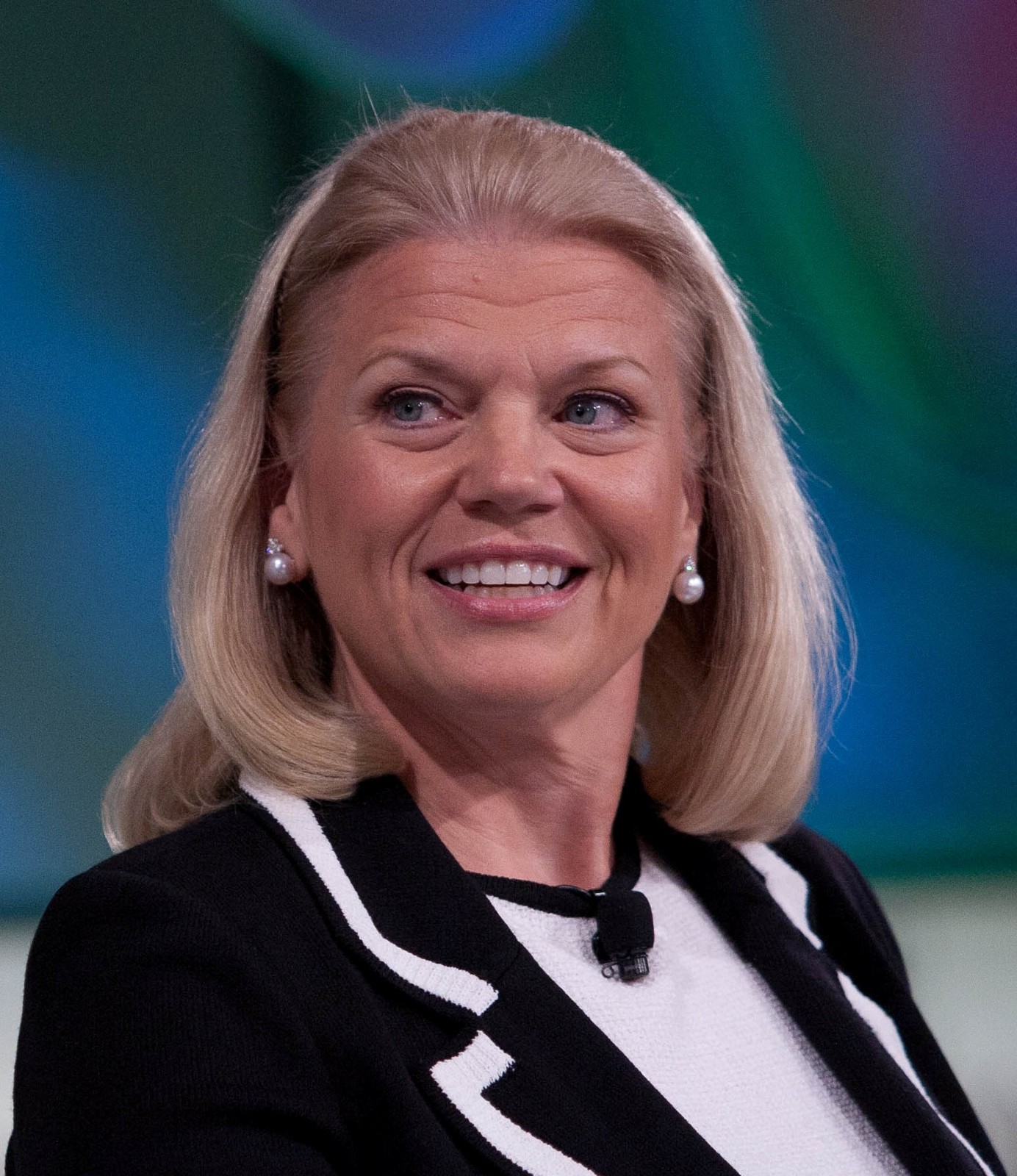
born Virginia Marie Rometty (née Nicosia)
Former Chairman, President and CEO of IBM · b. 1957 · Outside Chicago, Illinois
Two calls made by hand, not formulas. how we score →
Summary
A father's departure at fifteen left her mother, with no college degree, working multiple jobs while the family lived on food stamps; as the eldest of four, Ginni helped raise her siblings.
A General Motors scholarship carried her debt-free through an engineering degree, and IBM, joined in 1981, carried her the rest of the way: thirty-one years inside one company to become its first woman CEO.
How it happened
Born July 29, 1957, outside Chicago, the eldest of four children in an Italian-American family. Her parents split when she was fifteen and her father left the household; her mother, then without a job or education past high school, was left with no money for food or housing, and the family survived on food stamps. Rometty has written, in her 2023 memoir Good Power, that her mother "took control of her life, and ours, by going to school to learn new skills so she could get better jobs so we could get off food stamps and stay in our home." As the eldest, Ginni took on a caretaker role for her three younger siblings — cooking, tutoring, and running the household in the evenings — while her mother worked and attended community college.
A General Motors scholarship funded her degree at Northwestern University in full. She graduated in 1979 with high honors in computer science and electrical engineering, then worked off a service commitment attached to the scholarship at General Motors Institute in Flint, Michigan, before joining IBM in 1981 as a systems engineer in Detroit — a credential and an employer, arranged without family money behind either.
She moved through systems engineering into IBM's Consulting Group in 1991, then in 2002, as general manager of the global services division, championed and led the integration of IBM's $3.5 billion acquisition of PwC Consulting, at the time the largest deal in professional-services history. She helped shape IBM's 2007 "2015 Roadmap" away from hardware and toward software and services, ran Global Business Services from 2005, and became senior vice president of sales, marketing and strategy in 2009 — the seat IBM's board has historically used to identify its next chief executive.
The board named her president and CEO effective January 1, 2012; she added chairman on October 1, 2012. It capped a 31-year climb inside one company and made her the first woman to lead IBM in its more than 100-year history.
She spent roughly $8.5 billion acquiring about 30 companies between 2012 and 2015 while divesting close to $7 billion in slower businesses, pushing IBM toward cloud, analytics, security and Watson, its cognitive computing bet. In October 2018 IBM announced its acquisition of Red Hat for about $34 billion, one of the largest acquisitions in the company's history; the deal closed in July 2019, months before she stepped down.
IBM's revenue fell from over $100 billion in 2011 to under $60 billion in 2019, with 22 to 24 consecutive quarters of decline between 2012 and 2017 before returning to growth in early 2018. Critics, including several outlets that named her among the worst CEOs of 2016, pointed to that decline, to Watson's underwhelming commercial returns, and to executive bonuses paid during periods of layoffs. Supporters credited her for repositioning IBM around hybrid cloud, security and AI before the market rewarded that shift, and for the scale of the Red Hat bet. She stepped down as CEO on April 1, 2020, retired as chairman at the end of that year, and was succeeded by Arvind Krishna.
The coded evidence
Thirteen groups, every claim sourcedCoded from her maiden name, Nicosia, and widely reported Italian-American heritage; no finer-grained detail (region, immigrant generation of specific ancestors) is established in available profiles.
↗ en.wikipedia.orgnot established
Not established. No documented evidence her parents or grandparents were immigrants; the Italian-American surname alone does not establish generational status, so this is coded null rather than guessed.
↗ en.wikipedia.org0
A single continuous employment record at IBM from 1981 to her 2020 retirement, with no documented career gap.
↗ en.wikipedia.orgNone from her father after she turned fifteen. He left the household, and her mother — then without a job or a degree beyond high school — was left with no money for food or housing; the family survived on food stamps while her mother retrained and worked multiple jobs to get them off assistance and keep the family in their home.
Drawn from Rometty's own account in her 2023 memoir Good Power, as relayed in this interview piece — her own disclosure of the family's hardship, not a third-party allegation.
↗ ms.nowA General Motors scholarship funded her Northwestern degree without debt; a service commitment then placed her at General Motors Institute in Flint, Michigan (1979–1981), followed by a salaried IBM paycheck from 1981 onward. From her early twenties on, the entire 39-year climb ran on one employer's payroll, with no personal venture or capital ever at risk.
↗ en.wikipedia.orgThe hardship was imposed, not chosen. There was nothing to fall back on.
Her father's departure and the resulting food-stamp period were imposed, not chosen; there was no standing family wealth to return to.
↗ ms.nowHer father's occupation before he left the household is not established in available profiles. Her mother had no job and no education beyond high school at the time of the separation, and later enrolled in community college to qualify for better-paying work.
↗ ms.nowMother had no education past high school when the family's hardship began, at around age 15; she subsequently earned further training at community college. Father's education is not established.
↗ ms.nowAs the eldest of four, she took on a caretaker role for her three younger siblings after her father left at her age fifteen — cooking, tutoring, and running the household in the evenings while her mother worked and, later, attended community college. She has described this period in her own account, in her 2023 memoir Good Power.
↗ ms.nownot established
Grew up outside Chicago, Illinois; the specific suburb or neighborhood is not clearly established in available profiles.
↗ en.wikipedia.orgIBM, joined in 1981 as a systems engineer in Detroit and never worked anywhere else through the entire climb to chairman and CEO, aside from the pre-IBM General Motors service commitment attached to her scholarship.
↗ en.wikipedia.orgLeading the 2002 acquisition and integration of PwC Consulting, as general manager of IBM's global services division, was the highly visible mandate that marked her as executive material. CEO Samuel Palmisano subsequently moved her into sales, marketing and strategy leadership in 2009 — IBM's traditional proving ground for a successor — and the board named her president and CEO in 2012 as Palmisano's chosen successor.
↗ en.wikipedia.org2
General Motors Institute (1979–1981, a scholarship service commitment) then IBM (1981–2020) — effectively a single-employer career for the full 39-year climb.
↗ en.wikipedia.orgBS in computer science and electrical engineering, Northwestern University's Robert R. McCormick School of Engineering and Applied Science, 1979, graduated with high honors.
↗ en.wikipedia.orgNone documented — the degree was funded in full by a General Motors scholarship.
↗ en.wikipedia.orgHer GM scholarship carried a service commitment: application and systems-development work at General Motors Institute in Flint, Michigan, from 1979 into 1981, before she joined IBM.
↗ en.wikipedia.orgDirect: a fully funded engineering degree, into a GM service commitment, into a single 39-year IBM career.
↗ en.wikipedia.orgA General Motors scholarship funded her Northwestern degree in full — the resource that let her study a technical field with no family money behind her, in exchange for a period of service at GM afterward.
↗ en.wikipedia.org0
No personal venture to fail; a single unbroken salaried climb inside one company.
↗ en.wikipedia.org54
Age when she became president and CEO effective January 1, 2012; she added chairman on October 1, 2012.
↗ en.wikipedia.orgShe became CEO as the industry's center of gravity was already shifting from hardware toward cloud, mobile and analytics — a transition IBM had begun preparing for under the 2007 "2015 Roadmap" she helped develop as a senior executive. The disruptive part of that shift, and the multi-year revenue decline it produced, played out after she took over rather than before.
↗ en.wikipedia.orgEnterprise technology and executive management
↗ en.wikipedia.orgnot established
No credible net-worth figure is established. Forbes lists her on its 2022 "50 Over 50: Entrepreneurs" roster without an attached wealth estimate. Cumulative disclosed IBM compensation alone totaled over $144 million from 2008 to 2018 per Equilar's analysis of IBM's proxy statements, which — after taxes and ordinary spending — plausibly puts her net worth somewhere in the tens to low hundreds of millions, but no filed, equity-based, or otherwise verified figure exists. Unlike a founder, she never held a large personal ownership stake in IBM; her wealth is compensation-derived, not equity-derived.
↗ forbes.com31850000
2016 total compensation, the highest of her disclosed annual figures as CEO, per IBM's 2019 proxy statement as reported by The Register (other disclosed years: 2012, her first year as CEO, $16.2 million per Network World; 2017, $17.7 million; 2018, $16.45 million). Confidence is medium because the figure is drawn from journalistic reporting of the proxy's Summary Compensation Table rather than the SEC filing directly.
↗ theregister.comProxy statement
↗ theregister.comHigh salaried and stock-award income accumulated across a single 39-year career, not an owned, appreciating founder's stake. She was paid very well to run IBM; she never owned a meaningful piece of it.
↗ equilar.comFirst woman to serve as chairman, president and CEO of IBM in the company's history. Announced the roughly $34 billion acquisition of Red Hat in October 2018 (closed July 2019), one of the largest acquisitions in IBM's history. Third female member of Augusta National Golf Club (2014), following Condoleezza Rice. Later a JPMorgan Chase board member (elected 2020).
↗ en.wikipedia.orgCapped
↗ theregister.comPress
↗ en.wikipedia.orgAfter
The sharpest public reputational debate formed during and after the multi-year revenue decline that ran through most of her CEO tenure, rather than before it.
↗ en.wikipedia.orgMixed
Genuinely split. Several outlets, including Motley Fool, Forbes and 24/7 Wall St., named her among the worst CEOs of 2016, citing IBM's then 22-to-24-quarter revenue decline, Watson's underwhelming commercial returns, and executive bonuses paid during periods of layoffs. Others credited her, including in industry retrospectives after her tenure, for repositioning IBM around hybrid cloud, security and AI ahead of the market, and for the scale and timing of the Red Hat acquisition. Both readings are attributed characterizations of a contested tenure, not settled fact.
↗ en.wikipedia.orgThe reputation accrued from behaviour rather than being manufactured.
↗ en.wikipedia.orgFinancial press and some shareholders emphasized the revenue decline and Watson's shortfalls; supporters, more often drawn from industry and technology commentary, emphasized the strategic repositioning toward cloud and AI and the long-term bet the Red Hat deal represented. The two readings coexisted rather than resolving into one verdict during her tenure.
↗ en.wikipedia.orgStructural context
The cost-of-failure score comes from this person's own money and circumstances. But who they were in America carried its own weight, the same way their household or income did, and it shaped how hard the path was just as much. That part isn't in the cost-of-failure number. It's here instead.
Women ran 10.4% of Fortune 500 companies in 2023, an all-time high and still only a tenth of the seats. A 'broken rung' thins their numbers at every level below the top.
↗ forbes.comWhite executives hold most Fortune 500 CEO seats relative to their share of the population, an edge that adds up at every rung of the climb.
↗ finance.yahoo.comAmong the people recorded here — women: 68 · White subjects: 114. Representation here is who reached these outcomes, not equal odds of reaching them.
Controlled comparisons
Each holds one thing constant and varies another, so the difference is the point. A list of similar names wouldn't tell you anything.