Ross Perot
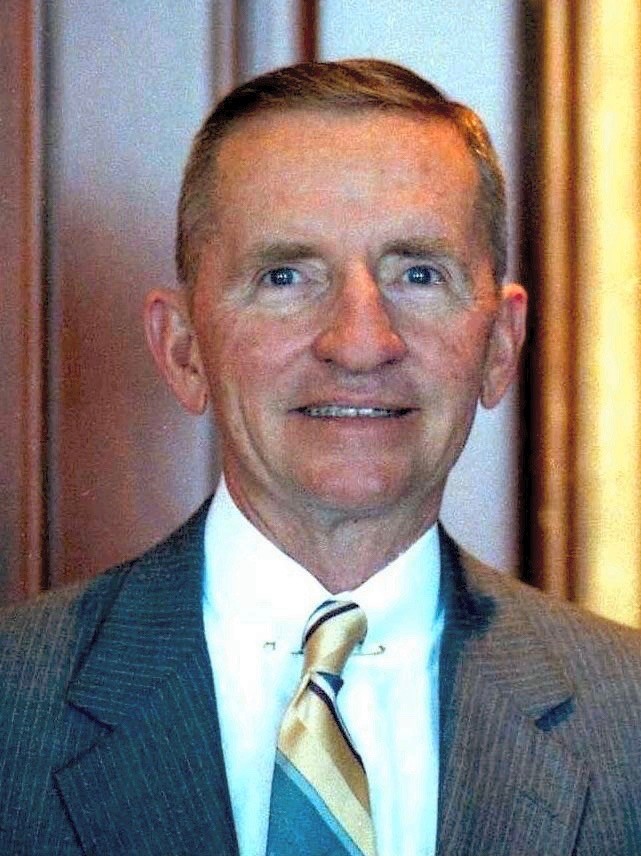
born Henry Ross Perot
Founder of Electronic Data Systems (EDS) · b. 1930–2019 · Texarkana, Texas
Two calls made by hand, not formulas. how we score →
Summary
A cotton broker's son from a stable, comfortable Texarkana family, he left a top sales job at IBM in 1962 with about $1,000 in savings to sell data processing as a service rather than hardware.
Government Medicare and Medicaid contracts fueled the growth, and by the 1980s he had sold Electronic Data Systems to General Motors and built a second fortune with Perot Systems.
How it happened
Born June 27, 1930, in Texarkana, Texas, to Gabriel Ross Perot, a cotton broker and horse trader, and Lulu May Ray Perot. An older brother, Gabriel Ross Perot, died as a toddler; his parents gave him the middle name Ross in the boy's memory. The family did relatively well even through the Depression on his father's brokerage income. As a boy he sold newspapers and garden seeds around town, and he made Eagle Scout at thirteen.
He spent two years at Texarkana Junior College before Senator W. Lee "Pappy" O'Daniel secured him an appointment to the U.S. Naval Academy. At Annapolis he was elected class president and chaired the honor committee, graduating in 1953. He served aboard a destroyer and then an aircraft carrier before leaving active duty in 1957.
An IBM executive he met aboard ship steered him toward sales, and he joined IBM in Dallas, once meeting his entire annual sales quota in about three weeks. He pushed IBM's management to move beyond selling machines and into selling data-processing services outright; they turned him down. On June 27, 1962, his 32nd birthday, he left with about $1,000 of his own savings and founded Electronic Data Systems to do exactly that.
EDS was reportedly turned down 77 times before it won its first contract, running payroll and claims processing for companies that didn't want to build their own computer departments. The 1965 Medicare and Medicaid legislation created a sudden need for large-scale claims processing that state governments weren't equipped to run themselves, and EDS picked up a wave of those contracts. The company went public in 1968; shares reportedly jumped from about $16 to roughly $160 within days, and Perot was briefly one of the wealthiest men in the country. In 1979, when two EDS employees were jailed in Iran, he personally financed and organized a rescue team that got them out.
In 1984 he sold EDS to General Motors for a reported $2.5 billion and joined GM's board. He was openly critical of GM's management culture, and in 1986 GM bought back his remaining stock for $700 million, a deal that reportedly included a penalty if he kept criticizing the company publicly.
In 1988 he founded Perot Systems with eight former EDS colleagues, including his son Ross Perot Jr., who became its CEO. The company grew into a $2.8 billion-revenue IT-services firm before Dell bought it in 2009 for about $3.9 billion. In between, he ran for president as an independent in 1992, taking about 18.9% of the popular vote on a platform centered on the federal deficit, then founded the Reform Party and ran again in 1996, warning during the NAFTA debate of a "giant sucking sound" of jobs moving south; neither run won any electoral votes.
Forbes put his net worth at about $4.1 billion in March 2019, four months before he died of leukemia that July at eighty-nine. Almost all of it traced back to two companies he started with a few thousand dollars and a service no one else was selling yet.
The coded evidence
Thirteen groups, every claim sourcedDescendant; family present in the American South for multiple generations before his birth.
↗ en.wikipedia.orgEnglish; no indication of another home language.
↗ en.wikipedia.orgnot established
Not documented either way; his moves (Texarkana to Annapolis to Dallas) tracked his own naval and business career.
↗ en.wikipedia.orgA financially stable, two-parent household in Texarkana. His family is described as doing relatively well even through the Depression on his father's cotton-brokerage income, giving him a home to return to throughout childhood.
↗ tshaonline.orgLeft a well-paying sales job at IBM to found EDS in 1962; the $1,000 of initial capital came from his own IBM savings, and no other family income floor is documented once he left.
↗ tshaonline.orgnot established
His wife Margot Birmingham Perot's role, if any, in the early EDS years is not established.
↗ en.wikipedia.orgnot established
Married in 1956 and eventually had five children, but the number of dependents at the 1962 founding is not established.
↗ en.wikipedia.orgNo money was owed or sent outward during the build.
↗ en.wikipedia.orgnot established
No housing loss or comparable instability documented; he moved directly from a salaried IBM role into founding EDS.
↗ tshaonline.orgnot established
No period of visible poverty is documented at any point in his life.
↗ en.wikipedia.orgFather Gabriel Ross Perot worked as a cotton broker and horse trader in Texarkana. Mother's name is given as Lulu May Ray Perot; her occupation beyond running the household is not established.
↗ tshaonline.orgA parent worked for themselves, the strongest known predictor of founding.
His father worked as an independent cotton broker and horse trader rather than a salaried employee.
↗ tshaonline.org1
An older brother, Gabriel Ross Perot, died as a toddler; Perot was given the middle name Ross in his memory and grew up effectively as an only child.
↗ en.wikipedia.orgnot established
Whether his brother died before or after his own birth is not established.
↗ en.wikipedia.orgFamily tradition traces paternal ancestry to a French immigrant who arrived in Louisiana in the 1740s; no sustained family wealth or standing accompanied this lineage into his father's generation.
↗ en.wikipedia.orgnot established
No account of family sponsorship into an unconventional path; his route through junior college and a competed Naval Academy appointment was a conventional, merit-based one for the era.
↗ tshaonline.orgTexarkana, Texas — a middle-class family in a small city on the Texas-Arkansas border.
↗ tshaonline.orgPublic schools; graduated Texas High School in Texarkana in 1947.
↗ en.wikipedia.orgnot established
His father's cotton brokerage had no documented link to the data-processing industry he later entered.
↗ tshaonline.orgNone before adulthood; his first major moves were career-driven, leaving Texarkana at 19 for the Naval Academy and later settling in Dallas after the Navy.
↗ tshaonline.orgU.S. Senator W. Lee "Pappy" O'Daniel secured his appointment to the Naval Academy after two years at Texarkana Junior College.
↗ tshaonline.orgInstitutional. Early clients were insurers and health-benefit administrators, then state Medicare and Medicaid data-processing contracts after the 1965 legislation, rather than a pre-existing personal relationship.
↗ tshaonline.orgThree years as an IBM salesman in Dallas gave him sales technique and credibility with corporate and government buyers, plus the specific insight that data-processing services could be sold apart from IBM's hardware, an idea IBM's own management rejected when he raised it internally.
↗ tshaonline.orgSkill, Credibility
↗ tshaonline.orgnot established
EDS is consistently described as founded solely by Perot in 1962. Perot Systems in 1988 was founded with eight EDS colleagues who followed him, including his son Ross Perot Jr.
↗ en.wikipedia.orgIBM's leadership rejected his repeated pitch to move the company into software and data-processing services. EDS, the company he founded instead once he left, built a considerably larger and more durable fortune than a sales career at IBM would have.
↗ tshaonline.orgAfter the 1984 GM sale, held a seat on General Motors' board, briefly placing him inside the governance of the country's largest corporation, before GM bought back his stock in 1986 following disputes with management.
↗ tshaonline.orgBachelor's degree, U.S. Naval Academy, 1953.
↗ en.wikipedia.orgTwo years at Texarkana Junior College, then a competed U.S. Senate appointment to the Naval Academy — a service-academy pathway rather than direct four-year civilian enrollment.
↗ tshaonline.orgElected class president and chaired the honor committee at the Naval Academy, giving him a network of Navy and later business contacts, though his actual business launch ran through IBM rather than Academy classmates.
↗ tshaonline.orgAbout $1,000 of his own savings, accumulated from his IBM salary and commissions, to found Electronic Data Systems on June 27, 1962, his 32nd birthday.
↗ tshaonline.orgnot established
↗ en.wikipedia.orgIt paid its own way from the start. Revenue came before any outside money.
EDS operated as a facilities-management and data-processing contractor from the outset, funded by contract revenue rather than outside equity, though it was reportedly turned down 77 times before its first contract.
↗ tshaonline.orgThe founding $1,000 came from savings out of his IBM sales income; there is no record of an outside loan or family transfer funding the 1962 start.
↗ tshaonline.orgGrew almost entirely on reinvested contract revenue and, from 1968, on public equity rather than private venture funding. Went public on the NYSE in 1968, with shares reportedly rising from about $16 to somewhere between $160 and $162 within days.
Sources give the post-IPO price as either $160 (Wikipedia) or $162 (TSHA); the underlying jump is consistent.
↗ tshaonline.orgReinvested EDS's contract revenue into the company's growth through the 1960s-70s rather than personal spending. After selling EDS to GM in 1984 for a reported $2.5 billion and being bought out of his remaining GM stake for $700 million in 1986, he used a large share of the proceeds to found Perot Systems in 1988 with eight former EDS colleagues, including his son.
↗ tshaonline.orgPersonal experience and a rejected pitch: while at IBM he concluded that companies would pay for data processing as a purchased service rather than owning and running their own mainframes. IBM's leadership turned the idea down internally, so he built it as his own company.
↗ tshaonline.org0
No prior venture before EDS is documented; he went directly from IBM into founding it.
↗ tshaonline.orgSelf. He personally financed and pitched the new company; TSHA notes EDS's earliest sales effort was rejected 77 times before it won its first contract, a cost of time and effort he alone carried since he had already left his IBM salary.
↗ tshaonline.orgThe 1965 Social Security Amendments creating Medicare and Medicaid produced a sudden, large-scale need for claims data processing that state governments weren't equipped to run themselves, just three years after EDS's founding; EDS built much of its 1960s growth on winning those state contracts.
↗ tshaonline.orgDallas, Texas, where he had worked for IBM and where he founded EDS.
↗ tshaonline.orgThe 1979 rescue of two EDS employees held in a Tehran prison, organized and personally funded by Perot, became a bestselling Ken Follett book ("On Wings of Eagles," 1983) and a 1986 NBC miniseries, building his national public profile well beyond the business world ahead of his 1992 campaign.
↗ en.wikipedia.orgBuilt. Created the outsourced-data-processing services model and the company itself from a $1,000 start rather than acquiring an existing business.
↗ tshaonline.org57
From the 1962 EDS founding to his 2019 death. The EDS engine itself ran under his ownership for 24 years, until the 1986 GM buyout, after which Perot Systems (1988-2009) and personal investing continued building his fortune.
↗ en.wikipedia.orgBuilt EDS and later Perot Systems in Dallas and Plano, Texas, rather than relocating to a coastal technology or finance hub.
↗ en.wikipedia.orgInformation technology and data-processing services
↗ tshaonline.org4100000000
Forbes valuation as of March 4, 2019, about four months before his July 2019 death; commonly rounded to about $4 billion across obituaries. Band only.
↗ forbes.comJournalistic estimate
↗ forbes.com2019
↗ forbes.comnot established
No single-year income figure with a disclosed basis is documented; his wealth is better captured by the EDS and Perot Systems sale prices than by an annual income figure.
↗ en.wikipedia.orgRealized cash and stock from two large sales: a reported $2.5 billion for EDS in 1984, paid substantially in GM stock and notes, and $700 million in cash for his remaining GM stake in 1986. Later, Perot Systems sold to Dell in 2009 for about $3.9 billion, a sum split among its shareholders rather than paid to Perot alone.
The 1984 EDS sale price is reported variously as $2.4B (Wikipedia), $2.5B (TSHA), and $2.6B (Wikipedia's EDS article); the underlying deal is the same.
↗ tshaonline.orgWealth from building and selling businesses, not a salary. Both EDS and Perot Systems were reportedly grown mostly on their own contract revenue, started with only a few thousand dollars, before being sold outright.
↗ tshaonline.orgRan for U.S. president as an independent in 1992, winning about 18.9% of the popular vote, the strongest showing by a non-major-party candidate since Theodore Roosevelt in 1912, on a platform centered on the federal deficit and opposition to NAFTA. Founded the Reform Party and ran again in 1996, winning about 8%. Neither campaign won any electoral votes.
↗ en.wikipedia.org6
From the 1962 founding to the 1968 IPO that made him one of the wealthiest people in the country almost overnight.
↗ tshaonline.orgUncapped
↗ tshaonline.orgnot established
No SEC or other regulatory enforcement action against Perot personally is documented in the sources consulted.
↗ en.wikipedia.orgnot established
None documented; the 1986 exit from General Motors was a negotiated stock buyback, not litigation.
↗ upi.comnot established
No detailed, sourced account of EDS's internal labor practices under Perot is established here.
↗ en.wikipedia.orgSelf made, Plain spoken, Populist, combative with corporate management
↗ forbes.comPublic
↗ en.wikipedia.org3
TSHA, Wikipedia, and Forbes each independently characterize the self-made, plain-spoken reputation.
↗ tshaonline.orgAfter
The national folksy-populist public image formed after the EDS fortune was made, mainly through the 1979 Iran rescue's dramatization and the 1992/1996 campaigns.
↗ en.wikipedia.orgMixed
An asset in winning government and insurance contracts and later a political brand, but a liability inside GM, where his criticism of management led directly to the 1986 buyout.
↗ tshaonline.orgThe reputation was deliberately built, through books, press, and PR.
Actively shaped through the 1979 rescue's dramatization in Ken Follett's 1983 book and a 1986 TV miniseries, and again during the 1992/1996 campaigns' plain-spoken media persona (Larry King appearances, half-hour infomercials).
↗ en.wikipedia.orgThe 1979 Iran rescue was dramatized in Ken Follett's bestselling book "On Wings of Eagles" (1983) and a 1986 NBC miniseries starring Richard Crenna as Perot, both outside his direct control, shaping much of his pre-1992 public image as a can-do patriot.
↗ en.wikipedia.orgTo much of the business press he was an outspoken corporate-governance critic and unwelcome board member; to a large slice of the 1992 electorate he was a plain-spoken, deficit-hawk outsider; critics in both spheres also described him as controlling and prone to conspiracy theories, particularly around Vietnam POW/MIA claims.
↗ en.wikipedia.orgStructural context
The cost-of-failure score comes from this person's own money and circumstances. But who they were in America carried its own weight, the same way their household or income did, and it shaped how hard the path was just as much. That part isn't in the cost-of-failure number. It's here instead.
Men founded the companies that took nearly all the venture funding and almost every top outcome, a tailwind that never shows up in one person's own circumstances.
↗ techcrunch.comWhite founders are heavily overrepresented among funded companies and top-tier wealth relative to their share of the population, an edge that has nothing to do with a person's own money.
↗ techcrunch.comAmong the people recorded here — men: 115 · White subjects: 74. Representation here is who reached these outcomes, not equal odds of reaching them.
Controlled comparisons
Each holds one thing constant and varies another, so the difference is the point. A list of similar names wouldn't tell you anything.